Shoppers keeping an eye on sugar
You want to avoid added sugars without mistaking this claim for a sugar-free product. The ‘of which sugars’ figure per 100 ml and the amount you serve can help you compare bottles.


For a picnic, first choose between pure juice, a mixed-fruit juice and a nectar by checking the product description and ingredients: ‘no added sugar’ does not mean there are no naturally occurring sugars. Then choose a volume to suit your group and check the storage instructions before you set off and after opening. Manger Bouger recommends limiting fruit juice to one glass a day and choosing whole fruit instead.
You want to avoid added sugars without mistaking this claim for a sugar-free product. The ‘of which sugars’ figure per 100 ml and the amount you serve can help you compare bottles.
You need to choose a bottle size to share and follow the storage instructions while travelling and after opening.
You’re deciding between a single-fruit juice, a mixed-fruit blend and a nectar. The product description, ingredients and, for a nectar, the stated fruit content help you tell the recipes apart.
If you’re preparing for a picnic, start by checking the recipe and nutrition label, then choose a bottle size that you can store as directed.
| What to consider | What to check | Who is this for? |
|---|---|---|
| Sugars and serving size | The ‘no added sugar’ claim, followed by the ‘of which sugars’ figure per 100 ml and the amount you plan to serve. | If I want to avoid added sugars, I also need to consider naturally occurring sugars and how much I pour. Around 42% of consumers would make this their top priority. |
| Storage and bottle size | The capacity, based on the number of glasses, and the storage instructions before and after opening. | When serving several people outdoors, I prefer a bottle that suits the group, so I don’t have to store leftovers for long. Around 33% of consumers would put this first. |
| Type of recipe | The product description, ingredients and, for a nectar, the stated fruit content. | Whether I’m choosing a single fruit, a blend or a nectar, I want to know what’s actually in the drink I’ll be sharing. Around 25% of consumers would prioritise the recipe. |
The sugars naturally present in fruit remain in the juice. So the claim on the front of the pack isn’t enough to compare two drinks.
Check the ‘of which sugars’ figure per 100 ml and decide how much to serve.
Instructions vary between products and may change after opening. The bottle size you choose should also match how much your group will drink while you’re there.
Check both sets of storage instructions before you leave, and take a cool bag if the product needs to be kept chilled.
The recipes aren’t interchangeable: the Jafaden and Carrefour Classic’ nectars listed by their retailers contain at least 81% and 75% fruit respectively.
Compare the product description, any water listed, the fruit content and the ingredients for each bottle.
The Carrefour Classic’ mixed-fruit nectar product page shows both a ‘no added sugar’ claim and information about added sugars.
Before choosing this product on that basis, check these details against the bottle label.
Mixed-fruit and apple options with no added sugar, in a range of sizes depending on the product.
Carrefour describes one no-added-sugar mixed-fruit option as pure juice made from 12 fruits and enriched with six vitamins.
Carrefour offers an Extra pure orange juice and a Classic’ no-added-sugar mixed-fruit nectar, among other products.
Auchan offers a no-added-sugar pure pineapple juice in a 1 L carton for those looking for a single-fruit option.
E.Leclerc offers a mixed-fruit nectar and a no-added-sugar pink grapefruit pure juice under these brands.
These bottles of mixed-fruit juice and nectar could be suitable for sharing at a picnic. Compare their size, recipe and packaging instructions before planning how to transport them.
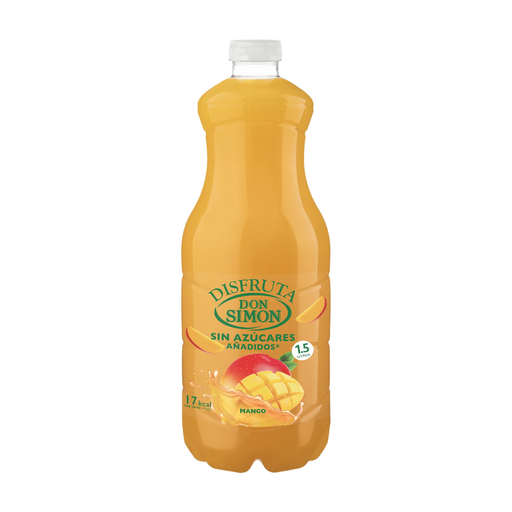 Image unavailable
The 1.5 L bottle could suit a group, as long as the amount matches the number of glasses you plan to serve. Check the ingredients and storage instructions on the bottle before you set off.
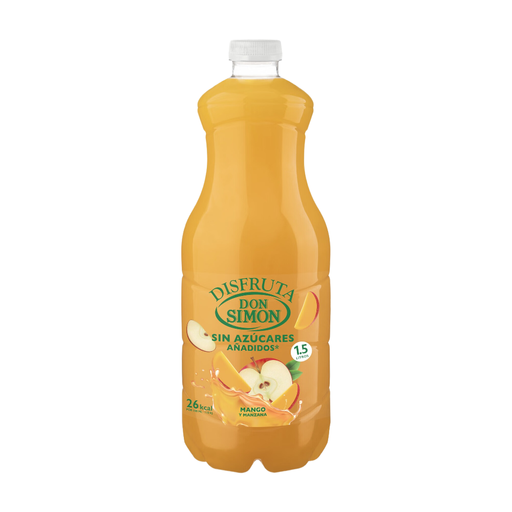 Image unavailable
This 1.5 L bottle is for a group looking to share a nectar made with mango and apple. Compare its ingredients and ‘of which sugars’ figure with those of the other recipes you’re considering.
 Image unavailable
This 1.5 L nectar lets you offer a fruit blend to several guests. To compare it with a mixed-fruit juice, read the product description and ingredients rather than relying on the fruit names alone.
 Image unavailable
The 1.5 L bottle could work if several people want to share a mixed-fruit juice. Before taking it with you, check the storage instructions for this bottle, particularly after opening.
 Image unavailable
The 1 L carton could be a better fit for a group expecting fewer glasses than a 1.5 L bottle would provide. If you’re specifically looking for pure juice, check the product description and ingredients for this option on the packaging.
No: sugars naturally present in fruit may remain in the juice. Compare the ‘of which sugars’ figure per 100 ml on the bottles you’re considering, then take the serving size into account.
Work out how many glasses you want to serve rather than automatically choosing a large bottle. Manger Bouger recommends limiting fruit juice to one glass a day, choosing whole fruit instead and making water your usual drink.
You’ll need one if the label says to keep the juice chilled during the journey. Check the instructions for after opening, too: if the bottle needs to be refrigerated, don’t leave it out during the picnic once it’s been opened.
Start by checking the product description on the packaging, then read the ingredients and stated fruit content. The mixed-fruit nectars offered by E.Leclerc and Carrefour contain water and have different minimum fruit contents, so they shouldn’t be treated as the same as pure juice.