Who is this guide for?

People keeping an eye on sugar content

You want to avoid added sugars without confusing this claim with ‘sugar-free’. Anses distinguishes naturally occurring sugars from added sugars. When comparing drinks, also check the ‘of which sugars’ line in the nutrition information.

Households looking for a specific recipe

For a weekend breakfast, you want to know whether you’re serving pure juice, juice made from concentrate or a nectar. The product description and ingredients can help you decide.

People who care about origin or organic produce

If the apples’ origin or organic credentials matter to you, check these details on the specific product you choose. They aren’t guaranteed by the ‘no added sugar’ claim alone.

What should you check?

For a weekend breakfast, start with the type of recipe you want and the sugar information, then choose a size that suits how much your household will drink. Check the organic credentials and apple origin on each individual product.

What to consider What to check Who is it for?
Sugars present The ‘no added sugar’ claim and the ‘of which sugars’ line, using the same basis for comparison, particularly per 100 mL. I want to avoid added sugars while knowing how much sugar is in the juice I serve; around 36% of consumers would put this distinction first.
Type of recipe The product description, ingredients and, for a nectar, the stated fruit content. If I’m looking for a drink made solely from apple juice, I want to distinguish it from a nectar containing water; this would be the top priority for around 29% of consumers.
Size and storage The volume and the product’s own refrigeration and after-opening instructions. I only serve juice occasionally and want to avoid leaving an opened bottle for too long; around 21% of consumers would make this their top consideration.
Organic credentials and origin The organic information and stated apple origin for the exact product. I want to choose first according to the production method or the apples’ origin; this would be the priority for around 14% of consumers.

Common mix-ups to avoid

  • Reading ‘no added sugar’ as ‘sugar-free’

    The juice still contains sugars naturally present in apples. So the claim on the front of the pack is no substitute for the nutrition information.

    Compare the ‘of which sugars’ line on the same basis and consider how much you plan to serve.

  • Confusing juice with nectar

    Recipes vary: the Cidou apple nectar shown by Auchan contains, among other ingredients, juice made from concentrate and water. ‘No added sugar’ doesn’t mean ‘made solely from apple juice’.

    If you don’t want added water, look for a product whose description and ingredients match this preference.

  • Choosing a size without thinking about storage after opening

    A bottle that’s the right size for the table may leave some juice to store. Instructions and storage times vary by product.

    Before choosing a size, read the storage instructions and estimate how much your household will drink within the stated time.

  • Relying on the brand name alone

    The same brand or retailer may offer different categories and recipes; being included in a selection doesn’t describe every product it sells.

    Check the product description, ingredients and nutrition information for the specific product you’re thinking of buying.

Brands and retailers to consider

Joker

The 1 L Joker Le Fruit product shown by Auchan is apple juice made from concentrate, with no added sugar and with lemon juice made from concentrate.

  • The product description and ingredients make it easy to identify exactly what this recipe contains.
  • This product shouldn’t be confused with a recipe made solely from apple juice.

Carrefour

Carrefour Classic’ offers apple juice made from concentrate and described as having no added sugar.

  • The Carrefour product information specifies the category for this product.
  • Check the ingredients separately for any other Carrefour product, especially if you’re looking for pure juice.

E.Leclerc / Marque Repère

E.Leclerc offers, among other products, Jafaden pure apple juices. The 1.5 L product information lists apple juice and states that the apples are from France.

  • This product information lets you check the recipe and stated origin for the size in question.
  • Check with the store that the product and size you want are available.

Auchan

Auchan’s product information distinguishes between apple juice made from concentrate, pure juice and apple nectars, including Cidou.

  • The product descriptions and ingredients shown help you compare these recipes without treating them as the same.
  • Follow the after-opening instructions for the product you choose rather than applying those for another product.

Lidl / Solevita

If you’re considering apple juice from Lidl or sold under the Solevita name, start by checking the label on the product available in your store.

  • The product description and ingredients let you see whether the recipe matches your preference.
  • Don’t assume from the retailer alone that a product has no added sugar or that you know its size or the origin of its apples.

Pampryl

Check Pampryl products individually: apple juice and apple nectar are not the same recipe.

  • The product description is a good starting point for distinguishing between categories.
  • A Pampryl nectar shown by Jus de Fruits Caraïbes contains added sugar. This recipe, sold outside mainland France, doesn’t represent the brand’s other products.

Apple juices available on Joybuy

These two 1 L sizes are worth considering for a weekend breakfast. For each one, check the recipe, the claim about added sugars and the after-opening instructions on the pack.
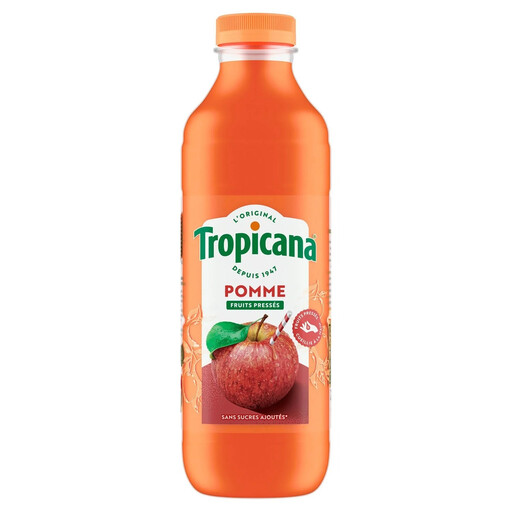
Tropicana pressed apple juice from France, 1 L

Tropicana pressed apple juice from France, 1 L

The 1 L size may suit a shared breakfast; choose it based on how much your household can drink after opening.

The title describes it as pressed apple juice from France. Check the pack for the claim about added sugars, the ingredients and how long it can be kept after opening.

View on Joybuy
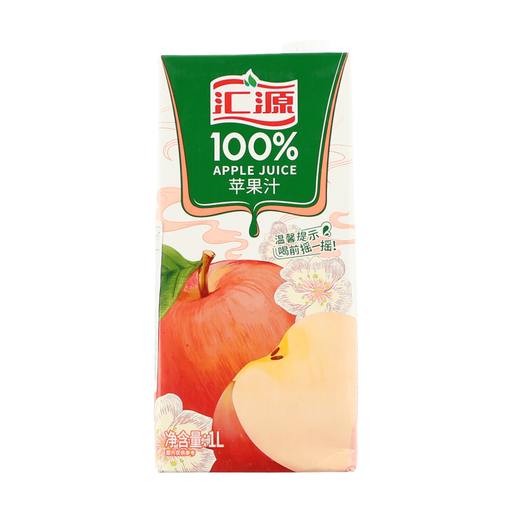
Huiyuan apple juice, 1 L

Huiyuan apple juice, 1 L

If you’re considering this size for a gathering, compare the recipe with your preference for apple juice or a drink made from juice concentrate.

The title states that it’s 1 L. Before buying, check the pack intended for sale in France for the product description, ingredients, sugars per 100 mL and storage instructions after opening.

View on Joybuy

Frequently asked questions

Does ‘no added sugar’ mean apple juice contains no sugars?

No. As Anses explains, this claim doesn’t rule out sugars naturally present in the fruit. To find out how much sugar is in the product you choose, check the ‘of which sugars’ line in the nutrition information.

Is apple juice with no added sugar always pure juice?

No. Carrefour Classic’ and Joker product information describes juices made from concentrate with no added sugar. A nectar may also carry this claim while containing water. Check the description of the specific product rather than relying on this claim alone.

What should I choose if I don’t want added water?

Look for a recipe whose ingredients confirm this. The Planet Bio pure apple juice shown by Carrefour lists ‘apple juice (origin France) (100%)’ and ‘no added water’. Always check the exact product you’re buying.

How long can you keep apple juice after opening?

Follow the instructions on your bottle or carton. The Auchan product information reviewed for some products recommends keeping them in the fridge and drinking them within five days of opening, but this may not apply to all juices.

Can apple juice with no added sugar replace a whole piece of fruit at breakfast?

The ‘no added sugar’ claim doesn’t make juice equivalent to a whole piece of fruit. French healthy eating guidance from Manger Bouger recommends choosing whole fruit and limiting fruit juice, whatever the type.