For shoppers who check the ingredients
You want to tell apple juice and nectar apart before comparing the ingredients. The name highlighted on the bottle doesn’t replace its legal product description.


For weekday breakfasts, start by choosing the category that suits what you’re looking for: apple juice, which may be made from concentrate, if you want a juice; or a nectar, but only if you’re happy with its different recipe. Then check the ingredients, the sugar content per 100 ml and the storage instructions after opening. ‘No added sugar’ does not mean ‘sugar-free’.
You want to tell apple juice and nectar apart before comparing the ingredients. The name highlighted on the bottle doesn’t replace its legal product description.
You’re looking for a size that suits weekday breakfasts, without keeping an opened bottle for longer than the label recommends.
You’re looking for a product with no added sugar, but you also want to know how much naturally occurring sugar is in the amount you serve.
For weekday breakfasts, start with the product description and ingredients, then compare the nutrition information with your usual serving size. A pack size is only practical if you can follow the storage instructions after opening.
| What to check | What to look for | Who is it for? |
|---|---|---|
| Category and ingredients | Read the product description and ingredients. If you’re considering a nectar, also check the fruit content stated on the packaging. | If I want apple juice rather than nectar, the recipe matters more to me than the claim on the front of the pack alone. Around 36 % of consumers would put this distinction first. |
| Sugar and serving size | Compare the ‘of which sugars’ figure per 100 ml, then calculate it for the amount you serve. | My morning glass can contain sugar even if none has been added to the juice. Checking the sugar in each serving would be the top priority for around 29 % of consumers. |
| Pack size | Compare the bottle size with the number of people you’re serving and how often you’ll have the breakfasts in question. | When several people pour a glass each morning, I want a bottle that suits our routine. Around 21 % of consumers would make pack size their main consideration. |
| After opening | Check the storage temperature and how soon the juice should be consumed, as stated on the bottle you choose. | If I only drink juice on some mornings, I’d rather be able to finish the bottle within the recommended time. Avoiding leftovers would be the top priority for around 14 % of consumers. |
Apples naturally contain sugars, which are present in the juice. Auchan’s product pages for the Joker and Auchan juices made from concentrate each state 9.8 g of sugars per 100 ml; figures may differ for other products.
Check the ‘of which sugars’ figure and take the amount you actually serve into account, rather than relying on the claim on the front of the pack.
These product descriptions refer to different recipes. Auchan’s product page for Cidou apple nectar states a minimum fruit content of 85 %, and also lists water among the ingredients.
Check the product description and ingredients before comparing two bottles.
Auchan’s product pages for some Auchan, Tropicana and Andros products say they must be refrigerated and consumed within five days of opening. A large bottle could therefore leave you with leftovers if you don’t use it often.
Choose a size your household can finish while following the instructions for the bottle you buy.
The products below illustrate the differences to look out for: product category, ingredients, sugar content and instructions after opening.
Le Fruit no-added-sugar apple juice is made from concentrate and comes in a 1 L bottle.
Carrefour’s product pages feature a Classic' no-added-sugar juice made from concentrate and a Bio product described as 100 % pure juice.
The retailer offers a no-added-sugar apple juice made from concentrate and another product described as pure apple juice, both in 1 L bottles.
The 100 % sweet apple juice with no added sugar comes in a 1 L bottle.
Auchan offers the no-added-sugar pressed apple juice in a 1 L pack with 15 % extra volume.
These products are apple juices rather than nectars. Their pack sizes and recommended times for consumption after opening let you choose according to how many glasses you’ll serve during the week.
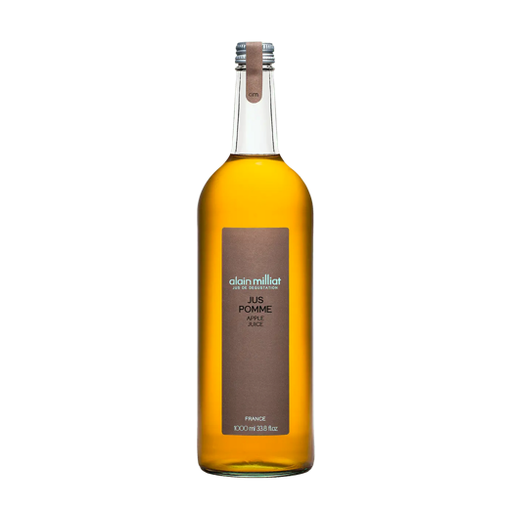 Image unavailable
This size could suit several breakfasts, as long as you finish the bottle within three days of opening.
Joybuy’s product page describes it as 100 % apple juice, not from concentrate and with no added sugar, with 10 g of sugars per 100 ml.
After opening, keep the bottle in the fridge and consume within three days, as stated on the product page.
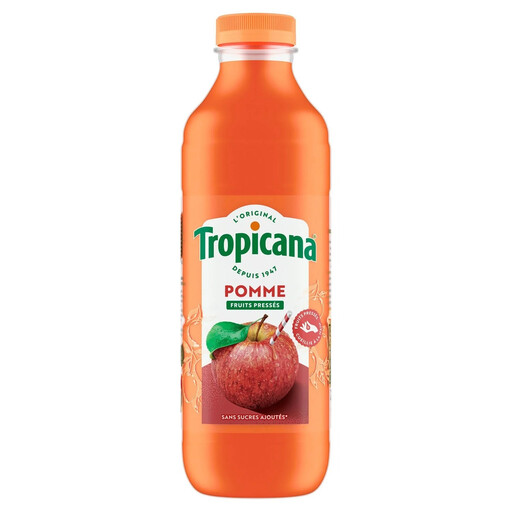 Image unavailable
This 1 L bottle is suited to households looking for pressed apple juice to serve over several breakfasts.
Joybuy’s product page describes it as pressed apple juice with no added sugar and ascorbic acid, and states 11 g of sugars per 100 ml.
After opening, the product page says to refrigerate at a maximum of 7 °C and consume within five days.
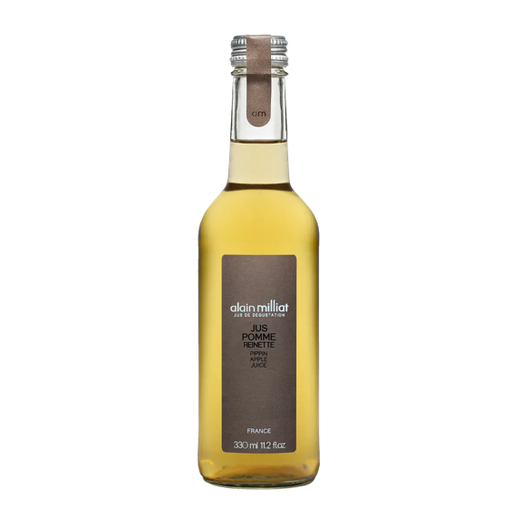 Image unavailable
The 33 cl size suits a smaller serving, but offers less to share at breakfast.
Joybuy’s product page lists 100 % Reinette apple juice in the ingredients and 10 g of sugars per 100 ml, described as naturally occurring.
After opening, keep the bottle in the fridge and consume within three days, as stated on the product page.
Yes. It can contain sugars that occur naturally in apples. To find out how much sugar is listed for the product you’re considering, check the ‘of which sugars’ figure in the nutrition information and calculate it for the serving you’ll have.
Nectar is suitable if you’re happy with a recipe that’s different from apple juice. Auchan’s product page for Cidou nectar states a fruit content of at least 85 % and also lists water and citric acid. Check the product description and ingredients before choosing.
Follow the time and temperature instructions on the bottle you buy, as these vary by product. Joybuy’s product pages for the two ALAIN MILLIAT juices featured here say to refrigerate and consume within three days of opening; the page for the TROPICANA juice featured here says five days.
No. Manger Bouger recommends choosing whole fruit over juice and points out that they have different fibre contents. If you do choose juice for breakfast, compare the nutrition information and the amount you serve, and don’t assume that ‘no added sugar’ means it contains no sugar.