Students keeping an eye on sugar
You’re looking for a juice with no added sugar, without assuming that it contains no sugars at all. The claim on the packaging, the ingredients and the ‘of which sugars’ figure each answer a different question.


For lunch at uni, choose an apple juice labelled ‘no added sugar’, then check its ingredients and how much you can drink or keep after opening. This claim doesn’t mean the juice is free from the sugars naturally present in apples: Auchan’s product pages for Joker and its own brand both list 9.8 g of sugars per 100 ml. If you have a particular recipe in mind, distinguish between pure juice, juice made from concentrate and nectar rather than treating them as interchangeable.
You’re looking for a juice with no added sugar, without assuming that it contains no sugars at all. The claim on the packaging, the ingredients and the ‘of which sugars’ figure each answer a different question.
You want an amount that’s easy to carry and finish. If you’re buying a bottle for several meals, it’s also worth checking how to store it after opening.
You want to tell the difference between pure juice, juice made from concentrate and nectar by checking the product description, ingredients and, for nectar, the fruit content.
For lunch on the go, start by checking the ‘no added sugar’ claim and the amount of sugars listed. Then choose a size that suits your meal and compare the recipes.
| What to consider | What to check | Who it matters to |
|---|---|---|
| Added sugars and sugars naturally present | Check the ‘no added sugar’ claim, the ingredients and the ‘of which sugars’ figure per 100 ml. | I want to avoid added sugar without mistaking this claim for a complete absence of sugars. Around 46% of consumers would make this their priority. |
| Size and storage | Compare the volume and storage instructions after opening, especially if you can’t keep the bottle chilled. | For a single lunch, I want an amount I can finish or store according to the product instructions. This would be the priority for around 27% of consumers. |
| Type of recipe | Read the product description and ingredients: pure juice, juice made from concentrate or nectar, including its fruit content. | If the ingredients guide my choice, I want to know whether the drink contains water or juice made from concentrate. Around 27% of consumers would prioritise this distinction. |
Sugars naturally present in the fruit still count. Auchan’s product pages list 9.8 g of sugars per 100 ml for Joker and Auchan juices, and 10 g for Tropicana juice.
Check the ‘of which sugars’ figure and how much you plan to drink, not just the claim on the front of the pack.
According to Carrefour, Carrefour Bio apple nectar contains organic apple juice made from concentrate and water, with at least 85% fruit. Planet Bio pure juice is described as containing apple juice with no added water.
First check the product description and ingredients, then compare the sizes.
Auchan’s product pages for Auchan and Tropicana products say to refrigerate them after opening and consume within five days.
For an individual lunch, choose an amount you can finish or store according to the label.
An opened bottle that you can neither refrigerate nor finish could go to waste.
Carrefour’s product page for Carrefour Bio nectar displays a ‘no added sugar’ claim, while also listing added sugars in its nutritional information.
If this is an important factor for you, check the packaging or ask the retailer to clarify before choosing this nectar.
Auchan’s product page describes the 1 L Joker Le Fruit apple juice as juice made from concentrate with no added sugar.
Carrefour’s product pages let you compare Carrefour Classic juice made from concentrate with Planet Bio pure juice. Both are described as having no added sugar.
Auchan’s product page describes a 1 L carton of apple juice made from concentrate with no added sugar.
These three 1 L apple juices could be a good choice if you plan to share the bottle or store it after lunch according to the instructions. For an individual packed lunch, consider the volume before choosing.
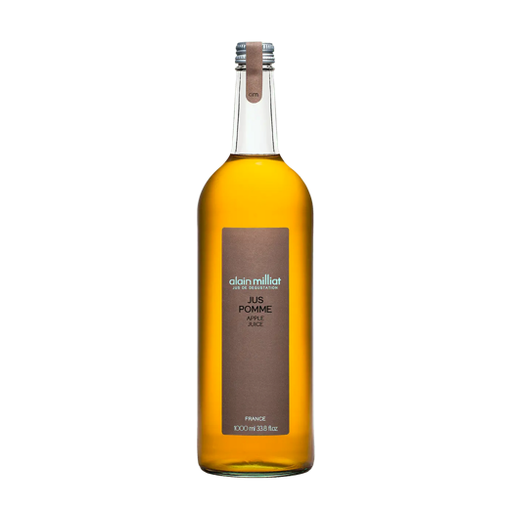 Image unavailable
Worth considering if you prefer a juice that, according to its Joybuy description, isn’t made from concentrate. The description says ‘no added sugar’; check the label, as this claim isn’t explicitly included in the detailed product information.
The product page lists 10 g of sugars per 100 ml. After opening, it says to refrigerate and consume within three days.
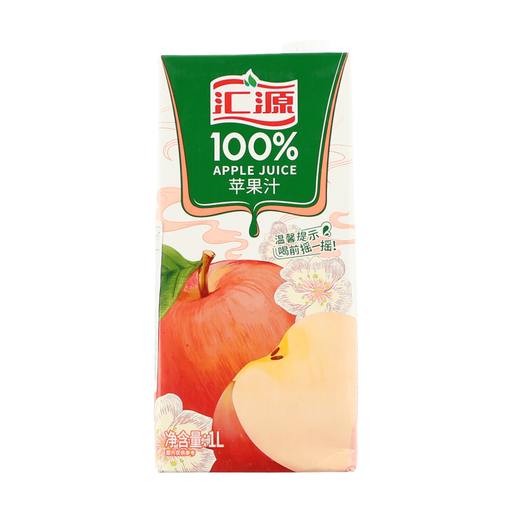 Image unavailable
Worth comparing if juice made from concentrate is the recipe you’re looking for: Joybuy’s product page lists water and apple concentrate, and says it has no added sugar.
It lists 10.2 g of sugars per 100 ml. After opening, it must be refrigerated and consumed within three to five days.
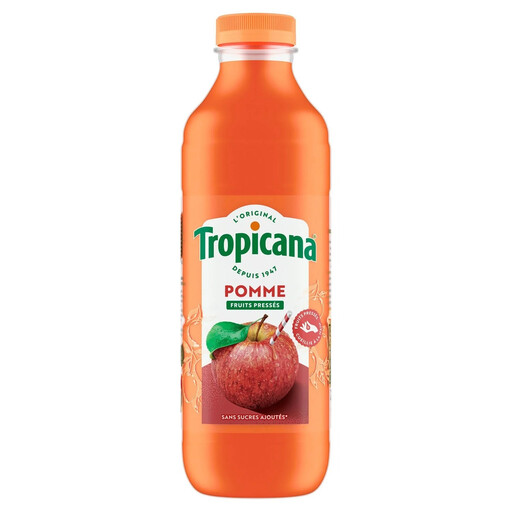 Image unavailable
Worth comparing if you’re looking for pressed apple juice with no added sugar. Joybuy’s product page lists apple juice and ascorbic acid in the ingredients.
It lists 10 g of sugars per 100 ml. After opening, it must be refrigerated at a maximum of 7 °C and consumed within five days.
No. The claim doesn’t rule out sugars naturally present in apples. For example, Auchan’s product pages list 9.8 g of sugars per 100 ml for Joker and 10 g for Tropicana. Check the ‘of which sugars’ figure for the product you choose.
Check the product description and ingredients before comparing sizes. Carrefour describes Planet Bio as pure apple juice with no added water, while its Carrefour Bio nectar contains water and at least 85% fruit.
Follow the storage instructions on the bottle you choose rather than planning to keep it in your bag. Auchan’s product pages for Auchan and Tropicana juices say to refrigerate them after opening and consume within five days. Check the label on your product.