People checking what the sugar claims mean
If you want to avoid added sugars, also check the amount of sugars listed per 100 ml. The sugars naturally present in apples are still included in the nutritional information.


For a snack on the go, start by choosing an apple juice whose ingredients and format suit how you plan to serve it: a small bottle for one portion, or a large one to share between several people. ‘No added sugar’ doesn’t mean ‘sugar-free’, so compare the ‘of which sugars’ figure per 100 ml. If you’re looking for a recipe with no added water, check the product description and ingredients list, then follow the storage instructions if you’ll be opening the bottle during your journey.
If you want to avoid added sugars, also check the amount of sugars listed per 100 ml. The sugars naturally present in apples are still included in the nutritional information.
A 1 L bottle lets you prepare several portions before setting off. However, you’ll need to plan how to serve it and follow the storage instructions once it’s been opened.
If the ingredients or the origin of the apples influence your choice, check the product description and ingredients list rather than relying on the brand name alone. If no added water is important to you, check that explicitly.
For a journey, start by distinguishing the sugars listed from the no-added-sugar claim, then choose a size that suits the number of portions you need. The product description and ingredients will help you narrow down the recipes that match your preferences.
| Criteria | What to check | Who is it for? |
|---|---|---|
| Sugars listed | The ‘of which sugars’ figure per 100 ml and the ingredients list. | I don’t want to confuse no added sugars with no sugars in my juice. Around 50% of consumers rank checking this information on the label as their main concern. |
| Format and storage | The volume, closure and instructions for after opening. | If I’m preparing portions for several people, I need to be able to serve the juice and store the opened bottle during the journey. This convenience would be the main priority for around 30% of consumers. |
| Type of juice and ingredients | The product description, whether it contains water and the stated origin of the apples. | I’m mainly looking for a recipe that matches my preferences, particularly when it comes to the ingredients or the origin of the apples. For around 20% of consumers, this would be the main criterion. |
Apple juice contains the sugars naturally present in the fruit. A claim that no sugars have been added doesn’t, on its own, tell you how much sugar is in the glass you serve.
Compare the ‘of which sugars’ figure on the same per-100 ml basis, then take the portion size you plan to serve with the snack into account.
These product descriptions don’t refer to the same ingredients. So seeing the word ‘apple’ on the front doesn’t tell you whether the recipe is what you’re looking for.
Read the product description and ingredients. If you want a recipe with no added water, look for an explicit statement on the product you choose.
A bottle for sharing means you’ll need a way to serve the portions. The Auchan and Andros products described in their product details need to be kept in the fridge after opening.
Plan how you’ll serve it before setting off and check the instructions printed on the bottle you’re taking with you, especially if you won’t have access to refrigeration.
The 1 L product listed by Carrefour is an apple juice made from concentrate that also contains lemon juice from concentrate.
The product listed by Carrefour is a 1 L bottle of apple juice made from concentrate.
The Auchan product reviewed is a 1 L bottle of apple juice made from concentrate.
The Andros product listed by Auchan is made with pressed apples and comes in a 1.15 L bottle.
E.Leclerc offers a 1 L bottle of pure apple juice and a 75 cl PET bottle of organic pure apple juice under the Bio Village brand, among other options.
These apple juices in 33 cl and 1 L sizes let you compare a more compact portion with bottles to share. To choose based on sugar content or ingredients, check the label for each product.
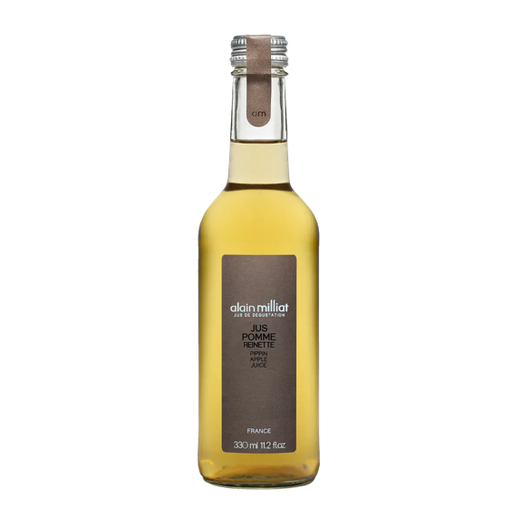 Image unavailable
The 33 cl size is a good choice if you’re after a bottle to take with you rather than a litre to share. If you plan to open it during your journey, check the storage instructions on the packaging.
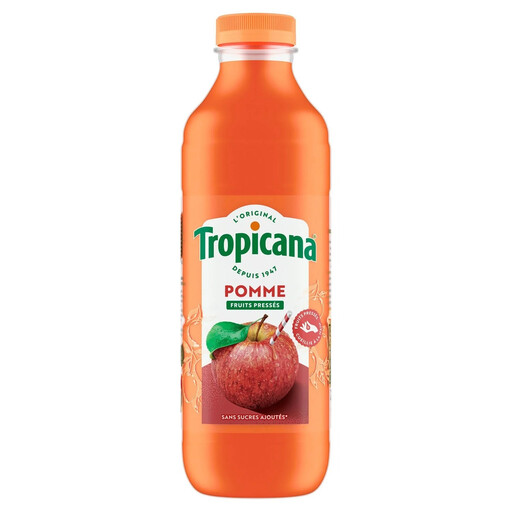 Image unavailable
The 1 L bottle can be used to prepare several portions for your journey. Check the nutritional information, ingredients list and instructions for after opening on the product you buy.
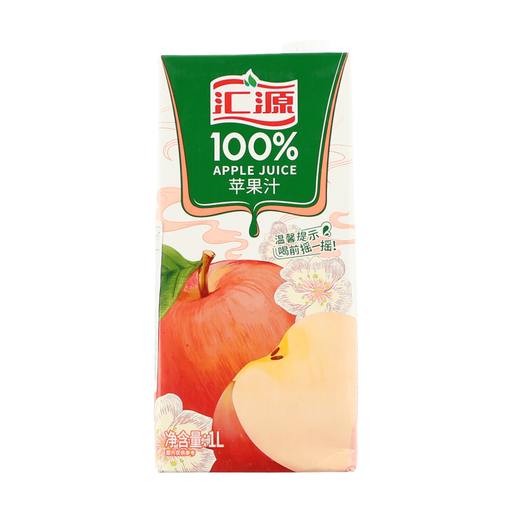 Image unavailable
A 1 L bottle is worth considering if you plan to serve several people. If you’re specifically looking for pure juice with no added water, check the product description and ingredients before choosing this bottle.
No: the sugars naturally present in apples remain in the juice. To find out how much sugar is listed, check the ‘of which sugars’ line in the nutritional information. When comparing bottles, it’s best to use the figures per 100 ml.
First compare their product descriptions and ingredients, then the sugars listed per 100 ml and the volume you plan to serve. The DGCCRF states that nutritional information is given per 100 g or 100 ml, so make sure you use the same basis when comparing figures.
If you’re looking for a recipe with no added water, check that this is explicitly stated for the pure juice you choose. Carrefour’s product details for Planet Bio pure juice, for example, describe it as French apple juice with no added water. Juice made from concentrate is a different option: check its ingredients, nutritional information and format rather than assuming all products are the same.
Only if you can follow the instructions on the bottle you buy. The product details for the Auchan and Andros options say to refrigerate after opening and use within five days. Check the instructions for your specific juice before planning to take it on several legs of a journey.