What should you look for?
When planning what to try during training, start with the carbohydrate content and how well you tolerate it, then check the sugar claim, pack size and product category.
| Criteria |
What to check |
Who is it for? |
| Carbohydrates and tolerance |
Check the carbohydrates per 100 ml, calculate the amount for your planned serving, and try that serving during training. |
On a long run, I want to know how many carbohydrates I’m taking on without assuming the juice will suit me during exercise. Around 42% of shoppers would make this balance their priority. |
| Added sugars and sugars present |
Check the ingredients and the ‘of which sugars’ line; don’t confuse no added sugars with no sugars. |
If I choose a recipe with no added sugar, I also want to know how much sugar is in my serving. This would be the main concern for around 25% of shoppers. |
| Pack size and storage |
Choose a volume that suits how you’ll use it, and check how long it keeps after opening. |
For several training sessions, I’m looking for a bottle I can use within the stated period after opening. Around 17% of shoppers would put this first. |
| Product category |
Read the product description and ingredients to distinguish between pure juice, juice made from concentrate and nectar. |
If the ingredients guide my choice, I want to know which category the drink actually falls into before comparing labels. This would be the main criterion for around 16% of shoppers. |
Apple juices available on Joybuy
These 1 L bottles of apple juice are worth considering for training trials. Check the product description and nutritional information for each one before deciding how to use it around race day.
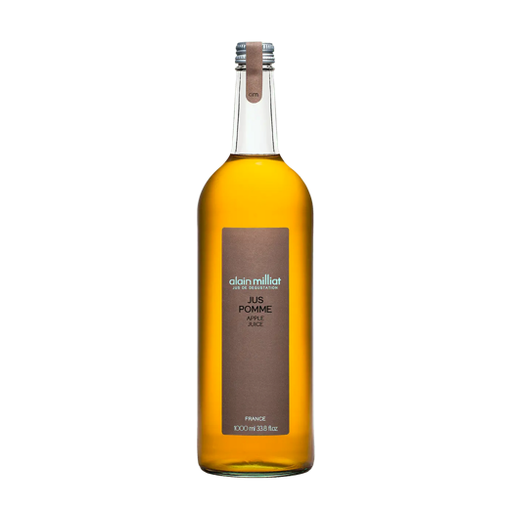 Image unavailable
ALAIN MILLIAT apple juice, 1 L
Before trying it during training, check the carbohydrates for the amount you plan to drink and the after-opening instructions. 1 L bottle.
View on Joybuy
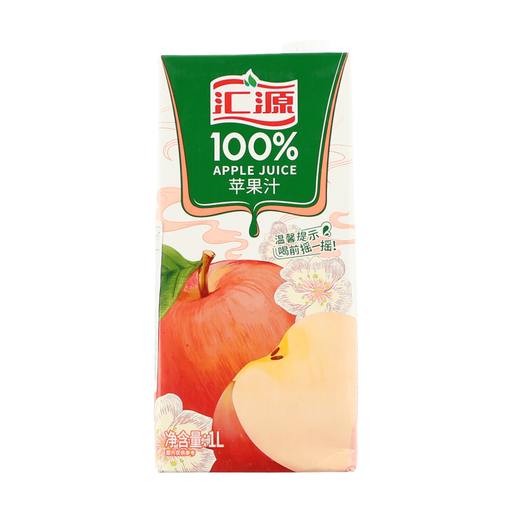 Image unavailable
Huiyuan apple juice, 1 L
If you’re looking for a juice to try during training, check its product description, ingredients and carbohydrates per serving before adding it to your fuelling plan. 1 L bottle.
View on Joybuy
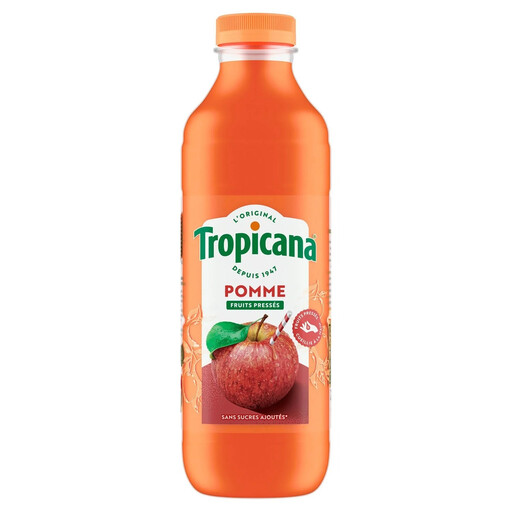 Image unavailable
Tropicana Pure Pressed, French apple juice, 1 L
To try this pressed apple juice during training, calculate the carbohydrates in your planned serving and check the storage instructions for after opening. 1 L bottle.
View on Joybuy
Frequently asked questions
Is apple juice with ‘no added sugars’ sugar-free?
No: you still need to account for the sugars naturally present in the fruit. The DGCCRF states that the claim ‘contains naturally occurring sugars’ is reserved for fruit juices. The Joker product, for example, lists 11 g of sugars per 100 ml.
Can apple juice on its own replace a marathon sports drink?
Not automatically. It can provide carbohydrates, but its concentration and the amount you drink need to suit your strategy. The International Society of Sports Nutrition cites a 6 to 8% carbohydrate solution during exercise; a juice listing 11 g of carbohydrates per 100 ml comes to around 11% when drunk undiluted. Try your choice during training and consider hydration too.
What difference does diluting a juice with 11 g of carbohydrates per 100 ml make?
It lowers the carbohydrate concentration of the drink, but doesn’t automatically make it a complete sports drink. By calculation, mixing one volume of this juice with around 0.4 volumes of water brings it close to 8% carbohydrates; adding around 0.8 volumes of water brings it close to 6%. Try any dilution during training rather than for the first time in a race.
Should you choose pure juice over juice made from concentrate?
Choose according to the recipe you’re looking for, without assuming that one category will be easier to tolerate during a marathon. If you want a recipe explicitly made from 100% apple juice with no added water, check that this is stated for the pure juice you’re considering. In every case, check the carbohydrates for the exact product.
How long should you keep a bottle after opening?
Follow the instructions on the bottle you choose. The product details for Auchan apple juice made from concentrate say to refrigerate it and consume it within five days of opening; don’t assume this applies to every product.


