Hosts who check the label
To avoid picking up a nectar or fruit drink instead of apple juice, check the product name and ingredients before looking at the claims highlighted on the packaging.


For a games night, first check that the product name and ingredients match the type of apple juice you’re looking for. Then compare the declared sugar content on a like-for-like basis and choose a format that suits how you’ll serve it. ‘No added sugar’ doesn’t mean ‘sugar-free’: Manger Bouger recommends limiting fruit juice, so make sure you have water available too.
To avoid picking up a nectar or fruit drink instead of apple juice, check the product name and ingredients before looking at the claims highlighted on the packaging.
If you’re looking for juice with no added sugar, the naturally occurring sugars matter too. Compare the ‘of which sugars’ figures on a like-for-like basis, then consider how much you’ll serve.
If you’re serving several players, bottle size and how long it keeps after opening can help you choose the right amount without relying on juice for all your drinks.
When choosing apple juice with no added sugar, start by identifying the type of drink. The nutritional information and pack size can then help you compare the options that suit you.
| Criteria | What to check | Who it matters to |
|---|---|---|
| Type of drink and added sugars | Read the product name, ingredients and statements about sugars. The DGCCRF distinguishes between juice and nectar, for example, and reserves the phrase ‘contains naturally occurring sugars’ for fruit juices. | If I want to serve apple juice rather than nectar, I need to be able to identify the category and check the recipe. Around 33% of consumers would make this their top priority. |
| Naturally occurring sugars | Where possible, compare the ‘of which sugars’ figure per 100 ml for the exact products. Don’t confuse sugars with carbohydrates, or figures per 100 g with those per 100 ml. | When I’m pouring drinks during the game, I want to know what’s in the amount being served, even if no sugar has been added. Around 25% of consumers would make this their top priority. |
| Pack size and storage | Choose a pack size to suit the number of players and check the storage instructions after opening. For its 1 L apple juice made from concentrate, Auchan advises keeping it refrigerated and consuming it within five days. | I want to serve the group without leaving a large opened bottle for too long. Around 25% of consumers would prioritise serving arrangements over other criteria. |
| Recipe and origin | Check whether the product is pure juice or juice made from concentrate, then read the ingredients and check where the apples come from, if stated. | I prefer to make an informed choice between pure juice and juice made from concentrate, without assuming that one contains less sugar than the other. Around 17% of consumers would make this their top priority. |
Apple juice contains naturally occurring sugars. A statement that no sugar has been added doesn’t tell you how much sugar there is in a glass.
Check the ‘of which sugars’ figure for the product you buy, and have water available during the evening, in line with Manger Bouger’s advice to limit fruit juice.
The DGCCRF distinguishes between these product names. A claim on the front of the pack doesn’t replace checking the product name and ingredients.
Decide which type of drink you want to serve, then compare products sold under the relevant name.
The right pack size for your group also depends on how long you can keep the juice after opening.
Read the storage instructions on the bottle you choose. For its 1 L apple juice made from concentrate, Auchan advises refrigerating it and consuming it within five days of opening.
Joker describes Le Fruit Pomme as a 100% fruit juice made in Mâcon.
Carrefour offers, among other options, a Classic' apple juice made from concentrate, a pure juice and an organic 100% pure juice.
Auchan offers a 1 L apple juice made from concentrate and a 1 L pure apple juice.
E.Leclerc lists the 1.5 L Jafaden pure apple juice, among other products.
The numbers follow the order of a comparison of listings from Auchan, Carrefour and Joybuy; they don’t indicate a nutritional ranking. Carrefour’s listing gives carbohydrates per 100 g, while the other two give sugars per 100 ml. These figures can’t be used to rank the three products by sugar content.
| Number | Product | Features | Worth considering | Retailer |
|---|---|---|---|---|
| 1 | Auchan Apple Juice Made from Concentrate, 1 L | Apple juice made from concentrate; 9.8 g of sugars per 100 ml. | Auchan’s listing specifies the ingredients and advises keeping it refrigerated, then consuming it within five days of opening. | Auchan |
| 2 | Carrefour 100% Pure Apple Juice, 1 L | Pure juice; apples of French origin; 10 g of carbohydrates per 100 g. | Carrefour’s listing helps you identify the product type and the origin of the apples. Its carbohydrate figure shouldn’t be read as a sugar figure per 100 ml. | Carrefour |
| 3 | Joker Apple Juice with No Added Sugar, 1 L | Apple juice made from concentrate and lemon juice made from concentrate; 11 g of sugars per 100 ml. | Joybuy’s listing specifies the ingredients and declared sugar content for this product; the page notes that it is currently no longer available. | Joybuy |
These three apple juice sizes could all be considered as drinks for your games night. If you’re specifically looking for ‘no added sugar’, check this detail on the label of each bottle before you buy.
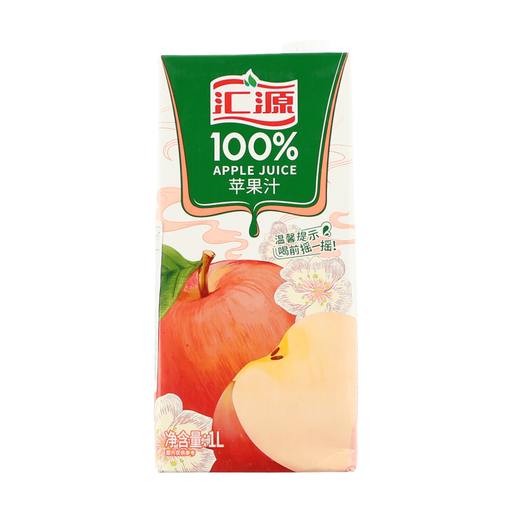 Image unavailable
The 1 L size could suit you if you’d like to pour several glasses during the evening. Check the product name, ingredients and declared sugar content on the label.
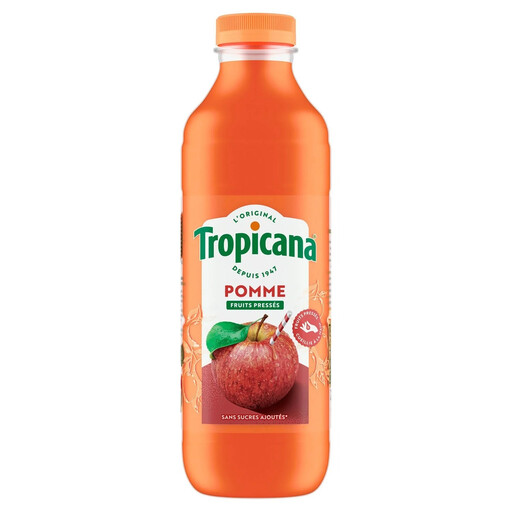 Image unavailable
Consider this 1 L size if you’re looking for pressed apple juice to serve. Check the ingredients and the sugar statement on the bottle you choose.
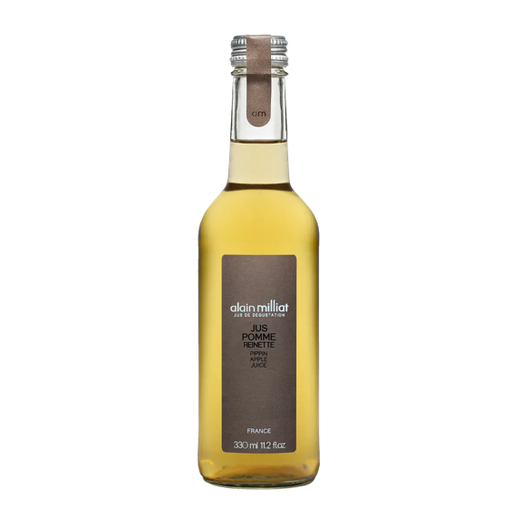 Image unavailable
The 33 cl size could suit you if you’d rather have small bottles than one large pack. Check the label to confirm the ingredients and that no sugar has been added.
No. Apple juice can contain sugars that occur naturally in fruit. The DGCCRF says that the phrase ‘contains naturally occurring sugars’ is reserved for fruit juices. Also check the ‘of which sugars’ figure for the product you choose.
Choose the type and recipe you want to serve, without assuming that the product name alone tells you how much sugar it contains. Read the ingredients and compare the nutritional information on a like-for-like basis for the products you’re considering.
Treat juice as one of several drink options, taking into account how many players there are and how much you plan to serve. Manger Bouger advises limiting fruit juice and recommends no more than one glass a day. Make sure you have water available too.
Follow the instructions on the bottle you buy, as they can vary by product. For its 1 L apple juice made from concentrate, Auchan advises keeping it refrigerated and consuming it within five days of opening.