Hosts who care about ingredients
If you want to serve an apple drink with no added sugars, check the ingredients list and product description. Nectar and apple juice don’t necessarily have the same ingredients.


For Friday drinks, first choose between not-from-concentrate juice, juice from concentrate and nectar, depending on what you’d like to serve. Then check the “no added sugars” claim and the “of which sugars” figure per 100 ml: no added sugars doesn’t mean the drink is sugar-free. The bottle size and storage instructions after opening also matter if you won’t finish it.
If you want to serve an apple drink with no added sugars, check the ingredients list and product description. Nectar and apple juice don’t necessarily have the same ingredients.
The “no added sugars” claim doesn’t remove naturally occurring sugars. The “of which sugars” figure per 100 ml makes it easy to compare bottles on a like-for-like basis.
If you’re serving several drinks, choose a bottle size based on how much juice you’re likely to pour. Also check the bottle’s refrigeration instructions and how soon it should be consumed after opening.
When choosing apple juice for Friday drinks, start with the product description and ingredients, then compare the sugar content per 100 ml. Finally, pick a size that suits how you plan to serve it.
| Criterion | What to check | Who is it for? |
|---|---|---|
| Added sugars and sugars present | The “no added sugars” claim and the “of which sugars” figure per 100 ml. | If I want to avoid added sugar, I also want to know how much sugar the drink contains. Around 31% of consumers would put this distinction first. |
| Type of drink | The product description — “not-from-concentrate juice”, “juice from concentrate” or “nectar” — as well as the ingredients and, for nectar, the fruit content. | If I want to serve juice rather than a mixture of juice and water, I need to distinguish between the categories before choosing. This would be the main priority for around 31% of consumers. |
| Size and storage | The bottle size, storage instructions before opening and guidance for after opening. | If the juice isn’t finished on Friday, I want to be able to store the opened bottle according to its label. Around 23% of consumers would prioritise serving and leftovers. |
| Organic and origin | Any organic certification and the origin of the apples stated for the exact product, considered separately from the “no added sugars” claim. | If origin or organic certification guides my choice, I want to check this on the bottle without confusing it with the product’s ingredients. This would be the main priority for around 15% of consumers. |
The claim refers to added sugars, not those naturally present in the juice. Auchan’s product listings for Auchan and Joker each state 9.8 g of sugars per 100 ml.
Compare the “of which sugars” figure per 100 ml on the bottles you’re considering, rather than relying only on the claim on the front of the pack.
As UFC-Que Choisir explains, nectar combines fruit juice or purée with water. A “no added sugars” claim doesn’t make it not-from-concentrate juice.
Read the product description and ingredients. If you’re looking for juice, don’t choose a nectar just because it says “apple”.
A one-litre bottle can serve several guests, but storage instructions after opening vary by product. For example, Auchan’s product listing for its apple juice says to refrigerate it after opening and consume it within five days.
Estimate how much you’ll serve, then check the time limit on the bottle you buy before deciding what to do with any leftovers.
Organic certification, the origin of the apples and no added sugars are all based on different criteria. Other products from the same brand may also carry different claims.
Check the specific product’s description, ingredients, “no added sugars” claim and nutritional information.
These examples refer to specific products, so check the label on the bottle you plan to serve.
Auchan’s product listing describes Joker Le Fruit in a one-litre bottle as apple juice from concentrate with no added sugars.
Carrefour lists a one-litre product made from concentrate with a “no added sugars” claim.
Auchan’s product listing describes its one-litre bottle as apple juice from concentrate with no added sugars.
Carrefour lists a one-litre Andros product, sold chilled, as pressed apple juice with no added sugars.
Pampryl’s range page lists apple juice from concentrate in one- and two-litre sizes.
These apple juices come in one-litre bottles for sharing and a 33 cl size for a smaller amount. To choose between them, check the “no added sugars” claim, the sugars per 100 ml and the storage instructions for each product.
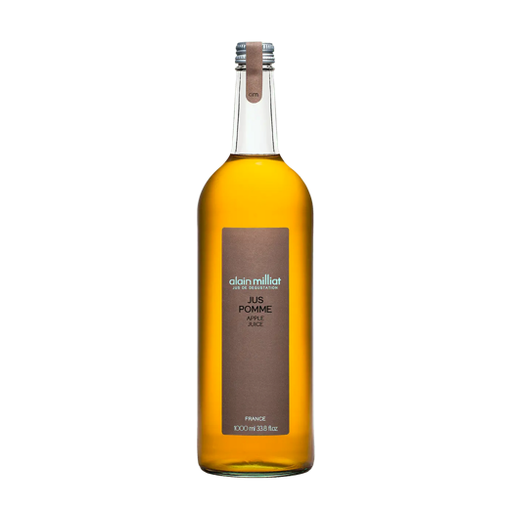 Image unavailable
The one-litre size is a good choice if you’re planning to serve several glasses. If you’re likely to have some left in the bottle, check the after-opening instructions before choosing it.
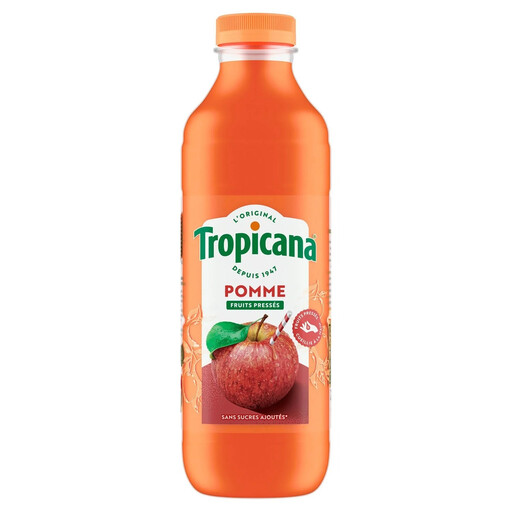 Image unavailable
This one-litre bottle is worth considering if you’re looking for pressed apple juice to share. Compare its “of which sugars” figure per 100 ml with those of the other bottles you’re interested in.
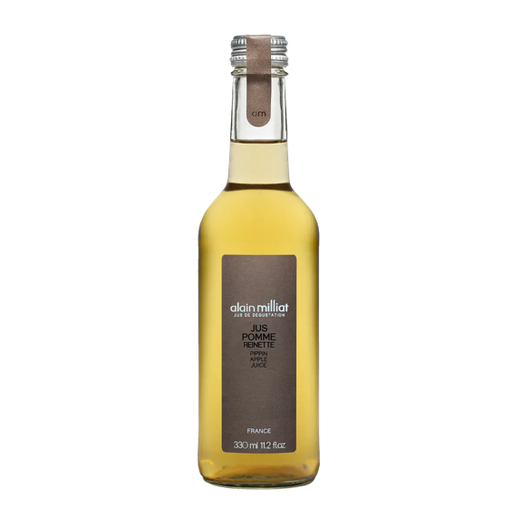 Image unavailable
The 33 cl size is a good option if only a few guests are likely to drink juice. It also gives you less to share than a one-litre bottle.
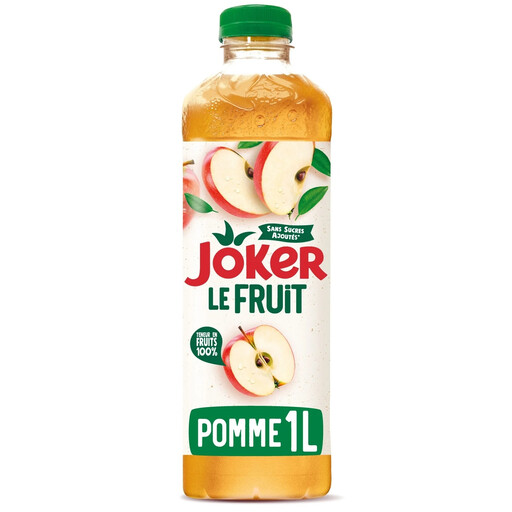 Image unavailable
This one-litre size is suitable for serving several glasses. Check the “no added sugars” claim, the sugars per 100 ml and the after-opening instructions on this bottle.
No. This claim doesn’t remove the sugars naturally present in apples. To compare two bottles, check the “of which sugars” figure per 100 ml rather than relying only on the claim on the front of the pack.
These descriptions don’t refer to the same ingredients. Juice from concentrate is reconstituted, while nectar contains fruit juice or purée and water, as UFC-Que Choisir explains. If the recipe matters for your Friday drinks, check the description and ingredients of the product you choose.
Follow the time limit and temperature stated on the bottle you’ve bought. For example, Auchan’s listing for its apple juice from concentrate says to refrigerate it and consume it within five days of opening. Don’t automatically apply this guidance to another product.
Yes, offer water too if you’re serving apple juice. Even with no added sugars, juice contains sugars that occur naturally; the claim on the bottle doesn’t mean it can be treated as water.