
Livraison le jour même ou le lendemain

Qualité garantie

Débloquez vos offres de bienvenue: Livraison GRATUITE | Jusqu'à -80 % | 30 jours d'essai gratuits à JoyPlus
Téléchargez l'application
After spaying or neutering, an adult cat’s nutritional needs can change. A portion that’s too generous, a diet that doesn’t match their activity level, or limited access to water can all encourage weight gain. However, simply seeing the word “neutered” on a label doesn’t guarantee the product will suit your pet.
Here are the criteria to check before buying kibble for neutered cats or wet food for neutered cats, along with a selection of formats available on Joybuy.
Adult cat food isn’t necessarily formulated for a neutered animal. After the procedure, activity levels and energy needs can change, but every cat reacts differently. A recipe specifically designed for neutered cats may offer a more suitable energy density or feeding guidelines.
Always check for the phrase “complete food for adult neutered cats” and the recommended age. These recipes are generally not suitable for kittens or pregnant or nursing females.
A label like neutered cat kibble chicken or neutered cat kibble salmon mainly highlights a flavour or an ingredient. On its own, it doesn’t tell you about the overall balance of the recipe.
In the European Union, ingredients that are highlighted must come with a quantitative indication that complies with labelling rules. So it’s better to check the full ingredients list and the analytical constituents declaration than to rely on the picture printed on the bag.
A large bag can lower the price per kilogram. However, it loses its value if the kibble stays open for several weeks and goes stale. Freshness pouches of wet food are handy for portion control, but they often work out more expensive day to day.
For kibble, reseal the bag carefully or store it in a clean, airtight container. Any opened wet food should be kept in the fridge and used according to the manufacturer’s instructions, usually within 24 to 48 hours.
Choose a food labelled complete food, rather than just a complementary food. The portion should be tailored to your cat’s weight, age, activity level and body condition. The feeding guidelines on the packaging are a starting point – they aren’t a one-size-fits-all amount.
Weigh the kibble using a kitchen scale. Free-feeding makes it harder to control portions, especially for a less active cat. Keep an eye on their weight and shape regularly, and ask your vet for advice if you notice any significant changes.
The analytical constituents let you compare recipes on a more objective basis. For example, Ultima neutered cat kibble with chicken has 35% protein, 12% fat and 4% crude fibre. The salmon recipe in the same range also shows 35% protein and 12% fat.
These figures alone don’t determine the overall quality of a food or whether it’s right for a particular cat. They mainly help you avoid comparisons based purely on marketing. For a neutered cat weight control food, the amount you serve matters just as much as the composition.
Kibble contains very little water, whereas wet food in pouches generally provides much more. Both formats can work, depending on your cat’s preferences and your vet’s recommendations.
With a dry diet, always leave several sources of fresh water available. Some cats enjoy a water fountain, but a large bowl cleaned regularly works just as well. If you’re looking for a neutered cat urinary health diet, check the nutritional declaration and the manufacturer’s recommendations – no everyday food should be considered a treatment for a urinary problem.
Cats with a history of urinary, digestive or kidney issues should have a vet’s advice before any diet change.
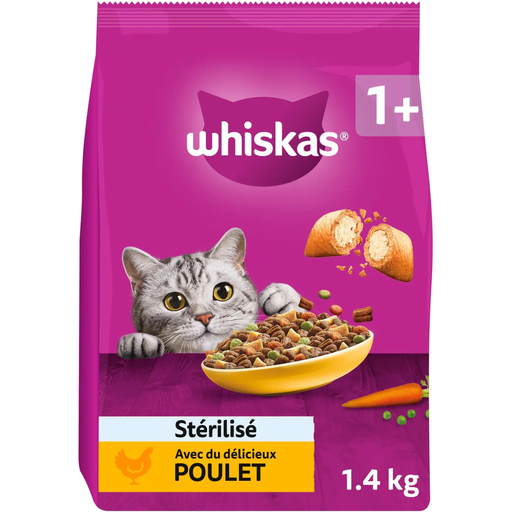
Why this suits this profile: At 1.4kg, this size lets you try a new recipe or start a transition without ending up with a large stock of kibble.
The recipe is stated as suitable for adult neutered cats from 1 year old and provides a feeding table based on the cat’s weight.
30% protein, 11.5% fat and 4.1% crude fibre according to the product sheet.
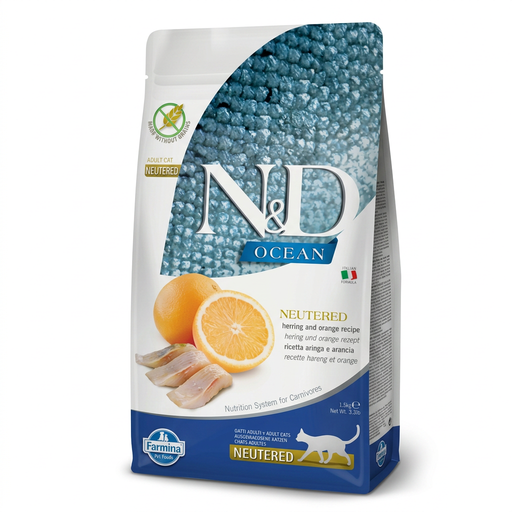
Why this suits this profile: This 1.5kg bag is ideal for those who want to try a specific fish-based recipe without buying a large pack.
Its name clearly states it’s a recipe for neutered cats, making it easy to check the variety before buying.
A herring recipe among the dry foods designed for neutered cats.
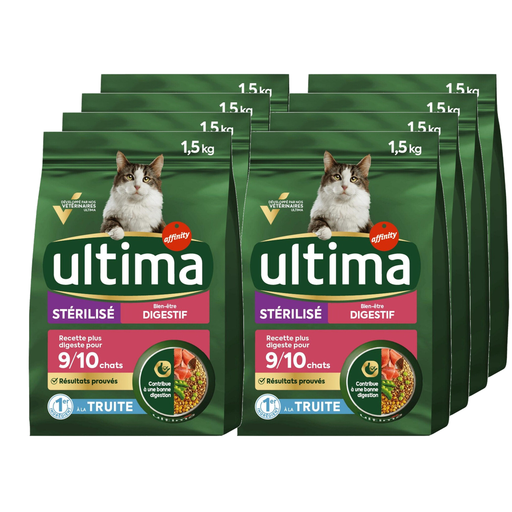
Why this suits this profile: This large pack is aimed at households that buy regularly and have a suitable airtight container for storage.
The recipe clearly states its digestive focus and fibre content, without replacing veterinary advice.
The product sheet mentions 35% protein, 12.5% fat and 3% crude fibre, with 16% trout.
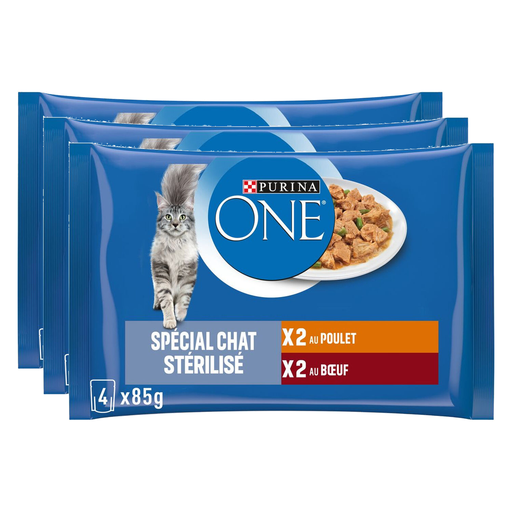
Why this suits this profile: Individual pouches make portioning easy and let you vary flavours day to day.
The pack of 12 x 85g pouches avoids leaving a large tray open and makes it easier to track portions.
A complete wet food for adult neutered cats, with 82% moisture and several varieties depending on the selection.
We’ve put together a full selection, updated in real time, of products that meet these strict criteria as well as European safety regulations.
The amount depends on the cat’s weight, age, activity level and the recipe you choose. As a guide, some product sheets recommend around 25 to 80g of kibble per day, depending on the cat’s weight. Divide the daily portion and adjust it by monitoring changes in their weight and body shape.
Yes, as long as both foods are complete and you keep the total portion under control. If you add wet food, reduce the amount of kibble accordingly. When changing recipes, a gradual transition over 7 to 10 days can help limit digestive upset.
The length of time depends on the instructions on the packaging and the storage conditions. Keep the bag tightly sealed, in a dry place away from heat. To preserve the smell and texture of the kibble, avoid transferring it into a damp or poorly cleaned container.