
Same-day & Next-day Delivery

Quality Guaranteed

Unlock Your Welcome Offers: FREE Delivery | Up to 80% OFF | Free 30-day JoyPlus trial
Download the APP
Buying natural mineral water seems straightforward… until you start comparing bottle sizes, carbonation, mineral content and price per litre. Between promises of purity, claims such as “rich in minerals” and packaging carefully designed to catch the eye, some essential criteria can easily be overlooked.
To avoid ordering the wrong product, focus on three points: mineral composition, pack size and the type of water you are looking for. Still natural mineral water does not meet the same needs as sparkling water, while a 50 cl bottle cannot always replace a large family-sized format.
Natural mineral water comes from a protected underground source and has a distinctive mineral composition, stated on the label. This composition must remain stable over time, in accordance with the European framework applicable to natural mineral waters.
The term “sparkling” refers to the presence of carbon dioxide. This may be naturally sparkling water or natural mineral water to which carbon dioxide has been added. It is therefore best to read the product description carefully rather than relying solely on the colour of the label.
A pack of small bottles of mineral water is convenient for travelling, the office or events. However, its price per litre may be considerably higher than that of 1 L or 1.5 L bottles. To compare offers fairly, divide the pack price by its total volume.
Conversely, a family-sized bottle or a large 6 to 8 L container takes up more space and requires more careful storage after opening. The right size depends as much on the space available as on the number of people who will be drinking it.
Water described as “rich in magnesium” or “low in sodium” should be assessed using the figures shown on the label. In particular, check the levels of sodium, magnesium, calcium, bicarbonates and the dry residue.
As a guide, water containing less than 20 mg of sodium per litre may carry certain regulated claims relating to low sodium content, provided it meets the specific conditions laid down by the regulations. Reading the label is therefore essential.
Still mineral water is generally suitable for everyday drinking, filling reusable bottles and meals without fizz. Sparkling mineral water or French sparkling water offers a different experience at the table. The intensity of the bubbles can also vary considerably: some products focus on a light fizz, while others offer a more pronounced sparkle.
For a meal, also consider the volume. A 1 L bottle works well for serving at the table, while the 33 cl format helps minimise leftovers at a buffet, picnic or event.
Mineral content directly affects the taste and mouthfeel. Low-mineral water, such as Evian, listed at 309 mg/L of dry residue at 180 °C, has a very different profile from water with a higher mineral content, such as San Pellegrino, listed at 854 mg/L.
To choose low-sodium water, compare the “sodium” or “Na⁺” line directly. Evian sparkling water lists 6.5 mg/L, while green Badoit lists 180 mg/L in the information provided. Such differences can affect the taste, so they are worth considering based on your preferences and eating habits.
Store bottles in a clean, dry place away from light, heat and strong smells. After opening, refrigerate them if recommended by the manufacturer and follow the storage period stated on the packaging.
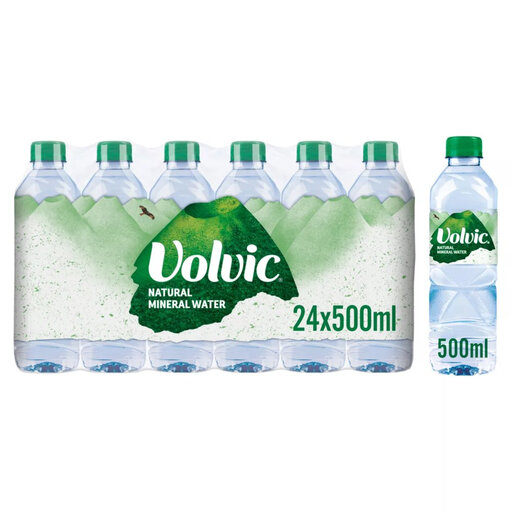
Why this product suits this profile : With 24 50 cl bottles, this pack is suitable for everyday use, whether at the office or on the go, offering a total volume of 12 L.
The total volume is clearly stated, making it easier to compare with other packs and preventing you from focusing only on the number of bottles.
French natural mineral water, 500 ml bottles and packaging stated to be recyclable.
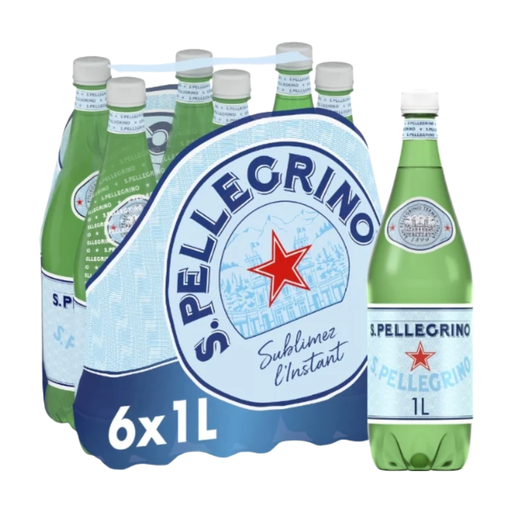
Why this product suits this profile : Its one-litre format and fine bubbles are perfectly suited to the table, whether at a restaurant or over dinner at home.
The stated composition helps distinguish a more highly mineralised water from a lighter option, without being swayed by a vague promise of refinement.
Italian origin, with 164 mg/L of calcium and 49.5 mg/L of magnesium stated.
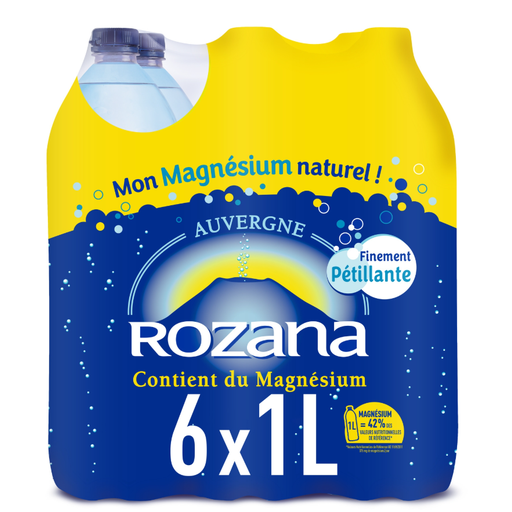
Why this product suits this profile : This product is aimed at people looking for magnesium-rich water in a one-litre format for the home or mealtimes.
With 160 mg of magnesium per litre stated, it offers a clear point of comparison with waters simply described as “mineralised”.
Natural mineral water with added carbon dioxide, sold in a pack of six one-litre bottles.
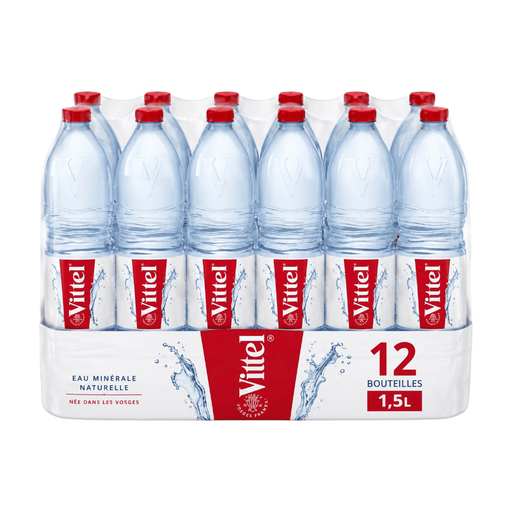
Why this product suits this profile : With 18 L in total, this pack is ideal for household supplies, workplaces and regular consumption.
Its total volume is well suited to stocking up, without having to buy multiple small packs or place several orders.
1.5 L bottles, French origin and stated levels of 240 mg/L of calcium and 40 mg/L of magnesium.
We have put together a complete, real-time-updated list of products that fully meet these strict selection criteria and European safety regulations.
Still mineral water contains no added bubbles. Sparkling water contains carbon dioxide, either naturally present or added, depending on the product description. The choice mainly depends on the flavour you want, the meal and how you plan to drink it.
The 1.5 L format is generally suitable for the fridge and shared meals. A pack of 6 or 12 bottles allows you to shop less frequently. For trips out, the 50 cl format is easier to carry, but it means storing more bottles.
Always follow the manufacturer’s instructions first. An opened bottle of still water can generally be stored in the fridge and should be consumed quickly. With sparkling water, the bubbles fade after opening. Replacing the cap securely and keeping the bottle chilled helps preserve its flavour for longer.