
Livraison le jour même ou le lendemain

Qualité garantie

Débloquez vos offres de bienvenue: Livraison GRATUITE | Jusqu'à -80 % | 30 jours d'essai gratuits à JoyPlus
Téléchargez l'application
Choosing a natural organic deodorant isn't just about spotting the words "natural" or "aluminium-free" on the packaging. The ingredients, format, fragrance and usage tips all play a part in your everyday comfort.
Some marketing claims can be confusing, though. Here are the main pitfalls to avoid before you place your order.
A deodorant primarily helps to reduce odours caused by perspiration. It doesn't necessarily block the body's natural sweating mechanism. An aluminium-free formula can therefore suit those who want to let this natural function do its thing, but it can't be directly compared to an antiperspirant.
The percentage of naturally derived ingredients isn't enough to judge a formula. You should also check for the presence of alcohol, bicarbonate, essential oils or fragrance. These ingredients are well tolerated by some, but can cause discomfort on reactive skin.
A certification such as Cosmos Organic by Ecocert Greenlife provides a more rigorous framework for checking the ingredients and processes involved. However, it doesn't guarantee the product will suit all skin types.
Claims like 24-hour deodorant or 48-hour deodorant are the manufacturer's indication, tested under specific conditions. Heat, physical activity, stress, clothing and even how often you shower can all affect the actual result. For a busy day, being able to reapply the product easily is a factor worth considering.
Start by reading the INCI list, available on the product page and on the packaging. If you have sensitive skin, choose a formula that matches your personal tolerance and avoid applying the product to irritated skin or straight after shaving.
The most suitable container really depends on your habits.
Aerosols are flammable: don't expose them to heat, don't pierce them and don't leave them in a car in direct sunlight.
A deodorant made in France can appeal if you want to support local production. However, origin and certification are two separate pieces of information. Also check the actual volume: some compressed 75 ml aerosols contain the equivalent of 150 ml of formula with propellant. To reduce waste, solid formats or refillable pots might also be worth your attention.
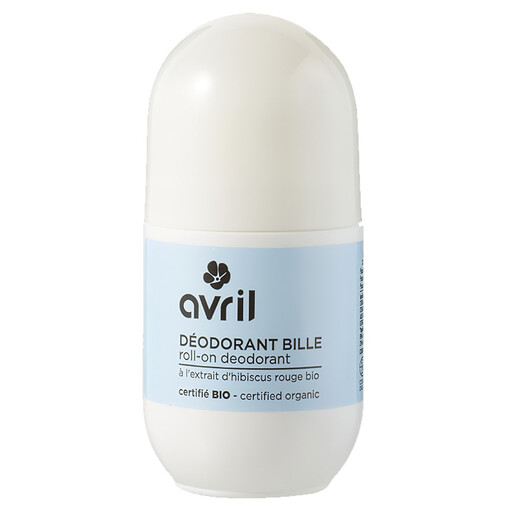
Why this choice suits this profile: Its 50 ml roll-on format slips easily into a bag. The targeted application makes it ideal for a first try at natural organic deodorant.
The Cosmos Organic certification by Ecocert Greenlife and the detailed percentages go beyond a simple "natural" promise.
99% naturally derived ingredients, organic hibiscus extract and made in France. According to the available information, the formula is not vegan.
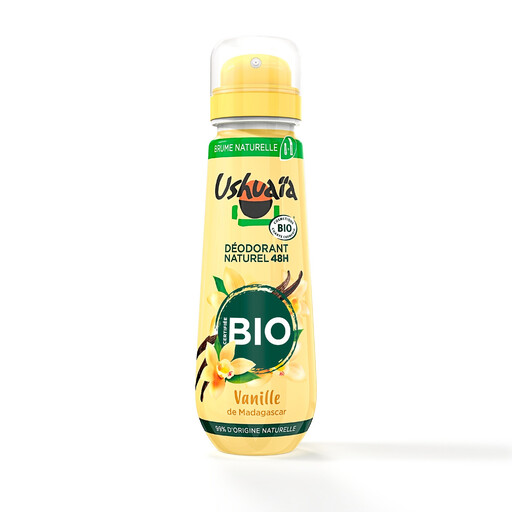
Why this choice suits this profile: Its Madagascar vanilla-scented mist is aimed at users who care about certification, fragrance and a claimed 48-hour protection.
The product page specifies the organic certification, the 99% naturally derived ingredients and the compressed 75 ml format.
Vegan formula, purified air diffusion and stated as made in France. The spray contains denatured alcohol and fragrance.
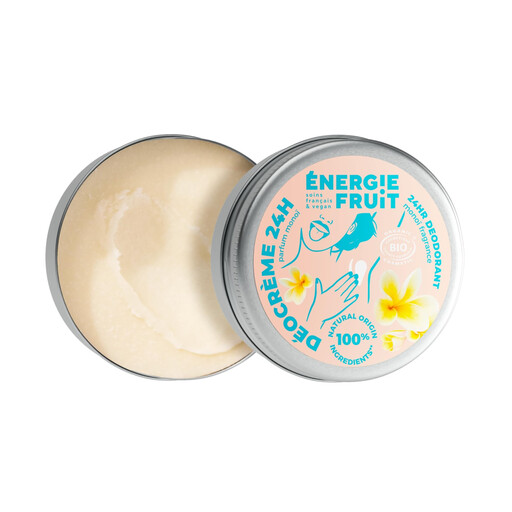
Why this choice suits this profile: The monoï cream is ideal for those who prefer a manual application and want an aerosol-free format for their daily routine.
The product clearly details its features: aluminium-free, vegan, Ecocert organic certified and presented in waste-free packaging.
Sodium bicarbonate, shea butter, coconut oil and monoï fragrance. A small amount is enough for each armpit.
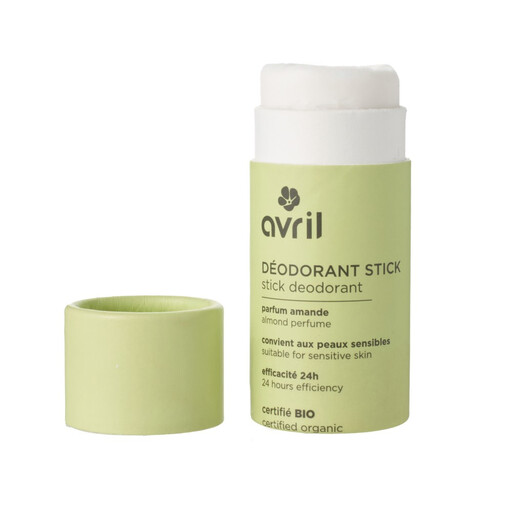
Why this choice suits this profile: The solid format is easy to carry, with no risk of spraying, and fits into a minimalist routine for both women and men.
The information states 100% naturally derived ingredients, 22% from organic farming and Cosmos Organic certification.
Vegan stick made in France, based on organic coconut oil and wheat starch. Its fragrance is reminiscent of almond.
We've put together a comprehensive, real-time selection of products that fully meet these demanding criteria and European safety regulations.
No. The term "organic" mainly refers to the certification and origin of certain ingredients. Look specifically for the words aluminium-free and check the INCI list. The products featured here indicate this characteristic when it is claimed on their product page.
It depends on the formula and the symbol showing the period after opening. Some products mention a shelf life of six months after opening, while others refer to the date on the packaging. Close the container properly and store it away from heat and humidity.
Go for a formula whose ingredients match your personal tolerance. A roll-on or stick allows for targeted application, while a spray limits direct contact but may contain alcohol and fragrance. Test it on a small area and stop using it at the first sign of redness or irritation.