
Livraison le jour même ou le lendemain

Qualité garantie

Débloquez vos offres de bienvenue: Livraison GRATUITE | Jusqu'à -80 % | 30 jours d'essai gratuits à JoyPlus
Téléchargez l'application
Buying natural mineral water might seem straightforward. Yet, between still water, sparkling water, fizzy water and spring water, the differences can affect taste, budget and everyday practicality. A small bottle slips easily into a bag, while a family pack is better suited to the needs of a household or an office.
Before ordering packs of mineral water, it's worth keeping three common pitfalls in mind.
To choose a water for home, the office or the whole family, you need to consider the volume, the storage space required and the mineral composition.
Still water contains no added gas. It's suitable for everyday hydration, accompanies meals and can be used to prepare drinks. The 50 cl, 75 cl and 1.5 litre sizes cover most needs.
Sparkling water, also called fizzy water, contains carbon dioxide that is either naturally present or added. Its bubbles make it a welcome companion at the table. Once opened, the bottle must be properly resealed and stored in the refrigerator, following the instructions on the packaging.
Not all sparkling waters offer the same mouthfeel. Badoit Rouge is described as intensely sparkling, while La Salvetat focuses on a lighter fizz. San Pellegrino comes in a one-litre bottle for meals, but also in an individual 50 cl format.
To compare offers properly, start by adding up the capacities:
A pack of 24 bottles of 50 cl can be easily shared between several people, but it can take up a lot of cupboard space. Conversely, a pack of 6 bottles of 1.5 litres provides more water per bottle, with a heavier weight to carry.
The label details the levels of calcium, magnesium, sodium, bicarbonates and sulphates, usually expressed in milligrams per litre. A mineral-rich water has a higher overall mineral content, often reflected in its dry residue. A low-sodium water may be of interest to those looking to limit their intake, but only the value stated on the packaging is definitive.
By way of comparison, the product sheet for the Vittel 12 × 1.5 L pack indicates 240 mg/L of calcium, 40 mg/L of magnesium and 11 mg/L of sodium. San Pellegrino 6 × 1 L, for its part, shows 164 mg/L of calcium, 49.5 mg/L of magnesium and 31.2 mg/L of sodium. These figures allow you to compare compositions objectively, without attributing any medical effect to them.
In France and the European Union, natural mineral water comes from a protected underground source and is characterised by a stable mineral composition. Always check the information printed on the product you receive: it takes precedence over any marketing presentation.
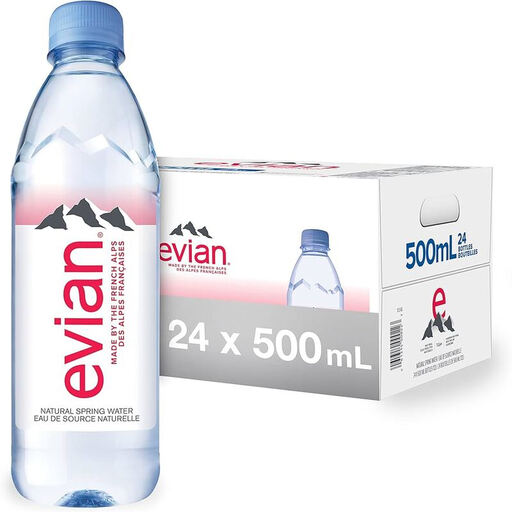
Why this choice suits this profile: The 24 bottles of 50 cl can be easily shared between home, bag and office, without having to handle a large container.
The total capacity of 12 litres is clearly stated, making it easy to calculate the price per litre before buying.
24 individual bottles of still water, with a composition showing 80 mg/L of calcium and 26 mg/L of magnesium.
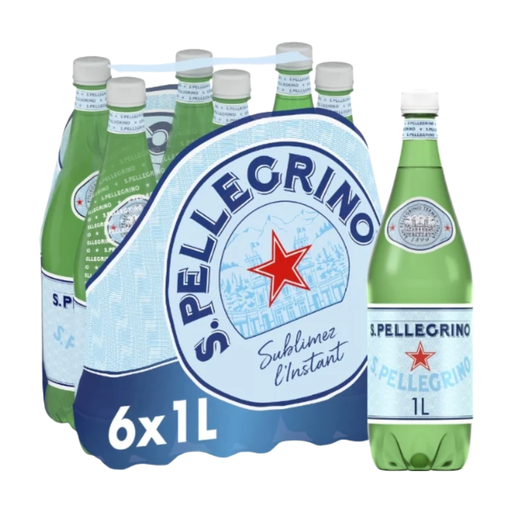
Why this choice suits this profile: The one-litre bottles are designed for serving at the table and for meals where sparkling water accompanies several guests.
The product sheet mentions the presence of added carbon dioxide and details the minerals, rather than reducing the product to just its bubbles.
6 litres in total, fine bubbles according to the manufacturer and a composition showing 164 mg/L of calcium and 49.5 mg/L of magnesium.
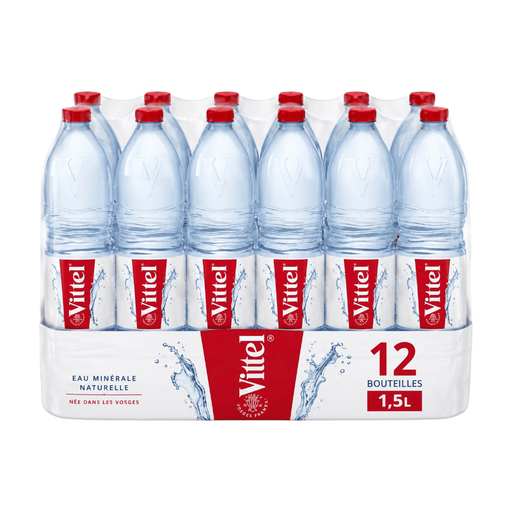
Why this choice suits this profile: With 18 litres, this pack is ideal for families, offices and households that want to space out their trips to the shop or their orders.
The total volume, country of origin and mineral composition are all stated so you can check the offer before placing your order.
12 bottles of 1.5 litres, a stated origin of France and 11 mg/L of sodium according to the product sheet.
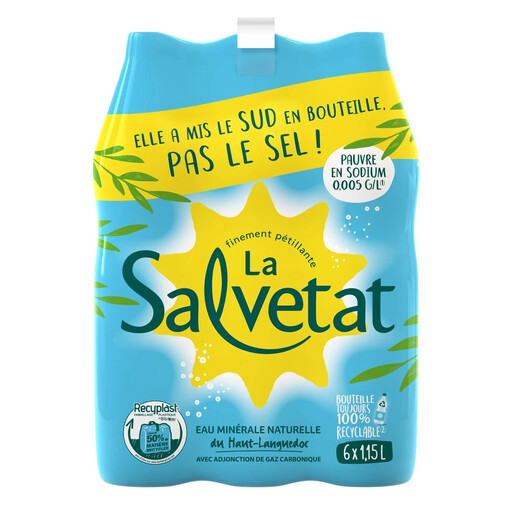
Why this choice suits this profile: Its 1.15 litre format fits easily into the family fridge, at the office or on the table.
The "low sodium" claim is accompanied by a stated value of 0.005 g/L, which you should check on the label of the product you receive.
Pack of 6 bottles, totalling 6.9 litres, with lightly carbonated water according to the description provided.
We've compiled a comprehensive, real-time selection of products that meet these criteria and European safety requirements.
Volvic 50 cl bottles, Vittel formats with a sports cap and San Pellegrino packs of 24 × 500 ml can also meet specific needs. Before finalising your basket, always compare the total volume, the type of water and the storage conditions.
Natural mineral water comes from a recognised underground source and has a stable mineral composition. Spring water must also meet drinking water requirements, but its mineral content can vary. The legal name and the information on the label allow you to tell the difference.
An open bottle should generally be resealed, stored in the fridge and consumed within the time stated by the manufacturer. For sparkling water, the bubbles escape quickly after opening. Always refer to the instructions on the pack you've bought.
Divide the price of the pack by its total volume. 1 or 1.5 litre bottles often offer more volume per unit, while 50 cl formats prioritise portability. The best choice therefore depends on the price, but also on the space available and your consumption habits.