
Livraison le jour même ou le lendemain

Qualité garantie

Débloquez vos offres de bienvenue: Livraison GRATUITE | Jusqu'à -80 % | 30 jours d'essai gratuits à JoyPlus
Téléchargez l'application
Buying a natural mineral water pack seems simple… until you start comparing volumes, mineral content and bottle types. Between promises of “pure” taste, value formats and packs that do not always suit your routine, a few details can quickly push up the cost or make storage more difficult.
Before ordering still or sparkling water, here are the criteria to consider, whether it is for your home, an office, a restaurant or an event.
Natural mineral water comes from a protected underground source and is characterised by a stable mineral composition. Spring water is also intended for human consumption, but it does not have exactly the same designation or the same requirements regarding the stability of its composition.
For example, NESTLÉ PURE LIFE Spring Water 24 x 500 ml is presented as still spring water, rather than natural mineral water. It may be perfectly suitable for everyday consumption, but this distinction is worth checking if you are specifically looking for French mineral water or a particular mineral composition.
Vittel, Volvic, Badoit, San Pellegrino, La Salvetat and Rozana do not have the same mineral profile or level of carbonation. A well-known brand does not guarantee that the format will suit your routine.
A 50 cl bottle is convenient to take with you, but it means more packaging per litre consumed. Conversely, a pack of 1.5 L bottles reduces the number of containers, but is less convenient to transport and can be more awkward to handle.
Always compare the price per litre, not just the price of the case. A pack of 24 50 cl bottles contains 12 L, while a pack of 12 1.5 L bottles contains 18 L. This difference completely changes the comparison between two offers.
For a reception, restaurant or office, also consider the available space, the total weight delivered and the number of bottles that need to be opened and then placed in the fridge.
For still water, check that it is actually “natural mineral water” or “spring water”, depending on your needs. For carbonated water or sparkling water, check whether the carbonation occurs naturally or has been added, as well as the stated level of fizz.
Sodium content is a useful indicator when comparing different products. La Salvetat is presented as a low-sodium sparkling water, with a stated content of 0.005 g/L in the product information. Badoit, meanwhile, lists 180 mg/L of sodium for its green version, according to the supplied product details. These values are not directly equivalent, so check the label on the pack you receive to confirm the composition.
Mineral-rich water may contain high levels of calcium, magnesium, bicarbonates or sulphates. Rozana, for example, states that it contains 160 mg of magnesium per litre. This information describes the water’s composition but is not a medical recommendation.
If consumption is spread over several days, larger formats require a different approach. Once opened, follow the storage instructions shown on the packaging, particularly regarding refrigeration and the recommended time to consume it.
Keep bottles in a clean, dry place away from heat, frost, strong odours and direct sunlight. Do not freeze them: some product details state that freezing may alter the appearance of mineral salts and may also deform the container.
Before placing your order, measure the space available in a cupboard, cellar or professional premises. A pack of 24 50 cl bottles is easy to distribute, while a case of 12 1.5 L bottles takes up more space and is heavier to move.
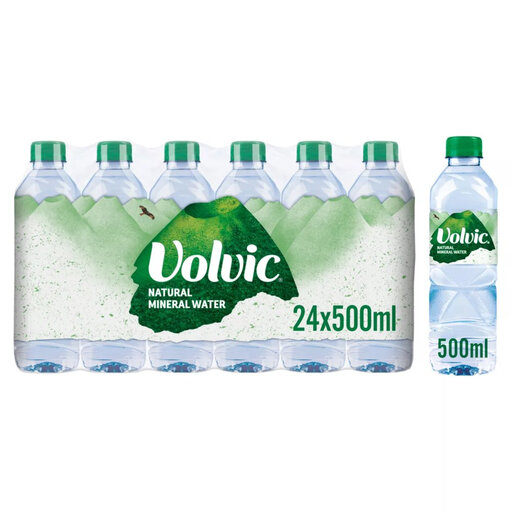
Why this choice suits this profile : With 24 50 cl bottles, this pack provides 12 L of still water in easy-to-carry portions for the office, travel or a small household.
The total volume is clearly stated, and the format limits leftovers after opening, unlike a large bottle shared by several people.
Natural mineral water, stated French origin and bottles advertised as recyclable.
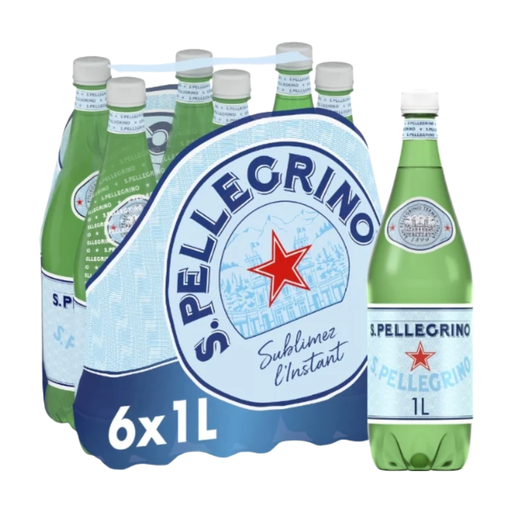
Why this choice suits this profile : The six 1 L bottles are ideal for serving at the table and for meals where you want sparkling water with fine bubbles.
The 1 L format avoids having lots of small bottles on the table, while the mineral composition is detailed in the product information.
Sparkling natural mineral water, 6 L in total and stated mineralisation, including 164 mg/L of calcium.
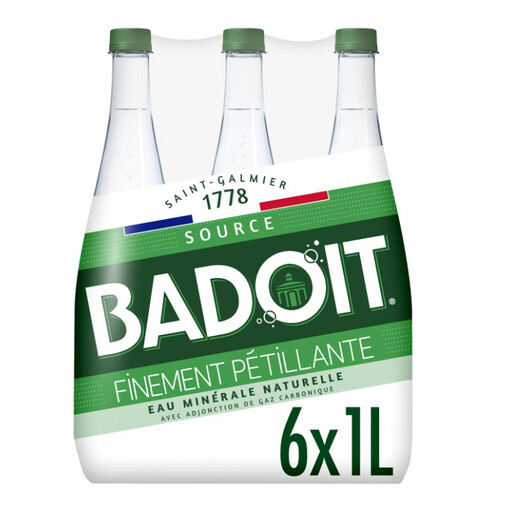
Why this choice suits this profile : This pack of six 1 L bottles is suitable for offices, group meals and regular service where you need a controlled volume of sparkling water.
The product information specifies the level of mineralisation and the main minerals, allowing you to compare the data rather than relying on a simple marketing promise.
6 L in total, 153 mg/L of calcium, 80 mg/L of magnesium and 1 250 mg/L of bicarbonates according to the product information.
Still water is generally suitable for everyday consumption and supplying workspaces. Carbonated or sparkling water makes a welcome accompaniment to meals, but the experience varies depending on the fineness and intensity of the bubbles.
For drinking on the go, NESTLÉ PURE LIFE Spring Water 24x500ml and Volvic in 50 cl bottles are easy to distribute. For the table, Badoit, San Pellegrino, La Salvetat and Rozana are available in formats from 1 to 1.15 L. La Salvetat stands out for its stated low sodium content, while Rozana contains 160 mg/L of magnesium. These details should be considered alongside your preferences and the official labelling.
Follow the manufacturer’s instructions. Several product details recommend keeping an opened bottle in the fridge and consuming it within two to three days. Close it carefully and avoid leaving it in direct sunlight or in a hot car.
The 1.5 L format is suitable for storing at home and for family meals. The 50 cl format is more convenient when everyone takes their own bottle. To decide, compare the price per litre, available storage space and how often you consume it.
It can make restocking easier, especially if you choose a pack that matches your weekly consumption and available space. Check the total weight, access conditions at the delivery location and whether you can distribute the bottles before placing your order.