
Livraison le jour même ou le lendemain

Qualité garantie

Débloquez vos offres de bienvenue: Livraison GRATUITE | Jusqu'à -80 % | 30 jours d'essai gratuits à JoyPlus
Téléchargez l'application
Buying a natural mineral water multipack may seem straightforward, until you compare the formats, total volume, mineral composition and storage requirements. Between taste claims, bottles described as ‘eco-friendly’ and family-sized packs, certain details can increase the cost or make everyday use more complicated.
Before choosing French mineral water, here are the main pitfalls to avoid and the criteria that really matter for a family, office, sports enthusiast or traveller.
A pack of 6 × 50 cl does not meet the same needs as a pack of 12 × 1.5 L. The first contains 3 L, while the second holds 18 L. Comparing only the displayed price can therefore give a misleading impression of the offer.
To compare prices properly, divide the price by the total volume. Also consider the cost of transport and the space available in your cupboards or storage area.
A 50 cl bottle is easy to carry in a bag, but it means storing and sorting more bottles. By contrast, a larger format reduces the number of containers, but a 1.5 L bottle is less convenient to take with you.
Large containers with a tap make serving easier at home or in the office. However, they must be placed on a stable surface and consumed soon after opening.
A bottle advertised as recyclable is not necessarily made entirely from recycled material. It is important to distinguish between:
In France, recycling must follow local sorting instructions. A recyclable bottle should be emptied and then placed in the appropriate bin.
The format should match your consumption habits:
For a family, a multipack of large bottles reduces how often you need to shop, but you should check the total weight you will have to move. A pack of 12 × 1.5 L contains 18 kg of water, excluding the packaging.
The low-sodium water claim should be checked on the label rather than inferred from the name of the source alone. Product listings may provide the levels of sodium, calcium, magnesium and sulphates, as well as the dry residue, in milligrams per litre.
This information describes the water’s composition but does not constitute personalised medical advice. If you follow a specific diet, ask a healthcare professional for advice and refer to the official labelling.
Check the volume of each bottle, whether it has a sports cap or tap, and the storage instructions. As a general rule, store bottles in a cool, dry, clean place away from sunlight, and keep them away from strongly scented products.
After opening, several product listings recommend storing the water in the fridge and consuming it within around three days. Always refer to the packaging you receive, particularly for the best-before date and the manufacturer’s instructions.
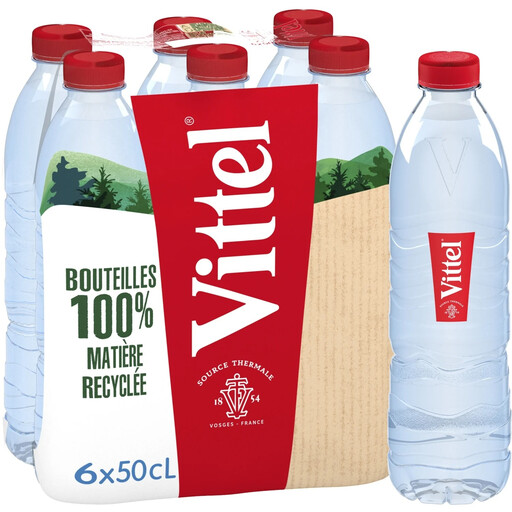
Why this choice suits this profile : With 3 L in total, this format lets you try French mineral water without creating a bulky reserve. The 50 cl bottles are suitable for the office, journeys and meals eaten out.
The total volume is clearly stated, making it easier to calculate the price per litre and preventing you from confusing the number of bottles with the actual quantity of water.
50 cl bottles, detailed mineral composition and packaging advertised as recyclable according to the product listing.
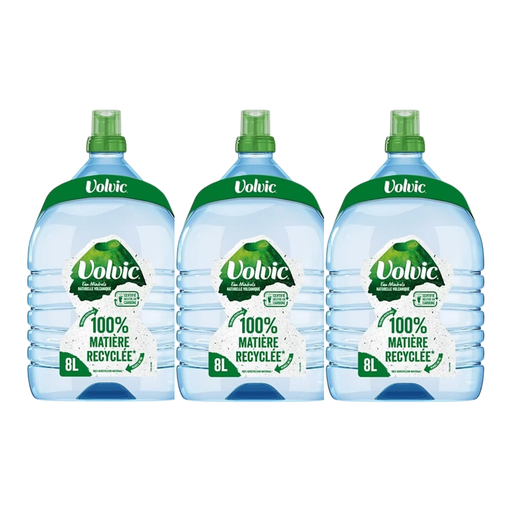
Why this choice suits this profile : The three 8 L containers are aimed at those looking for a practical solution at home or in a shared space, with a stated French origin and an integrated tap.
The tap means you do not have to handle a large container constantly. However, its weight when full means it must be placed somewhere stable and easily accessible.
8 L container with tap, water advertised as low in sodium, and PET presented as recycled and recyclable, excluding the cap and label.
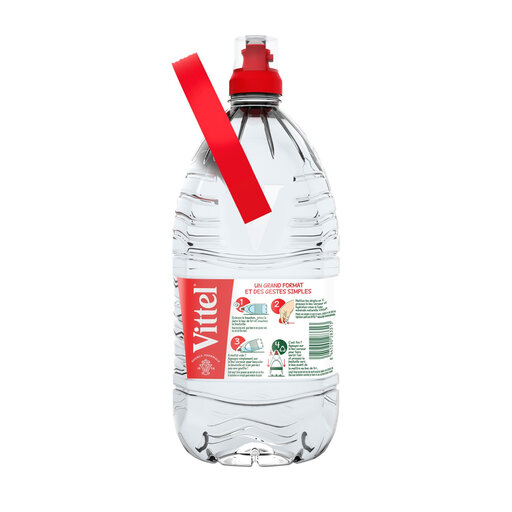
Why this choice suits this profile : The 6 L format with a dispensing spout is suitable for an office, family or any space where several people serve themselves throughout the day.
The dispensing spout means you do not have to lift several 1.5 L bottles. Nevertheless, choose a position away from heat sources and direct sunlight.
6 L container, practical dispensing spout and packaging advertised as made from 100 % recycled plastic, using less material than the format stated in the product listing.
For journeys, choose 33 or 50 cl bottles with a sports cap or reliable closure. At home, the 1.5 L format makes it easy to serve several people at the table and keep track of the amount consumed. Packs of 6 × 1.5 L or 12 × 1.5 L are suitable for keeping a regular reserve, provided you have suitable storage space.
Spring water may also suit your habits, but it should not be confused with natural mineral water. The composition and regulatory statements on the label allow you to check the exact category. For sparkling water, such as sparkling spring water in a 1.5 L bottle, check whether the carbon dioxide has been added or occurs naturally.
We have put together a complete, real-time updated list of products that meet these demanding selection criteria and European safety standards.
Follow the manufacturer’s instructions. Several product listings recommend storing an opened bottle in the fridge and consuming it within around three days. Avoid leaving an opened bottle in the sun or in a hot car.
Not necessarily, but the price per litre varies depending on the brand, number of bottles and current promotions. Always compare the total volume: 6 × 50 cl equals 3 L, while 24 × 50 cl equals 12 L.
Keep it in a clean, dry, cool place away from direct light. For a container with a tap, use a stable surface, clean the serving area and follow the post-opening consumption period stated on the packaging.