
Livraison le jour même ou le lendemain

Qualité garantie

Débloquez vos offres de bienvenue: Livraison GRATUITE | Jusqu'à -80 % | 30 jours d'essai gratuits à JoyPlus
Téléchargez l'application
Buying a natural mineral water multipack seems straightforward. However, the wrong pack size can quickly prove costly, bulky or impractical. With 50 cl bottles, family-sized 1.5 L formats, large containers with taps and different levels of mineralisation to choose from, it is worth looking beyond the claims printed on the packaging.
Three pitfalls come up time and again:
To compare two mineral water multipacks, start by calculating their total volume:
Price per litre is the best way to compare different pack sizes. Also remember to factor in any delivery charges, especially when ordering mineral water for home delivery. Larger multipacks mean you can shop less frequently, but their weight makes handling more difficult and requires suitable storage space.
Mineral composition has a direct impact on taste and everyday use. On the label, pay particular attention to the levels of calcium, magnesium, sodium, sulphates and bicarbonates, expressed in mg/L.
For example, the product page for the VITTEL Natural Mineral Water 12 × 1.5 L pack states 240 mg/L of calcium, 40 mg/L of magnesium, 11 mg/L of sodium, 400 mg/L of sulphates and 373 mg/L of bicarbonates. These figures describe the product’s composition; under no circumstances do they constitute medical advice.
Lightly mineralised water may be appreciated for its subtle taste, while water with a higher mineral content has a more distinctive flavour profile. For regular consumption, focus above all on a clearly stated composition that suits your usual preferences.
The right format depends above all on where you intend to drink the water:
Store bottles somewhere cool, dry, clean and away from sunlight, and keep them away from heat sources and strong smells. Once opened, follow the recommendations on the packaging. Several product pages advise storing the bottle in the refrigerator and drinking it within two to three days. Some pouch formats, however, specify a shorter period after opening.
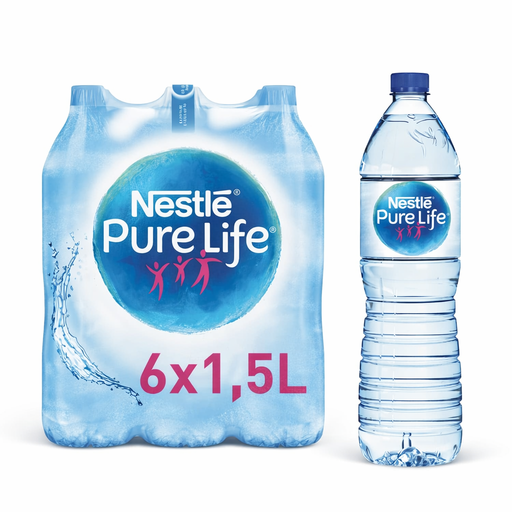
Why this is a good match for this profile: With 9 L in total, this multipack offers a practical volume for trying bottled water, stocking a small household or avoiding taking up an entire cupboard.
The total volume is immediately clear: six 1.5 L bottles, a format that is much easier to compare than an ambiguous pack size.
Its family-sized 1.5 L format, together with the absence of sugar and calories according to the product page, makes it suitable both for drinking and cooking.
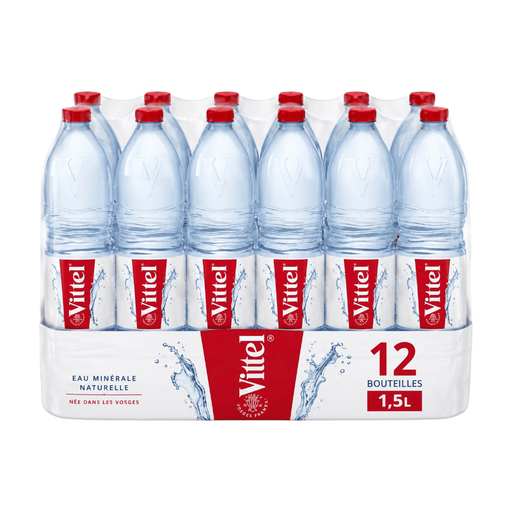
Why this is a good match for this profile: With 18 L, this pack suits households that want to keep a supply of French mineral water for meals and everyday hydration.
The product page details the mineral content and French origin, giving you concrete, verifiable information for comparison.
Twelve 1.5 L bottles, a composition stated in mg/L and easy storage before opening.
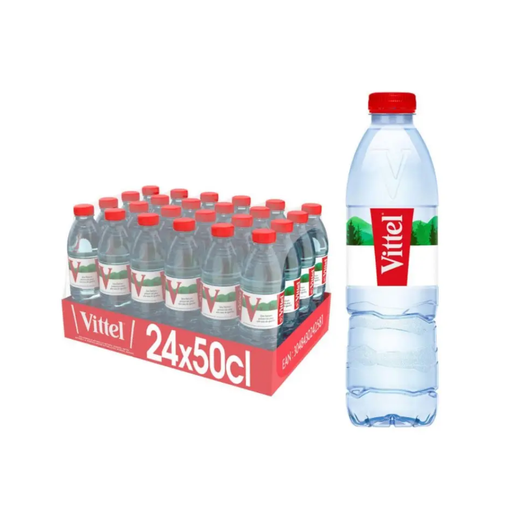
Why this is a good match for this profile: In an office, at the gym or when travelling, these bottles are easy to distribute between a fridge, bag or shared space.
The individual format means you do not have to carry a large bottle that has already been opened, and lets you see exactly how many units are left.
24 50 cl bottles, described on the product page as being made from recycled and recyclable materials.
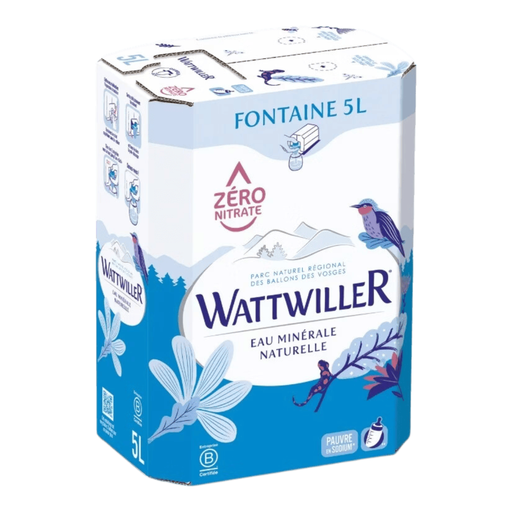
Why this is a good match for this profile: Its integrated tap makes serving water easy at home or in the office, without filling the table or fridge with small bottles.
The 5 L format and integrated dispenser reduce repeated handling. The capacity is also clear at a glance.
This French mineral water from the Vosges has a low sodium content according to its product page and comes in recyclable cardboard outer packaging.
We have brought together a comprehensive, real-time selection of products that meet these demanding criteria, in line with European safety regulations.
For water intended for everyday hydration, the 1.5 L format remains easy to share between meals and household members. A pack of 6 or 12 bottles is suitable for planned shopping, provided you have a stable storage area.
At the office, on public transport or during sports activities, 50 or 75 cl formats are easier to handle. Models with sports caps are easy to open while on the move, but always check that the cap is intact before first use.
The 5 to 8 L containers are mainly intended for a fixed water station. They require a clear space and sufficiently regular consumption after opening. Their usefulness therefore depends as much on their capacity as on how long it will take you to finish them.
Start with your usual consumption, the number of meals eaten at home and the amount of space available for storing bottles. A 6 × 1.5 L pack contains 9 L, while a 12 × 1.5 L pack holds 18 L. Then compare the total volume, price per litre and how often you want to place an order.
Always follow the instructions on the packaging first. Several products recommend storing an opened bottle in the refrigerator and drinking it within two to three days. Avoid leaving an opened bottle in direct sunlight or near a heat source.
Not necessarily. A larger pack may reduce the price per litre, but it all depends on the price, delivery charges and how much water you actually consume. To compare, divide the total price by the number of litres and consider how practical the chosen format will be.