
Same-day & Next-day Delivery

Quality Guaranteed

Unlock Your Welcome Offers: FREE Delivery | Up to 80% OFF | Free 30-day JoyPlus trial
Download the APP
Buying natural mineral water seems simple… until you start comparing the composition, volume and bottle format. A pack of 6 still water bottles doesn’t meet the same need as a sparkling water to serve at the table, a large container for a family, or a filter jug for tap water.
Certain marketing claims can also make the choice trickier. Here are the criteria that really matter, so you can avoid ill-suited purchases and find a solution that fits your drinking habits in France.
Natural mineral water comes from a specific, identified source and has a characteristic mineral composition. Filtered water at home is generally tap water that has passed through a device containing activated carbon, ion-exchange resin or several filtration layers.
These two options are not interchangeable. A filter jug can improve taste, reduce certain elements mentioned by the manufacturer and cut down on bottle purchases. However, it should not be used with water of unknown microbiological quality, or water that would be unsafe to drink without proper treatment.
A high mineral content does not automatically mean the water is suitable for every use. Calcium, magnesium, sodium, bicarbonates and dry residue should each be examined separately. A magnesium-rich water, such as Rozana, contains 160 mg of magnesium per litre according to the product information. This value describes the water’s composition, but does not constitute medical advice.
For daily family consumption, some people prefer a low-sodium water instead. In that case, check the label and compare the value expressed in mg/L, rather than relying solely on the bottle’s design or slogan.
A pack of 6 × 1 L fits easily in a cupboard and works well for meals, but can quickly become impractical for heavy consumption. 50 cl bottles are easy to carry around, at the cost of more packaging. 5 L or 8 L containers reduce how often you need to shop, but take up more space and are heavier to handle.
Once opened, storage instructions vary by format. Some sparkling waters need to be kept in the fridge and consumed within two to three days. A large Volvic container recommends consumption within three days of opening, while the Wattwiller Bag-in-Box states a 48-hour period. Always check the instructions on the packaging.
Still water is generally preferred for everyday use, family meals or for filling a jug. Sparkling water (or fizzy water) is more suited to people who enjoy bubbles or want to accompany certain dishes.
Compare the type of gas used — added or naturally present — the intensity of the bubbles and the bottle volume. A 50 cl format works well for lunch at the office or on the go, while a 1 L bottle sits more naturally on the table.
Values expressed in mg/L allow you to compare waters on an objective basis. For example, the 1 L bottle of San Pellegrino shows 164 mg/L of calcium, 49.5 mg/L of magnesium, 31.2 mg/L of sodium and a dry residue of 854 mg/L. Badoit Green, meanwhile, displays 153 mg/L of calcium, 80 mg/L of magnesium and 180 mg/L of sodium.
These figures alone don’t make one water better than another. They mainly help you choose a composition that matches your preferences and, if necessary, the advice of a healthcare professional.
To work out the real cost, divide the pack price by its total volume. A batch of 24 × 50 cl bottles gives you 12 L, compared with 3 L for a pack of 6 × 50 cl. Larger containers can reduce how often you need to buy, but their weight and bulk need to be considered.
If you’re looking for water for the home while cutting down on the number of bottles, a 2.4 L filter jug can be a practical alternative. Just remember to factor in the cost of the cartridges and how often they need replacing.
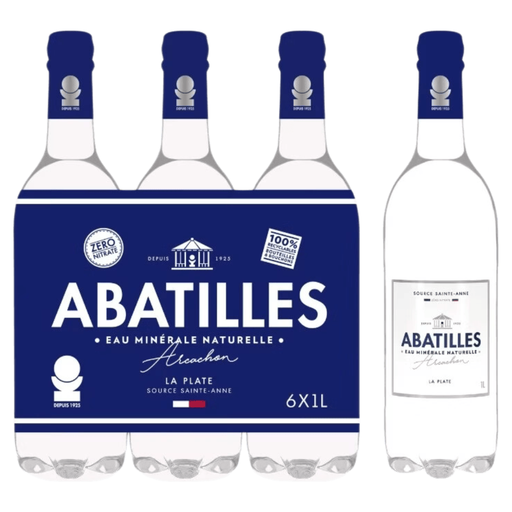
Why this choice suits this profile: This pack of 6 × 1 L bottles offers an easy-to-store format, suitable for both meals and everyday drinking.
The total volume of 6 L is clearly stated, making it easy to calculate the price per litre and avoid accidentally choosing a format that’s too small.
A still water of French origin, supplied in 1 L bottles gathered in a family pack.
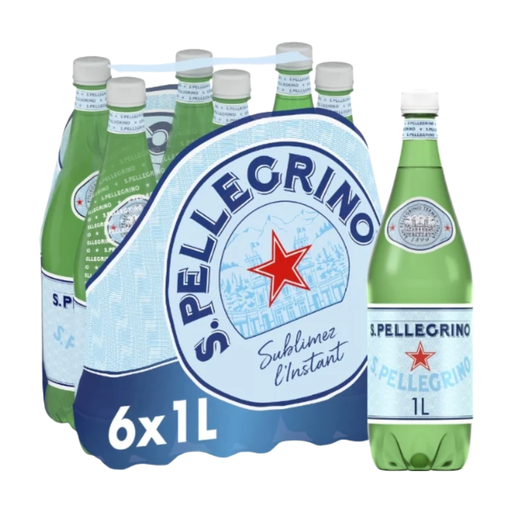
Why this choice suits this profile: The 1 L format and fine bubbles pair well with a family table, a dinner party or catering service.
The product page details the mineral composition and Italian origin, rather than relying solely on a promise of refinement.
164 mg/L of calcium, 49.5 mg/L of magnesium and a total volume of 6 L.
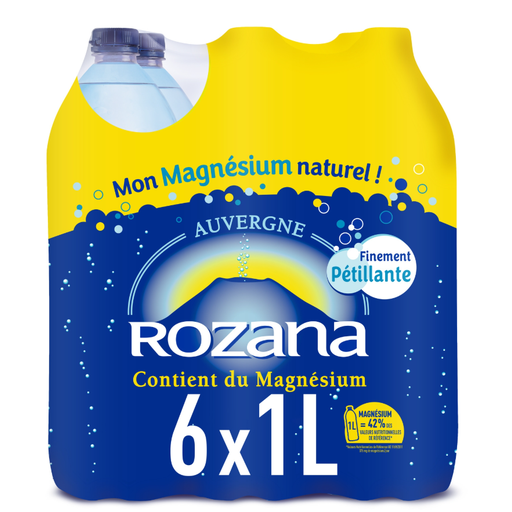
Why this choice suits this profile: This sparkling mineral water is aimed at consumers looking for a composition particularly rich in magnesium.
The stated content of 160 mg of magnesium per litre is verifiable on the product page, allowing you to compare it with other waters.
A pack of 6 × 1 L and a natural mineral water carbonated with carbon dioxide.
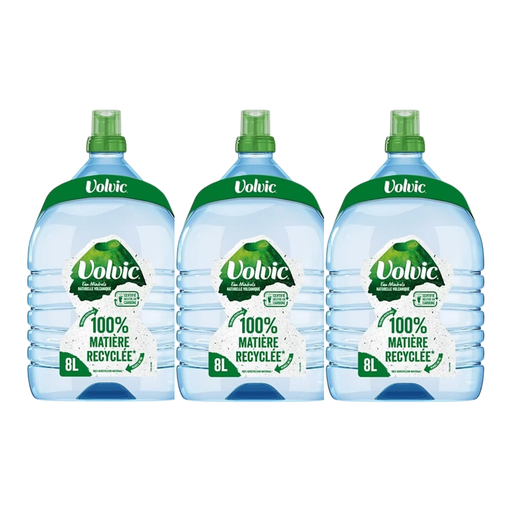
Why this choice suits this profile: The 8 L containers with a tap are designed to space out replacements at home or in the office.
The volume of each container and the storage conditions after opening are stated, making it easier to organise your consumption.
24 L in total, an integrated tap and a French origin stated on the product page.
A filter jug can be a good option if you mainly drink tap water and want to improve its taste or reduce certain deposits. The VIVREAL model, 2.4 L, has an electronic timer and is stated to be compatible with Brita filters. According to the product page, the recommended replacement in Europe is every 35 days.
Before buying, check the exact compatibility, the price of the cartridges and the space available in your fridge door. With very hard water, regular maintenance is essential. The stated performance for reducing chlorine, lead or other metals should be treated as information provided by the manufacturer and used in accordance with the instructions.
Natural mineral water comes from a specific, identified source and has a stable mineral composition, which is stated on the label. Spring water is also intended for human consumption, but its composition can differ and it doesn’t fall under exactly the same recognition framework.
Once opened, reseal the bottle and place it in the fridge, whether it’s still or sparkling water. Product pages often recommend consuming it within two to three days, but the time can vary. For a large container, follow the time stated on the packaging.
It all depends on the price of the jug, the cost of the cartridges and your consumption. Compare the annual budget spent on filters with the price per litre of your water packs. Also consider storage, packaging and maintenance of the jug.