
Livraison le jour même ou le lendemain

Qualité garantie

Débloquez vos offres de bienvenue: Livraison GRATUITE | Jusqu'à -80 % | 30 jours d'essai gratuits à JoyPlus
Téléchargez l'application
Buying natural mineral water might seem straightforward. Yet between still water, sparkling water, spring water and fizzy water, the differences can be felt in the glass — but also on the label and at the checkout. Taste, price per litre, mineral composition and everyday use don't always follow the same criteria. To make the right choice, start by looking at the composition, the bottle size and the total volume of the pack.
At home, families usually go for a family-size format for meals and daily consumption. At the office, on the go or for sport, individual bottles are often more practical. A French water like Vittel, Volvic, Évian or La Salvetat doesn't offer the same profile as an Italian water like San Pellegrino.
The word 'sparkling' primarily indicates the presence of bubbles. A fizzy water can be a natural mineral water with added carbon dioxide, or a carbonated spring water. To know exactly what you're buying, read the description on the label carefully.
A natural mineral water comes from a protected source and is distinguished by a stable and characteristic mineral composition. For a sparkling water, also check whether the gas occurs naturally or has been added. This detail affects the mouthfeel, the liveliness of the bubbles and how long they last once the bottle is opened.
A French, Italian or volcanic origin can give an indication of taste, but it isn't enough to determine whether the water will suit you. The most useful information is in the composition table: sodium, calcium, magnesium, bicarbonates and dry residue.
The composition stated for San Pellegrino notably shows 164 mg/L of calcium, 49.5 mg/L of magnesium and 31.2 mg/L of sodium. La Salvetat, meanwhile, shows a sodium content of 0.005 g/L, which is 5 mg/L according to the product information. These two waters therefore don't offer the same flavour profile.
A pack of 50 cl bottles slips easily into a bag or is convenient to hand out at the office, but it increases packaging and can sometimes work out more expensive per litre. Conversely, 1.5 L bottles and 6 to 8 L containers take up more space and are more awkward to move around.
Before ordering, calculate the total volume and check where you'll be able to store the bottles. Keep them away from sunlight, heat, frost and strong odours. Once the bottle is opened, follow the manufacturer's instructions, especially for large formats and sparkling waters.
For regular consumption, start with the sensation you're after: a neutral, discreet water for still water, a livelier, more acidic mouthfeel for sparkling water.
The values to compare are expressed in mg/L. Sodium deserves particular attention if you're looking for a low-sodium water. Calcium, magnesium and bicarbonates mainly contribute to the flavour profile and the level of mineralisation shown on the packaging. This data obviously doesn't replace medical advice.
The 'low in sodium' claim should be verified from the actual value shown, rather than inferred from the label colour or an advertising claim. The composition varies between brands and sources. Vittel, for example, states 240 mg/L of calcium and 42 mg/L of magnesium, while Évian notably states 80 mg/L of calcium and 26 mg/L of magnesium for its still water in a 50 cl bottle.
Also remember to check the packaging material, whether there's a sports cap, the stated recyclability and the recommended shelf life after opening. These are small details, but they genuinely make a difference to everyday ease of use.
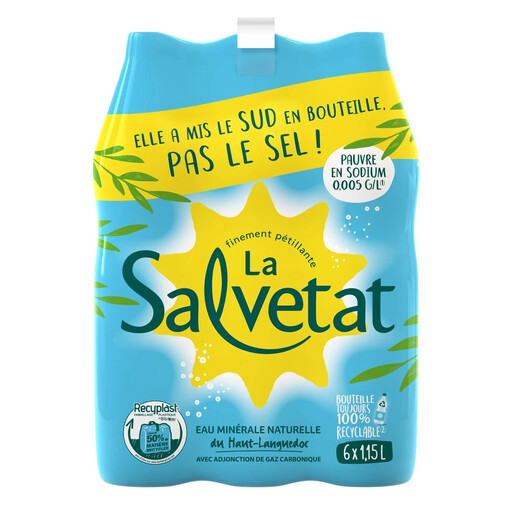
Why this choice suits this profile: An intermediate format for discovering sparkling water, giving you 6.9 L at home, the office or the table.
The 1.15 L capacity means you don't have to replace small bottles too often. The stated sodium content is 0.005 g/L.
A pack of 6 bottles of 1.15 L, with a French sparkling water as stated on the product page.
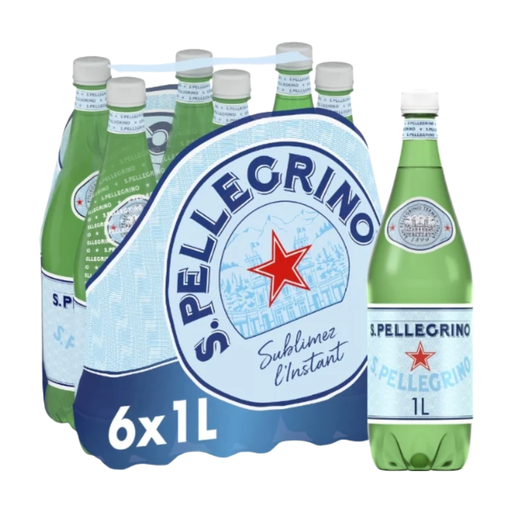
Why this choice suits this profile: An Italian mineral water in 1 L bottles, ideal for accompanying meals and enhancing the table presentation.
The product page details the mineral composition, allowing you to choose the water for its profile rather than just its Italian origin or bottle design.
6 bottles of 1 L, fine bubbles as stated, and mineral data available, including 164 mg/L of calcium.
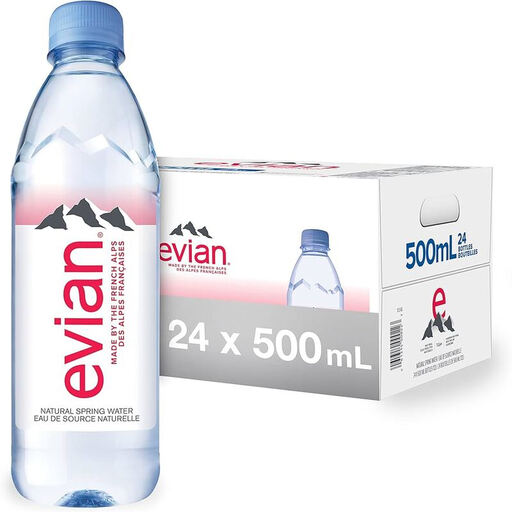
Why this choice suits this profile: A 12 L pack in individual bottles, suitable for offices, families, travel and sports activities.
The 50 cl format avoids carrying a large bottle that's already been opened and makes it easier to manage portion sizes.
24 bottles of 500 ml, a French still water and a composition showing 80 mg/L of calcium and 26 mg/L of magnesium.
We've put together a comprehensive, real-time updated list of products that fully meet these strict selection criteria and European safety regulations.
At home, start by comparing the total volume with the space you have available. A pack of 1.5 L bottles works well for a family that serves water at the table. A 6 or 8 L container reduces the number of bottles, but requires a stable surface and proper organisation after opening.
Still water is suitable for daily consumption and most uses. Sparkling or fizzy water offers a livelier sensation and goes well with meals. The choice depends on your taste, the mineral composition and your ability to store the bottle properly once opened.
Divide the price of the pack by its total volume in litres. Then compare equivalent formats: a pack of 24 × 50 cl contains 12 L, while a pack of 6 × 1.5 L contains 9 L. Also consider practicality, the weight to carry and the bottle type before choosing the offer that best suits your needs.