
Livraison le jour même ou le lendemain

Qualité garantie

Débloquez vos offres de bienvenue: Livraison GRATUITE | Jusqu'à -80 % | 30 jours d'essai gratuits à JoyPlus
Téléchargez l'application
Buying natural mineral water in bottles seems simple enough… until you start comparing sizes, composition, total volume and packaging type. Between family packs, 500 ml bottles, large containers and spring water, certain differences have a direct impact on price, storage and everyday practicality.
To avoid unsuitable purchases, here are the criteria to consider before choosing a bottle of water for home, the office, sport or on the go.
The term "natural mineral water" refers to water from a protected underground source, bottled under specific conditions and characterised by a stable mineral composition. Spring water also comes from an underground source, but its composition can be less consistent and its labelling falls under a different category.
Both types of water are suitable for daily hydration, but they don't meet exactly the same criteria. So check the description on the label rather than relying solely on the bottle design or brand recognition.
A pack may seem economical without actually being so. To compare two offers, calculate the price per litre and the total volume:
The unit price alone isn't enough. Also consider the weight you'll need to carry and the space available in a cupboard, cellar or office store room.
A bottle described as recyclable should be assessed as a whole: bottle, cap, label and local recycling guidelines. Some product pages state that the bottle is made from recycled plastic, while others separately indicate that it is recyclable.
Read the information on the product and its packaging carefully. When a brand announces a reduction in plastic, this should be interpreted in relation to the reference size stated, not as a general comparison across all bottles.
The 500 ml mineral water size is ideal for journeys, the gym, lunch at the office or hiking. Easy to carry, it can be consumed quickly after opening.
The 1.5 L mineral water size is more practical at the table, in the kitchen and for stocking up a family. A pack of several bottles allows you to space out your shopping trips, provided you have a stable, dry storage space away from heat.
For heavy consumption, large-format water can be more convenient. 5 to 8 L containers with a tap save you from constantly lifting a heavy container. However, they must be placed on a stable surface and used in accordance with the instructions on the packaging.
The label usually shows the levels of calcium, magnesium, sodium, sulphates and bicarbonates, expressed in mg/L. This data allows you to compare waters objectively, without attributing any medical effectiveness to them.
For example, the product page for VITTEL Natural Mineral Water Pack 12x1.5L indicates 240 mg/L of calcium, 40 mg/L of magnesium, 11 mg/L of sodium, 400 mg/L of sulphates and 373 mg/L of bicarbonates. Values may vary depending on the reference and packaging: always check the label of the product you buy.
A low-mineral water can be appreciated for its subtle taste, while a more mineralised water has a more pronounced flavour profile. The choice depends above all on your preferences and intended use.
Before buying, check the storage instructions: bottles should generally be kept in a cool, dry, clean, odour-free place away from sunlight. An opened bottle should be placed in the fridge and consumed within the time stated by the manufacturer, often within two to three days.
A practical cap makes it easier to use at the office or during sport. For large containers, an integrated tap allows you to pour without lifting the container. In all cases, check the integrity of the cap and packaging before first use.
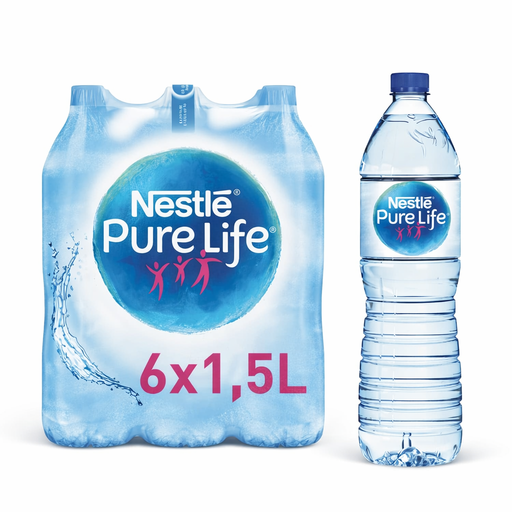
Why this choice suits this profile: This pack of 6 bottles provides 9 L of water for home, cooking and everyday meals. Its volume is easy to compare per litre.
The total volume is clearly stated: 6 × 1.5 L. This allows you to compare this offer with other packs without focusing solely on the number of bottles.
Family-size 1.5 L format, water with no sugar or calories indicated, origin France mentioned on the product page.
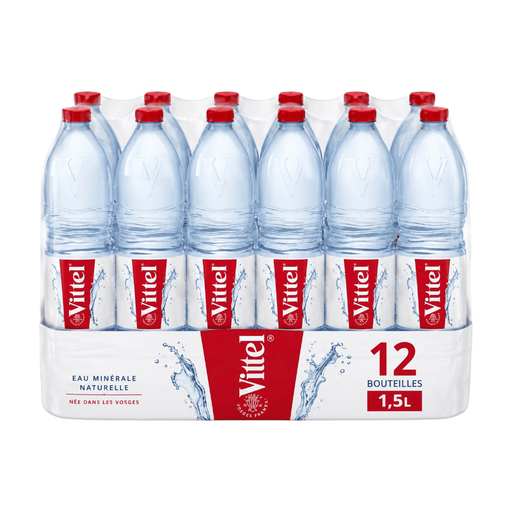
Why this choice suits this profile: This 18 L stock is ideal for households looking for a French mineral water with a distinctive taste and who want to space out their shopping trips.
The mineral composition is detailed in mg/L, allowing you to compare waters based on the information on the label.
Pack of 12 × 1.5 L, captured and bottled at source in France according to the product page, with calcium and magnesium indicated.
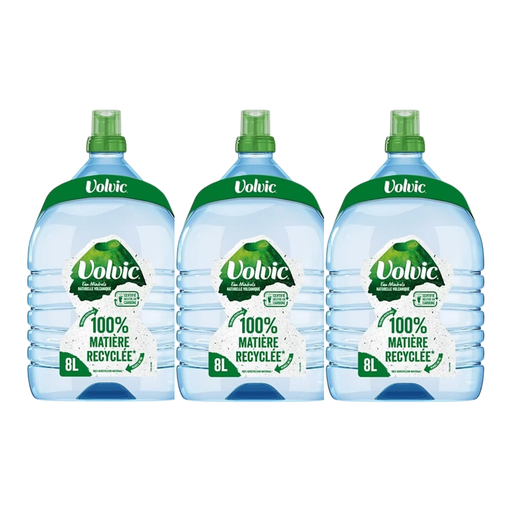
Why this choice suits this profile: These 8 L containers with a tap are ideal for heavy consumption at home or in a shared space.
The tap avoids having to regularly lift a heavy container. However, make sure you have a stable surface and follow the storage instructions after opening.
Three 8 L containers, integrated tap, origin France and recyclability indications for the container according to the product page.
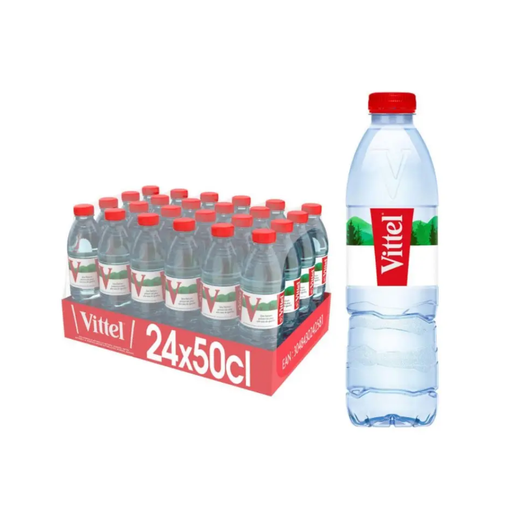
Why this choice suits this profile: The 24 bottles of 500 ml are easy to distribute between the office, journeys and sports sessions.
The individual size avoids carrying a large bottle that has already been opened. The total volume of 12 L remains clearly identifiable.
500 ml bottles, natural mineral water, packaging stated as made from recycled plastic and recyclable according to the product page.
Natural mineral water has an underground origin and a stable mineral composition, while spring water falls under a different regulatory category and may have a different composition. The description is on the label.
Follow the manufacturer's instructions. Many product pages recommend placing the bottle in the fridge and consuming it within two or three days of opening. Avoid leaving an opened bottle in the sun or in a hot car.
The 1.5 L size is a practical compromise for meals and home use. A pack of 6 or 12 bottles makes it easy to compare the total volume. If consumption is high and you have enough space, a container with a tap can reduce handling, provided you follow the storage instructions.