
Livraison le jour même ou le lendemain

Qualité garantie

Débloquez vos offres de bienvenue: Livraison GRATUITE | Jusqu'à -80 % | 30 jours d'essai gratuits à JoyPlus
Téléchargez l'application
Buying natural honey seems straightforward. Yet with different textures, origin statements and commercial descriptions to consider, it is not always easy to know what you are choosing. Runny honey, set honey, blossom honey or a variety associated with a particular region: these descriptions mainly tell you about the product’s origin, composition, texture and uses.
Before adding a jar to your basket, take the time to check three details that are often overlooked: the honey’s actual origin, the ingredients list and the stated texture. This will help you avoid paying more for a product whose presentation does not suit the way you usually use honey.
A jar packed in France does not necessarily contain French honey. Some products are selected and packed in France even though the honey comes from another country. This is the case with LUNE DE MIEL Liquid Blossom Honey 375 g and LUNE DE MIEL Creamy Blossom Honey 500 g, whose product information states that the honey originates from Ukraine.
Conversely, several Lucien Georgelin and Famille Michaud honeys are presented as made or produced in France. To avoid any confusion, check the statements ‘country of origin’, ‘packed in France’ and ‘made in France’ separately.
Crystallisation is a natural process. Its speed varies according to the floral variety, temperature and storage time. It does not mean that the honey has spoiled. Set honey is, in fact, made using controlled crystallisation, which gives it a fine texture that is easy to spread.
If you prefer runny honey, store the jar in a dry place at a moderate temperature and away from light. To liquefy crystallised honey, you can warm it gently in a bain-marie, taking care not to expose it to excessive heat.
A 500 g jar is suitable for regular consumption. However, a 250 or 375 g jar may be a better choice if you want to try a particular variety, such as heather honey. Texture also deserves your attention: runny honey is easy to measure into tea and recipes, while set honey is more enjoyable on bread, pancakes and toast.
To buy French honey, make sure the product information clearly states France as the country of origin. Varieties such as mountain honey, lavender honey and wildflower honey can nevertheless have very different flavour profiles depending on the flowers available and the location of the harvest.
A clearly stated origin helps distinguish honey from an identified region from blossom honey whose origin may be outside France. You should also check the name and address of the responsible food business operator shown on the packaging.
A honey sold as a simple product should have a clear, easy-to-read composition. The products featured here generally list honey or 100% honey, according to the information on their product pages. This statement is not a medical claim; it simply specifies the nature of the declared ingredient.
Also be wary of products whose name refers to honey without being honey intended for spreading. Lucien Georgelin Mint Honey 150 g sweets, for example, are confectionery products made mainly from sugar and glucose syrup, with just 2.9% honey. They can add a minty note to a sweet treat, but they are not a substitute for a jar of natural honey for tea, yoghurt or baking.
Like other honeys, the products mentioned here mainly provide carbohydrates. The stated nutritional values are generally around 320 to 325 kcal and 80 g of sugars per 100 g. Honey must not be given to children under 12 months old.
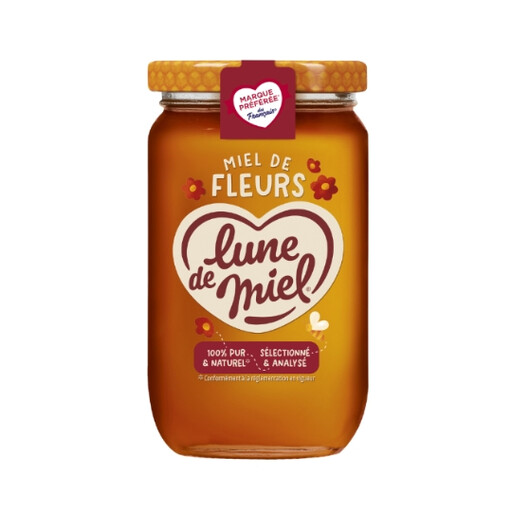
Why it is a suitable choice : Its 375 g size and runny texture make it a good starting point for everyday use in drinks, yoghurts or desserts.
The product information clearly distinguishes between being packed in France and having Ukrainian origins. This gives you more transparent information when making your purchase.
Runny blossom honey in a 375 g jar, with a composition listed as honey and especially versatile uses.
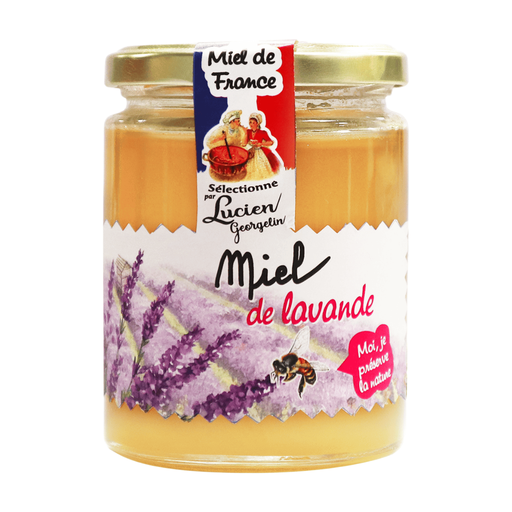
Why it is a suitable choice : This floral variety has a more distinctive flavour, making it ideal with tea, dairy products or desserts.
The product information directly states ‘100% lavender honey’, with no flavouring or added syrup in the declared composition.
A 375 g jar of lavender honey to use in drinks, with dairy products and in cooking.
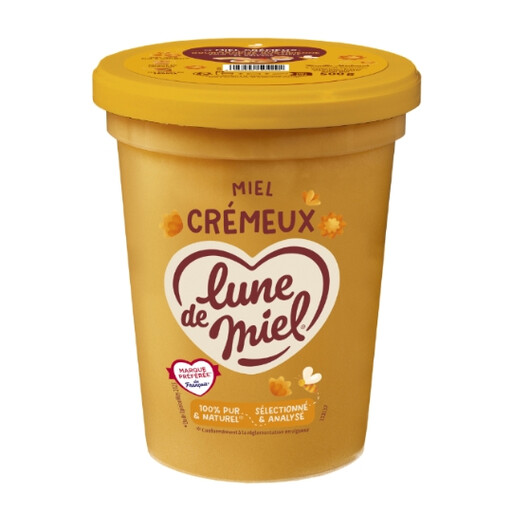
Why it is a suitable choice : Its 500 g size and creamy consistency make it particularly well suited to toast, pancakes and regular use in cooking.
The creamy texture is clearly stated, making it better suited to spreading than runny honey, which can drip.
A 500 g jar with floral notes, suitable for toast, cakes and hot drinks.
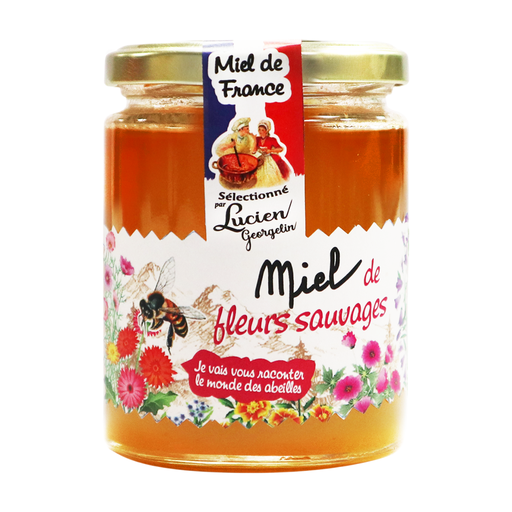
Why it is a suitable choice : This wildflower honey is stated to come from France. It works equally well in drinks and yoghurt, as well as on toast and in baking.
The French origin is explicitly stated on the product page. This is useful for distinguishing the country of origin from the place where the honey was packed.
French wildflower honey in a 375 g jar, with a composition declared as honey.
We have brought together a comprehensive, real-time selection of products that meet these selection criteria, as well as European regulations concerning safety.
Runny honey mixes more easily into a hot drink or recipe. Blossom honey is suitable for most uses, while lavender honey adds a more distinctive floral note. It is best added once the drink or preparation has cooled slightly, to preserve its flavour as much as possible.
Set honey is generally the most practical choice for bread, pancakes and cakes, as it stays in place better and drips less. 500 g jars are suitable for households that use honey regularly. For more occasional use, a 375 g jar reduces the risk of keeping the honey for too long.
Keep it tightly sealed in a dry, cool place away from direct light. Refer to the best-before date shown on the packaging. A change in texture or crystallisation can be perfectly natural. However, an unusual smell, colour or appearance should prompt you to check the product and the manufacturer’s recommendations.