
Livraison le jour même ou le lendemain

Qualité garantie

Débloquez vos offres de bienvenue: Livraison GRATUITE | Jusqu'à -80 % | 30 jours d'essai gratuits à JoyPlus
Téléchargez l'application
Natural food supplements appeal with their plant-based ingredients, convenient formats and promises around energy, skin health or immune defences. But a well-presented label alone doesn’t guarantee a wise choice. The actual amount provided, the form of the active ingredient and the conditions of use often matter more than claims like “premium”, “detox” or “high absorption”.
A product may list several thousand milligrammes of powdered plant without specifying the quantity of the actual standardised compound. This is a point to watch for quercetin, moringa, organic barley grass or cranberry extracts.
A concentrated extract should provide easily readable information: dose per serving, extraction ratio and number of daily servings. In the case of cranberry, the stated equivalence between extract and powder does not necessarily mean both provide the same amount of active ingredients.
Formulas like liposomal vitamin C or liposomal glutathione rely on phospholipids or other components intended to help disperse the active ingredient. That doesn’t mean they will automatically be more suitable for everyone. First check the amount per dose, the full ingredient list and the storage conditions.
A liquid liposomal formula can be pleasant to use, but it often needs to be kept in the fridge after opening. Capsules are less fussy to carry and fit more easily into a daily routine.
Combining a vitamin C 1,000 mg, a vitamin C and zinc supplement, cranberry enriched with vitamin C and an antioxidant complex can unnecessarily push your intake up. The same issue arises with zinc, selenium at 200 µg or certain plant extracts.
Before placing an order, take stock of the supplements you already use and add up their daily doses. If you are on medication, pregnant, breastfeeding, have a chronic condition or are simply unsure, ask a healthcare professional for advice.
The stated dose should correspond to a clearly defined serving. A vitamin C at 1,000 mg per tablet is not the same as a formula that provides 1,000 mg for two capsules. The product page for WeightWorld Liposomal Vitamin C, for example, states 1,000 mg for two capsules, while some Nutri&Co effervescent tablets provide that amount in a single serving.
The NRV helps you see the intake relative to the European reference value. It does not replace personalised advice. For high-dose formulas, follow the recommended dosage and avoid combinations that offer no clear benefit.
Compare the different formats based on your habits:
Also think about checking the excipients, polyols, flavourings, allergens and the possible presence of lactose, gluten or gelatine. The “organic” claim should come with an identifiable certification, such as the Soil Association certification shown on some WeightWorld products.
The price of the bottle alone isn’t always enough to compare offers. Calculate the daily cost based on the number of capsules or tablets and the recommended dose. A bottle of 180 capsules could last three months, six months or a much shorter period depending on the daily serving.
For an established routine, a large format can save you from ordering repeatedly. To try an ingredient, a pack of 45 effervescent tablets or a 15 ml bottle lets you start more cautiously.
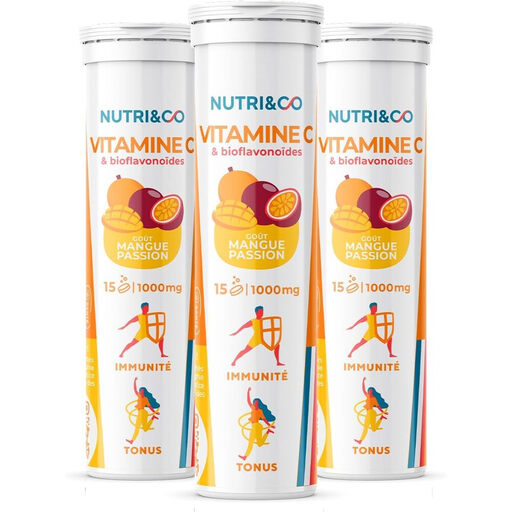
Why this choice suits this profile: The effervescent format and mango-passion fruit flavour make the first steps more enjoyable, with 45 tablets in total and an easy-to-dissolve serving in water.
The quantity is stated per tablet: 1,000 mg of vitamin C. The limit of one tablet per day is also clearly shown on the product page.
Vegan formula, gluten-free and lactose-free, enriched with orange bioflavonoids and available in a pack of three tubes.
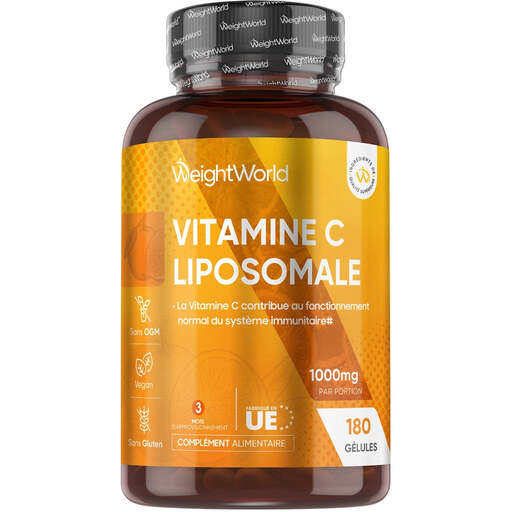
Why this choice suits this profile: This formula is aimed at those looking for a liposomal form without taste, offered in vegetable capsules and easy to take with a meal.
The product page specifies that the 1,000 mg corresponds to two capsules. It also details the presence of sunflower phospholipids and rosehip extract.
180 capsules, vegan and gluten-free formula, no flavourings, with authorised health claims for vitamin C under the European framework.
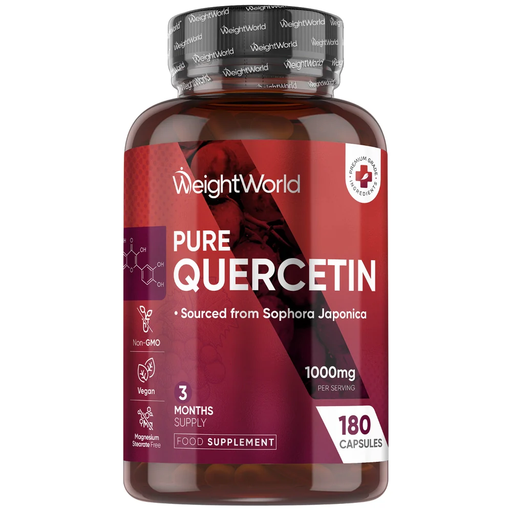
Why this choice suits this profile: Those who prefer a single-ingredient formula can more easily track their quercetin intake and integrate it into an existing routine.
The product page clearly states 1,000 mg for two capsules, 180 capsules in total and a maximum dose of two capsules over 24 hours.
Source stated: Sophora japonica. The capsules can be swallowed as they are or opened to be mixed into food. The formula is vegan, gluten-free and lactose-free.
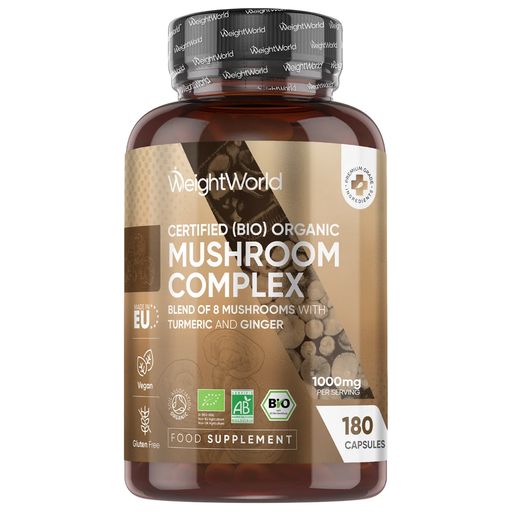
Why this choice suits this profile: This formula is aimed at adults who want to combine several organic mushroom powders in a single vegan routine, without having to incorporate them into their own recipes.
The composition details the eight mushrooms and their quantity per serving, rather than just stating a blend without further information.
Soil Association organic certification stated, 180 capsules and a recommended intake of two capsules per day. The product page also mentions a vegan, gluten-free and lactose-free formula.
We’ve put together a full selection, updated in real time, of products that meet these strict criteria as well as European safety regulations.
Yes, but start by comparing their compositions. Avoid stacking products that contain vitamin C, zinc or selenium. The total daily intake should remain within the limits stated on each label. If you are on medication or have a health condition, ask a doctor or pharmacist for advice.
Follow the best-before date and the manufacturer’s instructions. Capsules and tablets are generally stored in a cool, dry place away from light, with the bottle tightly closed. A liquid liposomal vitamin C may need to be kept in the fridge after opening. Do not use a product if its appearance, smell or packaging has changed.
Start with a single ingredient that matches your goal, with a clearly stated dose and a reasonable duration of use. Vitamin C, organic moringa, organic barley grass and organic mushroom complexes don’t all meet the same needs. Before ordering, compare the format, certifications, dietary exclusions and cost per day.