
Livraison le jour même ou le lendemain

Qualité garantie

Débloquez vos offres de bienvenue: Livraison GRATUITE | Jusqu'à -80 % | 30 jours d'essai gratuits à JoyPlus
Téléchargez l'application
Natural dog treats can reward good behaviour, make training easier or simply add a bit of variety to your dog’s day. But a nice photo and the word “natural” aren’t enough to make an informed choice. The ingredients, texture and the amount you actually give all play a key role in how the product works for you.
The term “natural” can cover very different recipes. Some treats combine meat, cereals, sugars, flavourings and additives, while others rely on a much shorter list of ingredients. To compare them, check the full ingredients list, which is presented in descending order of quantity.
A chicken or duck recipe isn’t necessarily made exclusively from meat. It may also contain sweet potato, pumpkin, plant-based proteins or vegetable glycerine. These ingredients aren’t automatically a problem, but they should match your dog’s needs and your own priorities.
A claim like high-protein treats should always be verified against the analytical table. MeatyWay chicken strips, for example, contain at least 30% crude protein, 15% fat and 18% moisture, according to their product page. Conversely, a moist treat may show a lower protein percentage on the label simply because it contains a lot of water.
It’s better to compare products with a similar texture and consider the actual portion you give, rather than focusing on a single percentage.
A very hard dried meat for dogs may suit an adult dog used to chewing, but can be impractical for a puppy, a small dog or a training session that needs lots of rewards. On the other hand, a soft treat is easy to break up, but may not keep as well once opened.
Also remember to check the supervision guidelines. A chew treat should be given under supervision, with fresh water available. It should never replace a complete and balanced diet.
If you’re looking for grain-free dog treats, check that the label doesn’t list wheat, maize or rice, when this matters for your pet. Bear in mind, though, that the absence of grains doesn’t guarantee the recipe will suit all dietary sensitivities.
A single-ingredient recipe makes the label easy to read. The MeatyWay Duck Tenders 100 g list duck as the only ingredient, with at least 30% crude protein, 15% fat, less than 1% fibre and up to 18% moisture. The animal source is clear at a glance.
Treats are complementary foods that should be factored into your dog’s daily ration. For a less active or overweight dog, or one that already gets several rewards, a lower-fat formula can help you manage portions more easily. That doesn’t mean you can skip watching the amounts, though.
The product page for INABA chicken and pumpkin treats states 2% fat and 83% moisture. This soft format can be handy between meals, but most of its weight is water. So follow the feeding guidelines on the pack.
For training, choose dog training treats that break easily into small pieces. That way you can give lots of rewards without handing out a whole strip for each exercise.
For longer-lasting chewing, dried bites or pieces of meat can be offered from time to time. The Ziwi Peak Chews Lamb Green Tripe page recommends one to two pieces per day, depending on the dog’s size, activity level and condition. It also advises removing the piece once it’s small enough to be swallowed.
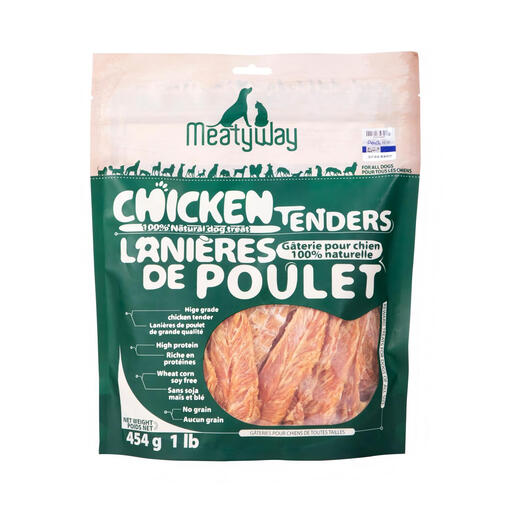
Why this choice suits this profile: Its 454 g format works well for households that give rewards regularly, especially during training or walks.
The page states a chicken recipe, with no grains, additives, fillers or preservatives, and a texture that’s easy to break into pieces.
Chicken as the declared ingredient, at least 30% crude protein and a resealable 454 g pouch.
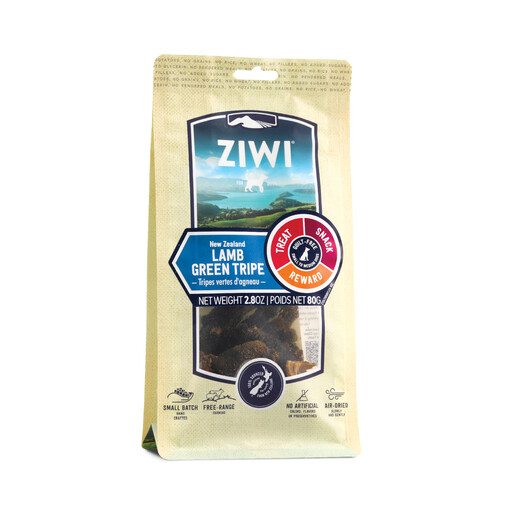
Why this choice suits this profile: This chew format, made from dried lamb meat, is aimed at owners looking for an occasional reward.
The declared ingredients list lamb lung and doesn’t rely on a long list of added ingredients.
At least 60% crude protein, slow-dried as stated, and clear supervision guidelines provided.
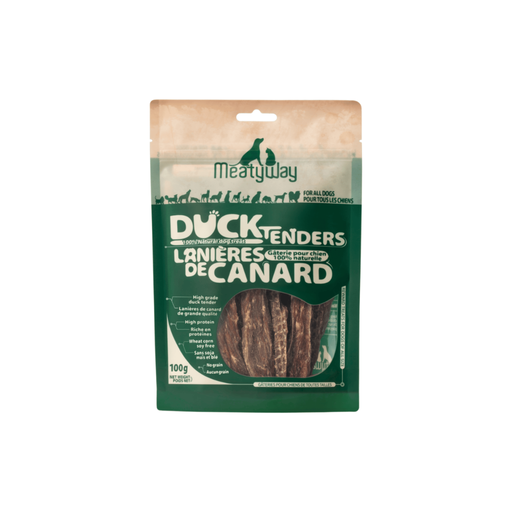
Why this choice suits this profile: Owners who want to try duck dog treats or vary their dog’s protein sources get a small, easy-to-handle format here.
The page lists duck as the sole ingredient and confirms no grains, additives, fillers or preservatives.
A soft texture, easy-to-break pieces and a 100 g format that keeps well after opening.
We’ve put together a full, real-time selection of products that meet these demanding criteria and comply with European safety regulations.
A recipe with a short ingredients list can help you identify an ingredient that’s poorly tolerated, but it doesn’t guarantee it will suit your dog. Single-ingredient treats, such as duck ones, are sometimes easier to introduce as part of an elimination diet. If problems persist, ask your vet for advice.
Not always. They can suit a dietary preference or a specific need, but the absence of grains alone isn’t enough to judge a recipe’s overall quality. Also look at the protein source, fat content, additives and portion size.
The amount depends on your dog’s weight, age, activity level and main diet. To give lots of rewards, use very small pieces and reduce the total daily food if needed. Treats remain complementary foods and should never replace complete meals.