
Livraison le jour même ou le lendemain

Qualité garantie

Débloquez vos offres de bienvenue: Livraison GRATUITE | Jusqu'à -80 % | 30 jours d'essai gratuits à JoyPlus
Téléchargez l'application
Giving your dog a little treat is both a gesture of affection and an excellent training tool. But the treat aisle has become a marketing jungle where it's hard to separate the wheat from the chaff. Behind promising packaging and vague slogans, many products hide deeply disappointing formulas.
Before you buy, it's best to know the most common pitfalls to avoid disappointment?:
The key to making the right choice? Knowing how to decipher the label by focusing on a few objective criteria.
To give your dog a reward that is both tasty and healthy, it all comes down to the ingredients. Here are the three non-negotiable points to check before any purchase.
A short, understandable ingredient list is often the best indicator of quality. Ideally, the first ingredient should be a clearly identified animal protein source (e.g., "chicken" or "duck," not the vague phrase "meat and animal by-products"). For dogs prone to allergies, hypoallergenic dog treats with a very short ingredient list (often a single protein and a single vegetable or fruit) are the best option to minimise the risk of a reaction.
Protein is the heart of a good dog treat. Opt for treats made from high-quality muscle meat. Chicken dog treats and duck dog treats are popular choices, but quality trumps variety. Look for specific terms like "chicken fillet", "duck breast", or simply "chicken" and "duck", rather than vague descriptions. This ensures a high-quality protein intake, essential for your pet's energy and muscle mass.
A healthy dog treat must be free of artificial colours, flavours, and chemical preservatives (like BHA or BHT). Also, avoid added sugars (molasses, corn syrup, etc.)?: they have no nutritional value for a dog and only serve to make the product more palatable at a low cost. The taste should come from the quality of the ingredients, not from synthetic additions.
To help you see more clearly, here is a selection of products that tick all the boxes, each meeting a specific need.
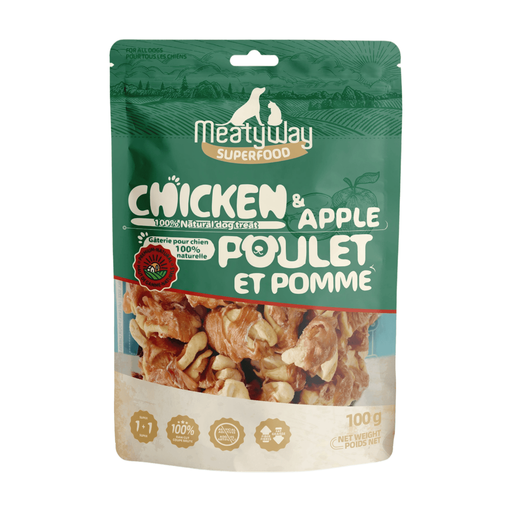
Why we recommend it: Perfect for dog training sessions, their simple recipe and tender texture make them a practical and healthy reward, without overloading your dog's daily diet.
With only two ingredients (chicken and apple), this avoids the trap of long ingredient lists. The formula is crystal clear, with no additives or fillers.
The combination of a quality protein (chicken) and the natural fibres from apple promotes good digestion.
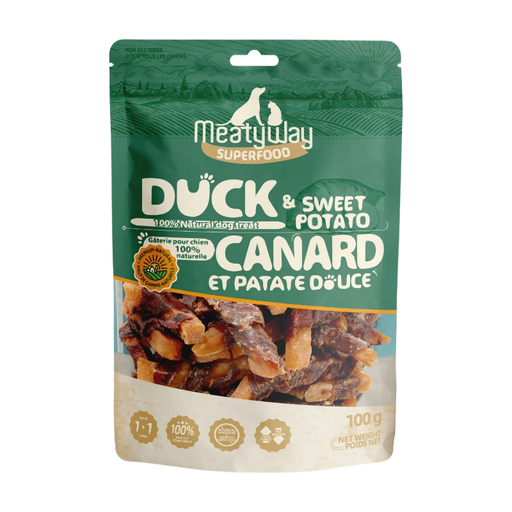
Why we recommend it: Duck is a protein that is often better tolerated than chicken. Paired with sweet potato, a gut-friendly carbohydrate source, it's a prime option for dogs with food sensitivities.
The recipe is grain-free and replaces common binders (like potato) with sweet potato. The formula couldn't be clearer: 55% duck and 45% sweet potato.
A simple, hypoallergenic formula that combines quality protein with gentle fibres. Ideal for digestion.
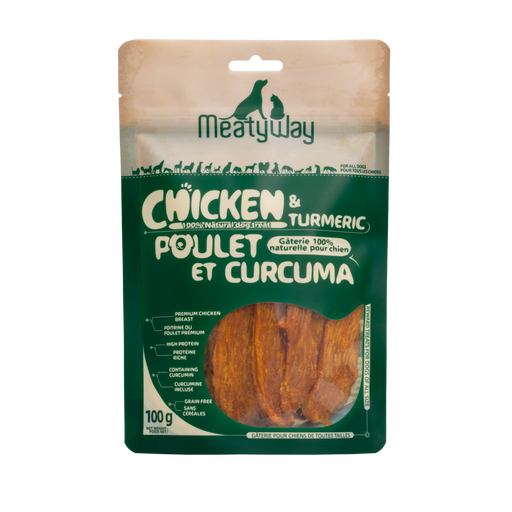
Why we recommend it: For owners looking for a treat that goes beyond simple pleasure. The addition of turmeric gives a "wellness" dimension to this chicken treat.
Here, the "health" benefit isn't an empty promise. It's directly linked to a tangible, recognised ingredient, turmeric, on a healthy, grain-free chicken base.
Turmeric is known for its antioxidant properties. This treat therefore combines deliciousness with support for the animal's overall well-being.
Discover our complete selection of products that meet our strict quality criteria and current regulations.
As a general rule, treats should not exceed 10% of your dog's daily calorie intake. The exact amount, of course, depends on its size, weight, age, and activity level. Always refer to the recommendations on the packaging and remember to adjust their main meals accordingly to prevent weight gain.
Not necessarily. While they are a real bonus for intolerant or allergic dogs, their quality depends mainly on the ingredients used as replacements. A grain-free treat packed with potato starch or pea flour is no healthier than one containing a little brown rice. The key is to prioritise a short ingredient list with quality meat first.
Most natural treats, especially if they are dried and preservative-free, should be stored in a cool, dry place, away from light. Once the package is opened, be sure to reseal the bag tightly to preserve their freshness and crunch. For moister products, check the packaging: some may require refrigeration.