
Livraison le jour même ou le lendemain

Qualité garantie

Débloquez vos offres de bienvenue: Livraison GRATUITE | Jusqu'à -80 % | 30 jours d'essai gratuits à JoyPlus
Téléchargez l'application
Giving your dog a treat is more than just a simple gesture of affection: it's a key training tool and a special bonding moment. But once you're in the pet food aisle, enthusiasm often gives way to confusion. Faced with eye-catching packaging and endless ingredient lists, how do you find your way? Our mission: to help you decode labels and avoid marketing traps to choose the perfect natural dog treat—one that combines enjoyment with health benefits.
Marketing can be deceptively effective. To avoid falling for the hype, here are three pitfalls to watch out for.
To avoid these traps, a few simple checks are all it takes. Focus on these key points to objectively assess the quality of a treat.
A short, readable composition is almost always a sign of quality. The first ingredient, and therefore the most abundant, should be a clearly named meat or fish ('chicken fillet', 'salmon', 'beef') and not a vague term like 'meat and animal by-products'.
A grain-free dog treat is a particularly relevant option for pets with sensitive digestion. Wheat or corn, often used as low-cost fillers, can cause digestive issues. A good healthy dog snack will instead use more digestible, high-quality carbohydrates like sweet potato or peas, always in reasonable amounts.
On the back of the package, the 'Analytical Constituents' table is a goldmine of information. Here's how to decipher it:
You wouldn't choose the same treat for a training session as you would to keep your dog busy while you're away.
To help you put this advice into practice, here are a few products that fit distinct use cases, all in line with our selection criteria.
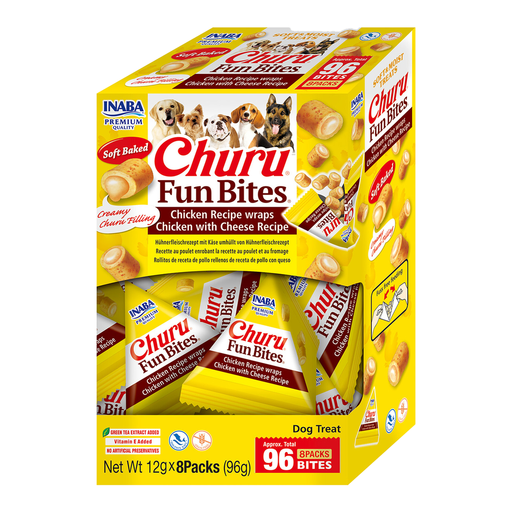
Why it stands out: Small, soft, and highly palatable, these bites are the perfect reward to keep your dog focused during training without filling them up or distracting them.
Its size and texture are designed for training: quickly chewed, they don't break the dynamic of the exercise, unlike treats that are too big or too hard.
A record-high moisture content (82%) ensures a soft texture and helps with hydration. The ingredient list is simple and clear, with chicken listed first.
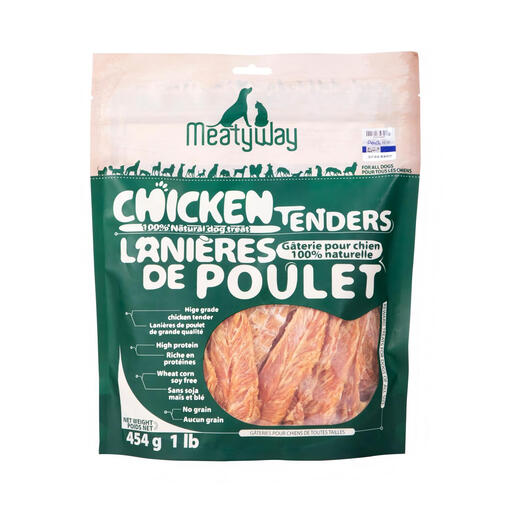
Why it stands out: Ideal for owners who demand absolute transparency. The recipe is disarmingly simple: just chicken, and that's it. Zero additives, zero surprises.
It counters the trend of long ingredient lists and opaque formulas. Here, the composition is crystal clear: 100% chicken. No grains, no preservatives.
Naturally rich in protein (min. 30%) and highly digestible. Its chewy texture is an excellent way to keep your dog occupied while contributing to their dental hygiene.
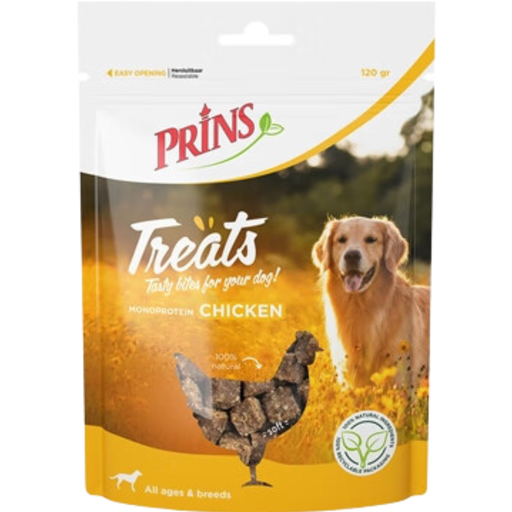
Why it stands out: Formulated around a single source of animal protein (chicken), this is the go-to treat for dogs with sensitive digestion or those prone to food allergies.
By using a 'single-protein' formula, it drastically minimises the risk of triggering an allergic reaction. The recipe gets straight to the point and avoids the most common allergens.
A clear composition (50% chicken) and a breakable treat that's easy to snap for adjusting portions. It's ideal for controlling calorie intake down to the gram.
Browse our full selection of treats that meet our quality criteria and the strictest safety standards.
Your first instinct should be to ignore the slogans on the front and turn the package over. Read the ingredient list. If it's short, understandable (names of meats, vegetables, fruits), and contains no chemical jargon or 'unspecified animal by-products', that's an excellent sign.
The golden rule from veterinarians is simple: treats should never exceed 10% of your dog's daily calorie intake. The exact amount varies depending on their size, age, activity level, and the manufacturer's recommendations. Don't forget to adjust their main food portion accordingly to prevent weight gain.
Not necessarily. Grain-free treats are an ideal solution for dogs with fragile digestion or allergies. For other dogs, it's not a requirement. The most important thing is the overall quality of the ingredients, whether they contain grains or not. If you have any doubts about your companion's diet, the best advice will always come from your veterinarian.