
Livraison le jour même ou le lendemain

Qualité garantie

Débloquez vos offres de bienvenue: Livraison GRATUITE | Jusqu'à -80 % | 30 jours d'essai gratuits à JoyPlus
Téléchargez l'application
Providing a healthy, balanced diet for your four-legged friend is a top priority for any pet owner. But when faced with a maze of options on the shelves, deciphering labels to understand what natural dog kibble truly contains can be a real challenge. This guide is designed to give you the keys to making an informed choice, teaching you to read between the lines of marketing claims and focus on what matters most: the ingredients.
Our goal: to help you find the premium dog food that will perfectly meet your pet's specific needs.
Before we unveil our top picks, here are the essential points to check when judging the quality of a kibble.
The rule is simple: ingredients are always listed in descending order by weight (before cooking). This means the first item on the list is the most abundant. For protein-rich kibble, the first ingredient must be a clearly identified meat source ("fresh chicken," "dehydrated lamb") and not a catch-all term like "meat and animal by-products." In general, a short, clear ingredient list is an excellent sign.
Grain-free kibble is gaining popularity, and for good reason. It replaces grains like wheat or corn with alternatives such as sweet potatoes, peas, or lentils. This type of formula is particularly relevant as a food for sensitive dogs or as a hypoallergenic kibble option. Indeed, some animals develop intolerances to grains, and more specifically to gluten. Be aware, however, that being grain-free is not an absolute guarantee of quality. The quality of the protein and the overall nutritional balance remain the top criteria.
A dog's nutritional needs vary enormously throughout its life. A growing puppy, an energetic adult, or a more sedentary senior will not have the same requirements. Kibble for small dogs, for example, is smaller and more energy-dense to suit their fast metabolism and small jaws. Conversely, formulas for large breeds focus on providing joint support.
Here is our selection of kibble, chosen for the transparency of their ingredients and their ability to meet the needs of different dog profiles.
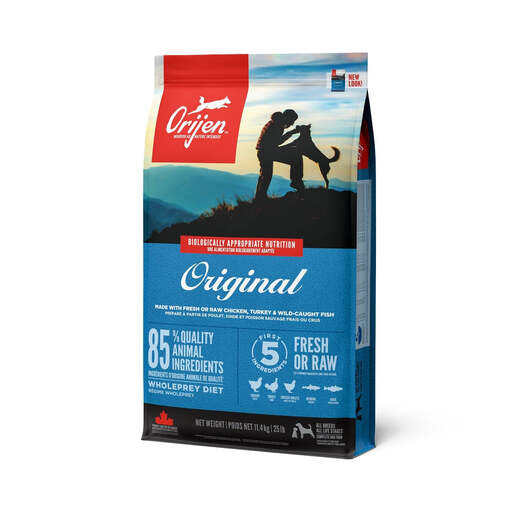
Why we love it: The Orijen Original formula is inspired by the "Whole Prey" concept, which aims to mimic a dog's natural, ancestral diet. It includes not just muscle meat, but also organs and cartilage for complete nutritional value. The result is a composition with an impressive 38% crude protein content, derived from a wide variety of animal sources.
Key features:
Best for which dog? This kibble is ideal for adult dogs of all breeds, especially the most active ones. It will satisfy owners looking for an ultra-protein-rich premium dog food to support their companion's muscle mass and vitality.
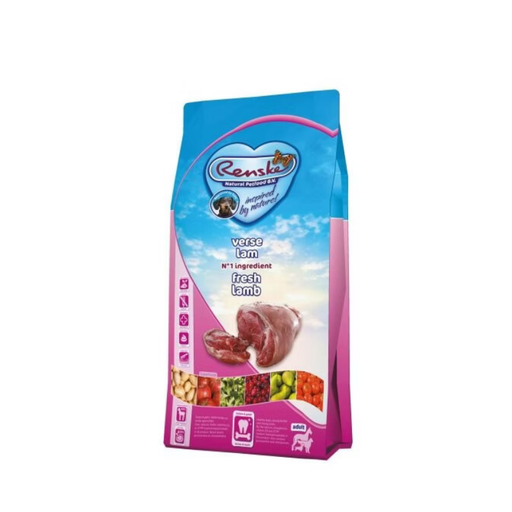
Why we love it: This Renske product is an excellent option for sensitive stomachs. Formulated grain-free and gluten-free, it relies on lamb as a single source of animal protein, thereby limiting the risk of allergies. The combination of sweet potato and peas as carbohydrate sources makes this a highly digestible recipe.
Key features:
Best for which dog? It is perfectly suited for adult dogs of all sizes with sensitive digestion or known intolerances to grains, gluten, or even more common proteins like chicken.
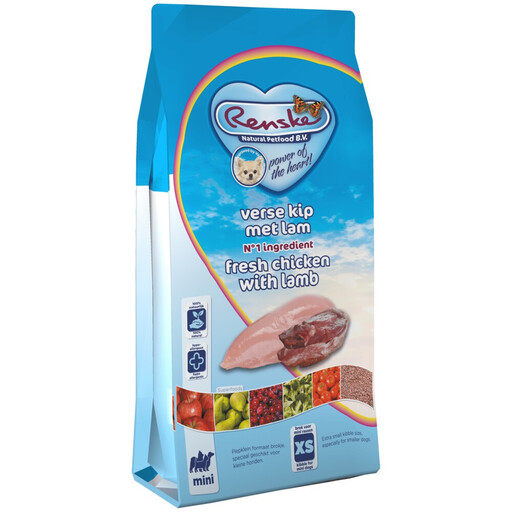
Why we love it: Specially designed for small breeds, this Renske kibble has a tiny size of 7.4 x 4 mm, ideal for small jaws. Very rich in animal-based ingredients (59%), the recipe combines chicken and lamb for maximum palatability. It includes quality whole grains (brown rice, millet, oats) that provide slow-release, sustainable energy.
Key features:
Best for which dog? The perfect choice for adult small-breed dogs whose owners are looking for a complete, energy-dense, and easy-to-chew diet.
A good diet is the foundation of everything, but some dogs have specific needs, particularly for maintaining or gaining their ideal weight. If you want to supplement your pet's diet, take a look at our selection of dog weight gain snacks.
Natural dog kibble stands out for its higher-quality composition: clearly identified protein sources, no artificial colours, flavours, or preservatives, and a generally higher meat content. In contrast, standard formulas may include animal and plant by-products of varying quality, as well as more additives.
Not necessarily. Grain-free kibble is an excellent solution for dogs with a confirmed allergy or sensitivity. For all others, good quality grains (brown rice, oats, etc.) are a healthy source of fibre and energy. The most important thing remains the overall quality of the recipe and how well your dog digests it.
To avoid any digestive upset, a smooth transition is essential. Over a period of 7 to 10 days, mix the new kibble with the old, gradually increasing the proportion of the new food. Start with a 25/75 ratio (new/old), move to 50/50 after a few days, then to 75/25, before reaching 100% of the new diet. Throughout this phase, carefully monitor your dog's stool and general behaviour.