
Livraison le jour même ou le lendemain

Qualité garantie

Débloquez vos offres de bienvenue: Livraison GRATUITE | Jusqu'à -80 % | 30 jours d'essai gratuits à JoyPlus
Téléchargez l'application
As a pet owner, you want only the best for your four-legged companion. Yet, the pet food aisle often feels like a marketing minefield. Between the eye-catching packaging and tempting promises, it's hard to know what to choose. But selecting a quality natural dog food shouldn't be such a puzzle.
This guide is here to help you cut through the noise. We'll break down the most common traps and give you the keys to reading a label like a pro. The goal? To empower you to make an informed choice for your pet's health.
Deciphering manufacturers' claims requires a sharp eye. Here are two of the most frequent pitfalls, designed to mislead even the most well-intentioned owners.
The term "natural" is a powerful selling point, but it's not always a guarantee of superior quality. A brand might highlight a premium ingredient like fresh chicken on the front of the bag, while the full ingredient list reveals a completely different story: low-grade meal, unidentified animal by-products, or an abundance of cheap fillers.
The solution: Ignore the slogans and turn over the bag. The true value of a food is found in the ingredient list, which is ordered by weight. The first 3 to 5 ingredients make up the bulk of the recipe.
The popularity of grain-free kibble has exploded, addressing a legitimate concern about allergies and digestibility. However, the absence of grains doesn't guarantee better quality. Some formulas replace wheat or corn with large amounts of potatoes or peas, which can have a high glycemic index and aren't always more digestible for all dogs.
The solution: Instead of hunting for the "grain-free" label, it's better to assess the overall quality of the protein and carbohydrate sources. A well-formulated recipe with quality brown rice or oats will often be more beneficial for your dog than a grain-free formula packed with potato starch.
To avoid these traps, nothing beats relying on objective indicators. Here are the points to check systematically before you buy.
A clear and precise ingredient list is the first sign of a quality product.
This is where the numbers do the talking. This section provides key data on the food's composition.
There's no one-size-fits-all food. Needs vary enormously from one dog to another.
To help you see more clearly, we've selected a few products that meet specific needs, perfectly aligning with the criteria we've just discussed.
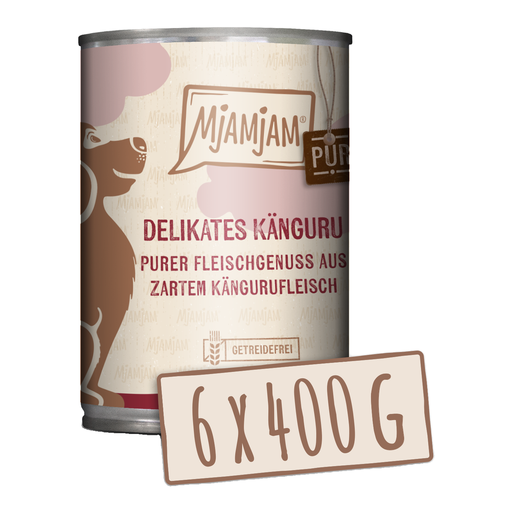
Why we recommend it: Perfect for a sensitive dog, this dog p?té is a single-protein formula. The use of kangaroo, an uncommon meat, minimises the risk of reactions in dogs prone to food allergies. It's a prime choice for an elimination diet.
This product avoids the trap of overly long ingredient lists. Its recipe is impressively simple: 71% kangaroo meat, broth, and minerals. That's it. No grains, sugar, preservatives, or artificial flavours.
Single-protein and grain-free formula, offering very high digestibility. Fresh meat is the almost exclusive ingredient.
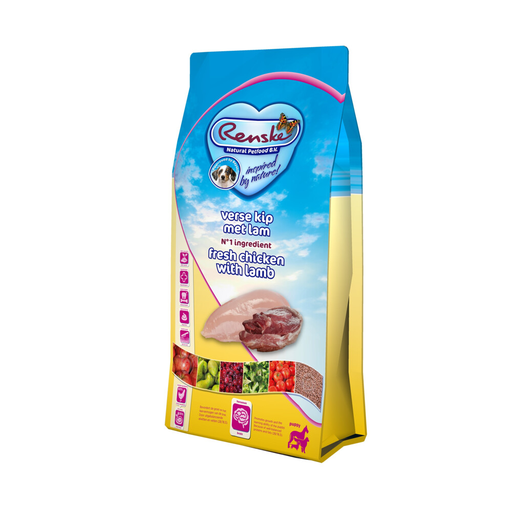
Why we recommend it: Specifically designed for puppies, this formula supports healthy growth with 28% protein and 19% fat. The addition of krill and flaxseed provides Omega-3s, essential for brain development.
This product doesn't fall into the "all-in-one" trap. It's a dedicated, gluten-free puppy food that favours quality grains (brown rice, millet) over empty fillers for a truly balanced nutritional approach.
Fresh chicken is the main ingredient (26%). The recipe is enriched with glucosamine and chondroitin to support developing joints.
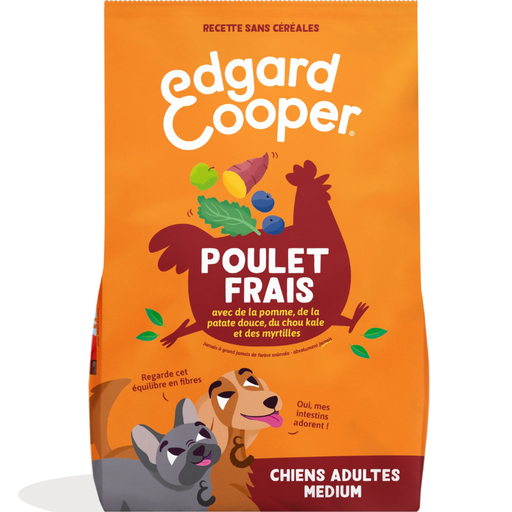
Why we recommend it: With 40% fresh chicken and a 25% protein level, this recipe is designed for adult dogs with a normal to high activity level. It provides the necessary energy to maintain muscle mass and daily vitality.
This formula plays the transparency card by listing "fresh chicken" as the first ingredient. This guarantees a high-quality meat source, not meal or by-products of uncertain nutritional value.
Protein-rich kibble from fresh meat. The recipe also contains prebiotics (FOS & MOS) to promote good gut health.
Discover our full selection of products that tick all the boxes in our guide and meet your dog's needs.
To avoid digestive upset, a gradual transition is essential. Over a period of 7 to 10 days, mix the new food with the old, progressively increasing its proportion:
These two terms are not interchangeable.
Each format has its advantages. Kibble is convenient to store and portion, contributes to good oral hygiene through its mechanical action, and is generally more budget-friendly. Dog p?té, which is higher in water content, promotes hydration and is often more palatable, making it an excellent choice for picky, elderly, or dental-challenged dogs. A mixed-feeding approach, combining both, is often the ideal compromise to get the benefits of each format.