
Livraison le jour même ou le lendemain

Qualité garantie

Débloquez vos offres de bienvenue: Livraison GRATUITE | Jusqu'à -80 % | 30 jours d'essai gratuits à JoyPlus
Téléchargez l'application
Giving your dog the best starts with what's in their bowl. But when faced with the jungle of options for natural dog food, it's easy to get lost between marketing promises and real benefits. Behind appealing packaging and vague slogans, you can sometimes find disappointing formulas. To help you see more clearly, our guide breaks down the pitfalls to avoid and the essential criteria for making the right choice.
The pet food aisle can quickly become overwhelming. Here are three common pitfalls that might lead you to make the wrong choice.
To make an informed choice, focus on these few points that define the quality of a good food.
It all comes down to the ingredient list. The first ingredient must be a clearly identified source of quality animal protein: "fresh chicken," "dehydrated duck," "lamb"... Avoid vague terms like "meat and animal derivatives," which often hide poor-quality raw materials. For a sensitive dog, a single-protein formula (only one source of meat) is ideal for limiting the risk of a reaction. A hypoallergenic dog food goes even further with hydrolysed proteins or novel proteins.
The choice between dry and wet food depends on your dog's preferences, but also on their needs.
Mixed feeding (a combination of kibble and p?té) is an excellent compromise, combining enjoyment, hydration, and convenience.
Natural dog treats are a great tool for training and bonding moments. Be careful, though, as they are a complementary food and should never replace a balanced meal. The best practice? Choose treats with the shortest and simplest ingredient list possible, without added sugars or artificial additives.
To guide you, here are some products with formulas that meet specific needs and avoid the pitfalls we've just discussed.
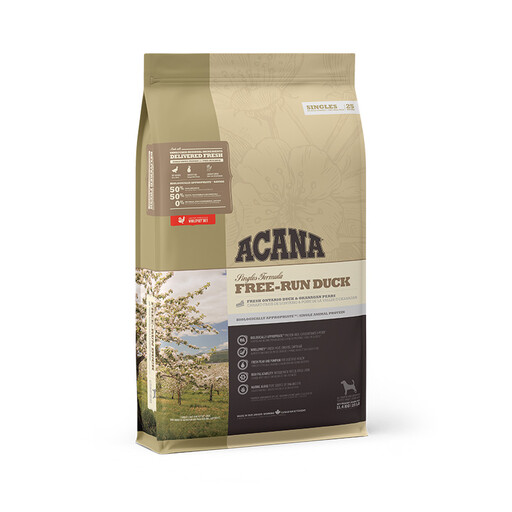
The Profile: Perfect for dogs with sensitive digestion or those prone to allergies. Its single-protein formula (only one meat source) drastically limits the risk of a reaction.
By relying on a single protein source (duck), this recipe radically simplifies the ingredient list. This is a major advantage for easily identifying the cause of an intolerance.
50% duck (raw meat, liver...) for a high protein content. Grain-free, soy-free, corn-free, and wheat-free recipe, enriched with fruits and vegetables (pumpkin, pear) to aid digestion.
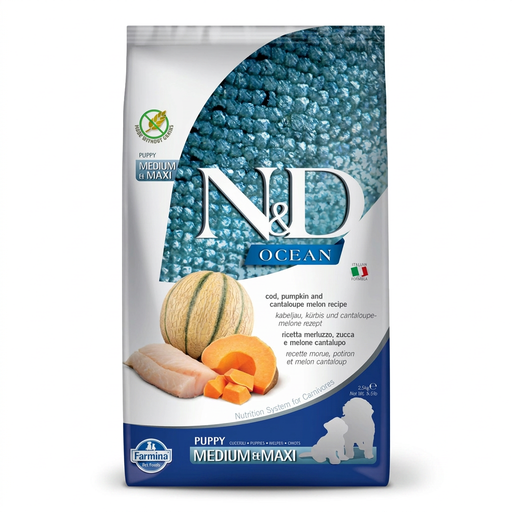
The Profile: Specially formulated for medium and large breed puppies, this food provides all the essential nutrients for healthy and balanced growth.
Unlike 'all life stages' foods, this recipe is specifically calibrated for the needs of puppies. It guarantees an optimal intake of key nutrients, like DHA, which is essential for proper brain development.
Rich in fish protein (cod) and omega-3s (DHA: 1.10%, EPA: 0.80%), which are crucial for the brain and eyes. The pumpkin, rich in fibre, ensures gentle digestion.
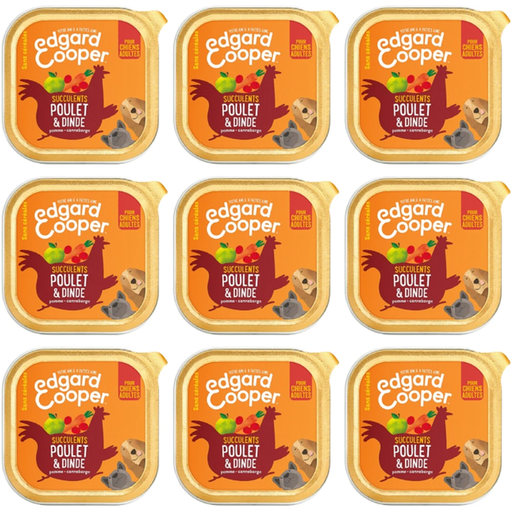
The Profile: The perfect solution for those who prefer wet food, either as a standalone meal or to supplement kibble. A delicious, complete, and highly digestible p?té.
Unlike entry-level wet foods, this one stands out for its high fresh meat content (30% chicken, 26% turkey) and the absence of grains or filler ingredients.
A truly complete and balanced meal, slow-cooked at a low temperature to preserve nutrients. The recipe includes fruits and vegetables (carrots, cranberries, pumpkin) for a cocktail of vitamins and fibre.
Find our complete selection of products that meet our quality criteria and current regulations.
To avoid digestive upset, the transition should be done gradually. Over 7 to 10 days, progressively mix the new food in with the old one. Start with a 25/75 ratio (new/old food) and increase the proportion of the new food every two or three days until it's a complete replacement.
"Grain-free" is an excellent path for dogs with a known sensitivity or allergy. However, it's not a mandatory switch for everyone. A quality recipe containing well-chosen whole grains (brown rice, oats) can be just as beneficial. The most important thing remains the overall quality of the ingredients and the digestibility of the formula.
A complete food (most kibbles and p?tés) is designed to cover 100% of your dog's daily nutritional needs. It can serve as their sole source of nutrition. Conversely, a complementary food (treats, oils, some toppers...) is not balanced to be a meal. It is added to the complete diet in small quantities and should never replace it.