
Livraison le jour même ou le lendemain

Qualité garantie

Débloquez vos offres de bienvenue: Livraison GRATUITE | Jusqu'à -80 % | 30 jours d'essai gratuits à JoyPlus
Téléchargez l'application
You want the best for your pet, and it all starts in their bowl. The market for natural dog and cat food is booming, but it's also a confusing maze of marketing promises. How can you tell the difference between a truly healthy recipe and a product that's simply riding the "natural" wave?
This guide is here to help you see things more clearly. We'll break down the labels and reveal the essential criteria for making the right choice, helping you avoid common mistakes that are tough on both your wallet and your companion's health.
Navigating the pet food aisle can quickly become a headache. Between appealing packaging and punchy slogans, it's hard to keep a clear head. Here are the three most common traps.
To stop buying blind, focus on these three objective indicators. They are the true barometer of a product's quality.
First instinct: read the composition. For a carnivore, the first ingredients must be a clearly identified source of animal protein.
This table, mandatory on all packaging, is a real gold mine. Focus on these two key values:
There's no one-size-fits-all answer; each format has its advantages.
Mixed feeding (or bi-nutrition), which combines kibble and p?té, is often the ideal compromise between hydration, enjoyment, and practicality.
To put theory into practice, here is a selection of products suited to different needs, all analysed against our criteria.
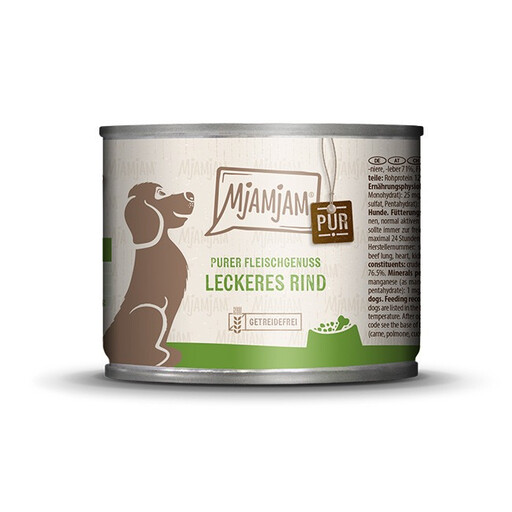
Why this product fits: Perfect for owners who demand complete transparency. This beef p?té is formulated with a single source of animal protein, making it ideal for dogs with sensitive digestion or for implementing an elimination diet.
It cuts through the confusion of long ingredient lists with an ultra-short and clear composition: 71% beef (meat, lung, heart...), meat broth, minerals, and eggshell powder. No hidden surprises.
A single-protein and grain-free formula with a very high meat content and a minimalist composition for maximum digestibility.
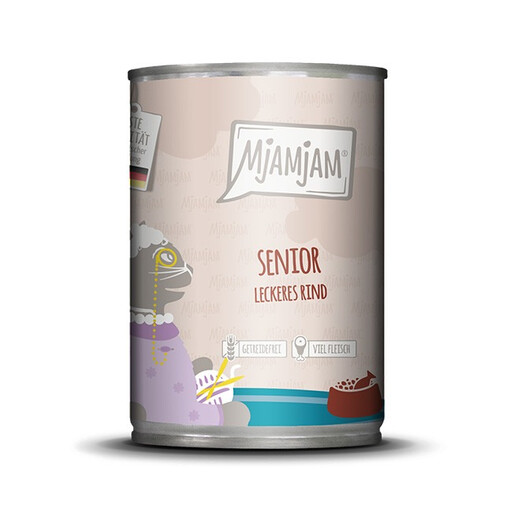
Why this product fits: This senior cat food recipe is specifically designed for the needs of ageing cats, with a focus on digestive health and joint support.
It goes far beyond a simple 'senior' label. The formula includes functional ingredients like chicory (a prebiotic), salmon oil (rich in omega-3s), and green-lipped mussel, known for its joint benefits.
A complete and targeted recipe that supports the mobility and digestion of older cats, while guaranteeing a high meat content (70%) and a grain-free composition.
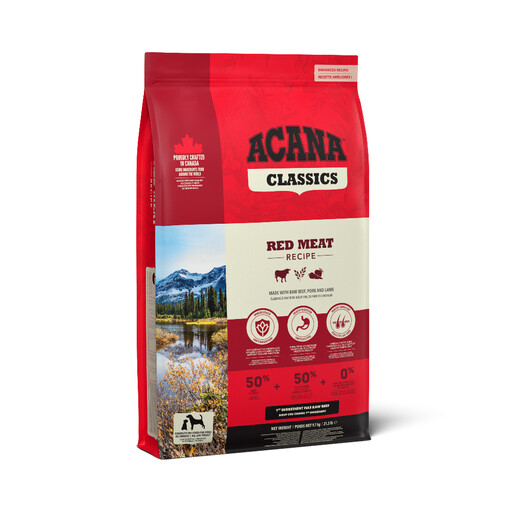
Why this product fits: For those who prefer the convenience of Acana kibble without compromising on quality. This recipe is based on a well-thought-out balance of animal proteins and low-glycaemic carbohydrates.
It avoids the 'grain-free for show' trap, where grains are replaced by poor-quality substitutes. Here, Acana includes whole oats and barley, low-glycaemic grains, and puts raw beef (16%) at the top of the list.
A balanced ratio: 50% quality animal ingredients (beef, lamb, pork) and 50% healthy grains, fruits, and vegetables. A complete and nutrient-dense formula.
Discover our complete and up-to-date selection of products that meet our strict selection criteria and current safety standards.
To avoid digestive upset, any transition must be gradual. Over 7 to 10 days, mix the new food with the old, gradually increasing the proportion of the new food until the old one is completely replaced. Closely monitor your pet's stools and general behaviour during this phase.
Not necessarily. A grain-free diet is only beneficial if it's rich in quality animal protein. If grains are simply replaced with a large amount of potatoes or legumes, the carbohydrate level remains high. The key is to choose a formula suited to your pet's needs as a carnivore. For some dogs, quality ancient grains (oats, barley) in reasonable amounts are actually very digestible.
Once opened, a can or tray of wet food should be stored in the refrigerator and consumed within 24 to 48 hours. To make it more palatable, remember to take it out a few minutes before serving to let it return to room temperature.