
Livraison le jour même ou le lendemain

Qualité garantie

Débloquez vos offres de bienvenue: Livraison GRATUITE | Jusqu'à -80 % | 30 jours d'essai gratuits à JoyPlus
Téléchargez l'application
Nothing brings more joy than seeing your dog wag its tail in delight. When it comes to spoiling them, chicken treats are a timeless choice. The problem? Pet store shelves are packed with products whose appealing packaging often hides a much less savoury reality. Deciphering labels to distinguish the good from the not-so-good can be a real headache.
To help you make the right choice, here are the most common pitfalls to avoid, saving you from disappointment and wasted money:
Fortunately, making an informed choice is simpler than it seems—you just need to know where to look and what to check.
To see things more clearly, focus on a few key criteria that never mislead. They will help you assess at a glance whether a product is truly right for your pet.
The golden rule is simple: the ingredients list is arranged in descending order by weight. For a natural chicken dog treat, the very first ingredient must be chicken. Be wary of vague terms like "meat and animal derivatives." Favour clear descriptions such as "chicken," "dehydrated chicken," or "fresh chicken meat."
A chicken jerky for dogs, for example, often has a very short ingredients list, which is an excellent sign. The fewer the components, the more certain you can be about what you're giving your companion.
The percentages of analytical constituents provide a good overview of the product's balance. Here's what to look for:
For many dogs, simplicity is the best recipe. A grain-free dog treat is a compelling option, especially for those with digestive sensitivity to gluten or certain grains. In the same vein, a hypoallergenic dog treat relies on a single protein source (in this case, chicken) to minimise the risk of a reaction. The absence of artificial colours, flavours, and controversial preservatives is also a true mark of quality.
Every dog is unique. The ideal treat, therefore, depends on its age, size, and your goals (training, occupation, or a simple pleasure). Here are a few suggestions that meet specific needs, based on the criteria we've just discussed.
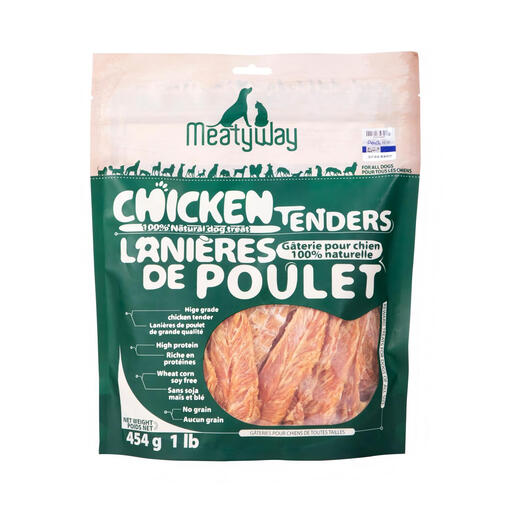
Why it's a great fit: Perfect as a dog training reward, its tender texture makes it easy to break into small pieces for frequent rewards without racking up the calories. The intense chicken flavour keeps your dog motivated during exercises.
Its composition is a model of simplicity: just chicken, and that's it. No grains, no additives, no fillers. The very definition of a natural treat.
A minimum of 30% crude protein, proving it's made from real meat, not substitutes. Its tender texture is easy for dogs of all ages to chew.
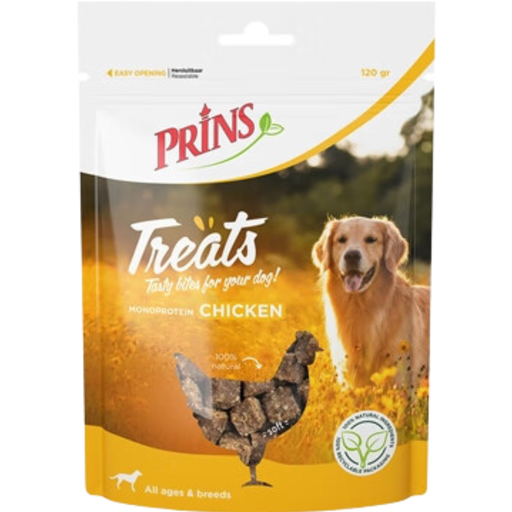
Why it's a great fit: Designed with a single animal protein source (chicken), this product is an excellent option for dogs with food sensitivities. It's a chicken dog treat that minimises the risk of intolerance.
Its intentionally simple formula is designed for sensitive stomachs. It excludes common allergens like beef or soy and contains no unnecessary additives.
50% chicken from responsible farming. Its texture is designed to be easily breakable, allowing for perfect portion control.
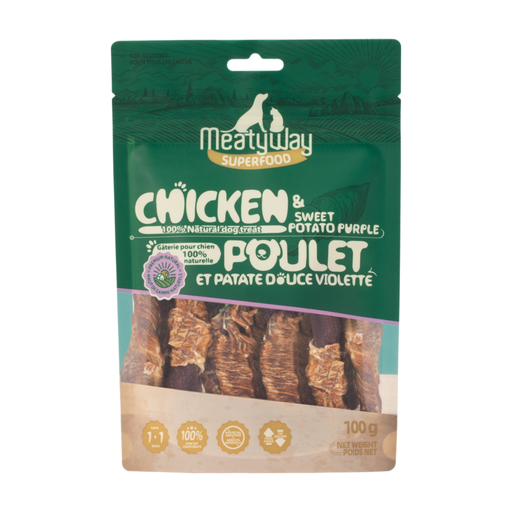
Why it's a great fit: The combination of chicken and sweet potato provides a crunchy texture that supports oral hygiene by mechanically cleaning plaque from teeth. It's a delicious and functional treat.
This grain-free recipe uses purple sweet potato, rich in fibre and antioxidants, as a healthy alternative to conventional fillers. The ingredients list remains short and crystal clear.
The marriage of quality animal protein with the benefits of vegetables. Its crunchy texture guarantees a highly satisfying chewing session.
Find our complete selection of products that meet our strictest quality criteria.
As a general rule, treats should not make up more than 10% of your dog's daily caloric intake. The exact amount depends on its size, weight, age, and activity level, as well as the caloric value of the treat itself. Always refer to the manufacturer's recommendations on the packaging and remember to adjust its main food portion to maintain a healthy weight.
Not necessarily. A "grain-free" treat isn't automatically healthier. What matters is the overall quality of the ingredients. A grain-free formula is a good idea for dogs with a known sensitivity or allergy. However, a treat containing a reasonable amount of quality whole grains can be perfectly suitable for a dog that digests them well. The most important thing is to choose products with short, clear ingredients lists, with meat at the top.
Natural treats, especially if they are soft and free of artificial preservatives, require a bit of care. Store them in a cool, dry place, away from direct light. Once the package is opened, seal it tightly or transfer the treats to an airtight container. For very moist products, the manufacturer may recommend refrigeration. In any case, check the storage instructions on the packaging.