
Livraison le jour même ou le lendemain

Qualité garantie

Débloquez vos offres de bienvenue: Livraison GRATUITE | Jusqu'à -80 % | 30 jours d'essai gratuits à JoyPlus
Téléchargez l'application
A natural cat litter can reduce the use of mineral materials, simplify cleaning and limit odours around the house. But marketing promises alone aren’t enough to make the right choice. Texture, clump quality, dust levels and disposal methods can vary considerably from one product to another.
Before you decide, also consider the number of cats, their age, their sensitivity to texture and how much time you can devote to maintaining the litter tray.
A plant-based cat litter can be made from tofu, wheat, corn, cassava or other plant fibres. However, its origin doesn’t guarantee the quality of the clumps. A clump that breaks apart leaves more residue at the bottom of the tray and increases consumption.
So check the details on clumping litter, the firmness of the clumps and the recommended frequency of removal.
Odour management depends on several factors: absorption capacity, daily removal of waste, depth of fill and room ventilation. An odour-control litter can help reduce smells, but it will never replace regular maintenance.
Scented formulas aren’t necessarily suitable for all cats. For an animal sensitive to smells, an unscented or naturally scented product will often be easier to accept.
The term biodegradable litter means the product can break down under certain conditions. It doesn’t automatically mean the clumps can be flushed through the drains. In the UK, local guidelines and the manufacturer’s instructions should always come first.
Some plant-based products allow composting or disposal in small quantities, while others must be thrown away with household waste. Always follow the label and avoid pouring large amounts down the toilet.
Fine granules, similar to traditional sand, are generally easier for cats to accept during a transition. Tofu or cassava fibres, which are lighter, can feel different under their paws.
To switch formulas, gradually mix the old and new litter over several days. Watch your cat’s habits and avoid changing the tray, its location and the litter all at once.
For quick tray cleaning, choose a litter that forms well-defined clumps around urine. A compact clump is easy to scoop out and reduces waste of clean granules.
A depth of 5 to 7 cm is generally suitable for plant-based litters, but always refer to the recommended depth on the packaging. In a multi-cat household, several trays and daily scooping are usually needed to keep the surface clean.
A completely dust-free litter is hard to guarantee: transport, pouring and friction can release fine particles. Instead, look for a formula that claims low dust emission, then pour it slowly.
Mineral cat litters, especially those based on chalk and quartz, don’t behave like clumping plant-based litters. Some absorb liquids without forming clumps and need more frequent stirring or complete replacement. The best choice therefore depends as much on your routine as on the material used.
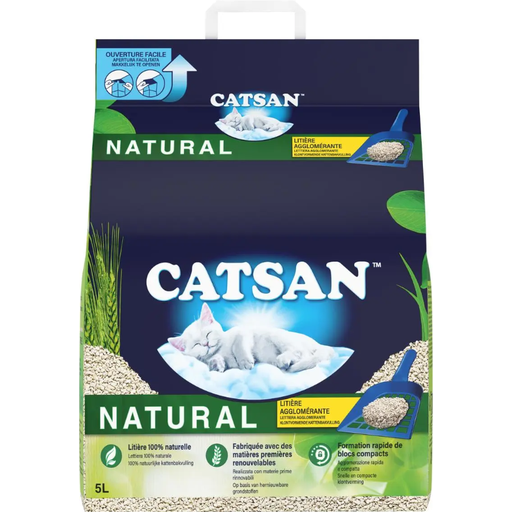
Why this suits this profile: Its 5-litre size lets you try a plant-based litter made from wheat derivatives without committing to a large pack straight away.
Its clumping formula forms small, compact blocks, so you only need to remove the soiled area instead of emptying the whole tray.
Wheat derivatives, 5-litre size, clumping action and biodegradable claim according to the product page.
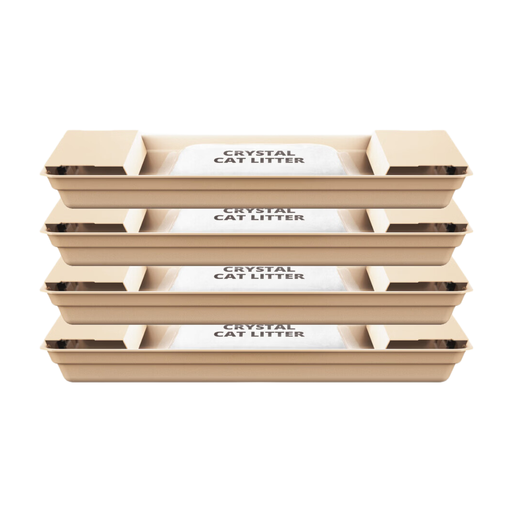
Why this suits this profile: This self-cleaning litter, equipped with a camera and pH monitoring, is designed for households that want to automate part of the tray management.
The system includes stop sensors and pauses cleaning when it detects liquid stools. However, you must use the PETKIT crystal litter designed for pH monitoring.
Waste monitoring, dual waste collector, 19 cm entry and built-in safety sensors.
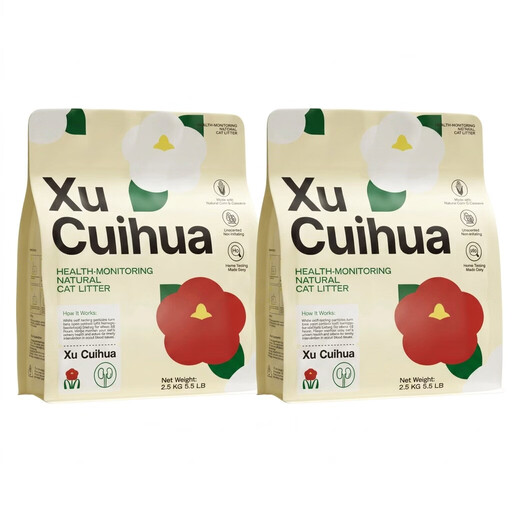
Why this suits this profile: Its blood detection feature in urine may appeal to owners who want to monitor certain changes during daily cleaning.
The indicator granules change colour according to the product page. This feature is a screening aid, not a diagnosis: any abnormality should be reported to a vet.
Formula based on cassava and corn starch, unscented, with fast clumping and a fine texture.
We’ve put together a comprehensive, real-time updated selection of products that meet these demanding criteria and comply with European safety regulations.
A depth of 5 to 7 cm is generally suitable for clumping plant-based formulas. However, some products recommend up to 10 cm. Remove clumps and stools every day, then top up the level to maintain an even layer.
It depends on the number of cats, the size of the tray and the litter’s absorbency. A multi-cat household will naturally use more. The best indicators are the condition of the litter, any odours and whether the clumps stay firm. The tray should be completely emptied and washed at regular intervals.
Not necessarily. The price of the bag alone isn’t enough to compare products. A highly absorbent litter that forms solid clumps can reduce waste, whereas a less cohesive formula means you’ll remove more clean material. Compare the price per kilogram or per litre, then observe the actual consumption over several weeks.