Which configuration is right for you?
The available width, the space needed to load the machine and how you plan to use the top all point towards different designs.
A very narrow kitchen
If the space is around 40 to 45 cm wide and cannot accommodate a front-loader close to 60 cm wide, consider a top-loader. The French National Consumer Institute describes this design as suitable for narrow spaces, provided there is enough room above the machine to open the lid.
A kitchen with enough width but limited depth
If a front-loader fits the width but may stick out into the walkway, compare its depth without the door, with the door closed and with it open. Also check the space needed for the hoses: the depth of the machine itself does not show how much room it will take up once installed.
A household that wants to keep its worktop
A front-loader is the design to consider for installation under a worktop. Check the manual for the exact model to make sure your planned installation is permitted and that the door remains accessible. If you also plan to stack a tumble dryer on top, check that both appliances and the stacking kit are compatible.
What should you check before choosing?
First measure the space and check access with the machine in use, then compare compatible models with the amount of laundry you usually wash.
| Priority |
What to check |
My needs |
| Overall size |
Measure the available width and height. For a front-loader, compare the depth without the door, with the door closed and with it open; allow for any clearance specified in the manual. |
I need to be able to open the machine without blocking the kitchen door or making the walkway unusable. |
| Loading and space above |
A top-loader opens from above and cannot go under a worktop, according to the French National Consumer Institute. For a front-loader under a worktop or a stacked installation, check the instructions and compatibility requirements for the specific models and kit. |
There is limited space in front of the machine, or I want to keep a continuous worktop. These two requirements do not necessarily call for the same design. |
| Capacity and energy label |
Match the capacity in kg to your usual loads. ADEME says that 7 kg is usually enough and recommends checking that the capacity meets your needs; then compare the information on the energy label. |
I want a drum that can handle bedding and towels without choosing the highest capacity just for the sake of it. |
| Connections |
Locate the water inlet, drain and socket, then check the manual for the space needed for the hoses and the type of water supply required. Electrolux, for example, states that its washing machines are designed for a cold water supply. |
In a fitted kitchen, I need to connect the machine without trapping the hoses or making changes to the connections without checking first. |
Which branded models can you use as a guide?
These models give you dimensions to compare with your kitchen. Their inclusion here does not confirm that they can be installed under a worktop or that a particular model is available.
Whirlpool
Whirlpool France’s product details for the TDLR6267FR top-loader give dimensions of 40 cm wide, 60 cm deep and 90 cm high.
- A width worth comparing with a space that cannot fit a front-loader close to 60 cm wide.
- The lid needs clear space above the machine; also check its depth and installation clearances.
Candy
Candy France lists the front-loading ProWash 300 GD 48SB6-S at 595 × 533 × 850 mm, with an 8 kg capacity.
- The stated depth makes this model worth considering if your kitchen can accommodate a front-loader width-wise but not a deeper machine.
- Check the door clearance, connections and manual requirements separately before deciding whether it will fit your space.
Bosch
Bosch’s technical details for the WAN2827TFR distinguish between 59.0 cm deep without the door, 63.2 cm with the door and 104.9 cm with the door open.
- These measurements help you work out how much space is needed in front of this specific model.
- They do not, on their own, confirm that it can be installed under a worktop; check the relevant manual.
Haier
Haier France’s range includes top-loaders measuring 405 × 600 × 860 mm, with capacities of 6 or 8 kg depending on the model.
- These models show why you should compare capacity and all three dimensions for each machine.
- A narrower width does not remove the need to allow room to open the lid and fit the connections.
Which front-loading washing machines should you consider on Joybuy?
Consider these four front-loading models if your kitchen can accommodate this design. For each one, compare the installation dimensions of the exact variant with your space and check the clearance needed for the door. Do not assume it can be installed under a worktop.
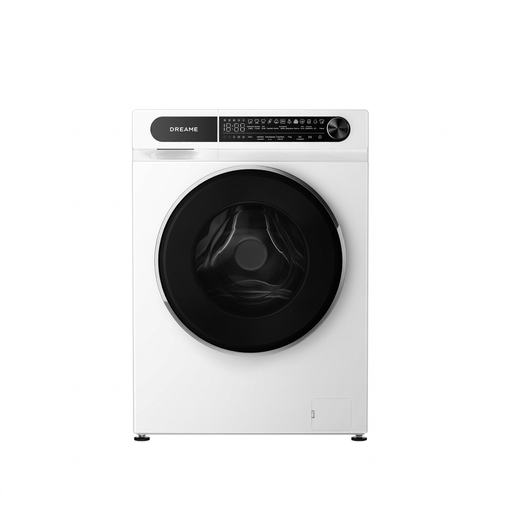 Image unavailable
Dreame DRWASHS8KG Washing Machine S, 8 kg
Worth considering if a front-loader will fit in your kitchen. Before choosing this 8 kg model, check the manual for its depth with the door and connections in place, the clearance needed for the door and any requirements for installation under a worktop.
View on Joybuy
 Image unavailable
Hisense WF5I8043BWF, 8 kg, 1400 rpm
This front-loader could be an option if you have enough width. It has a stated capacity of 8 kg; check the model’s diagram for its installed depth, door clearance and whether it can go under a worktop before adding it to your kitchen.
View on Joybuy
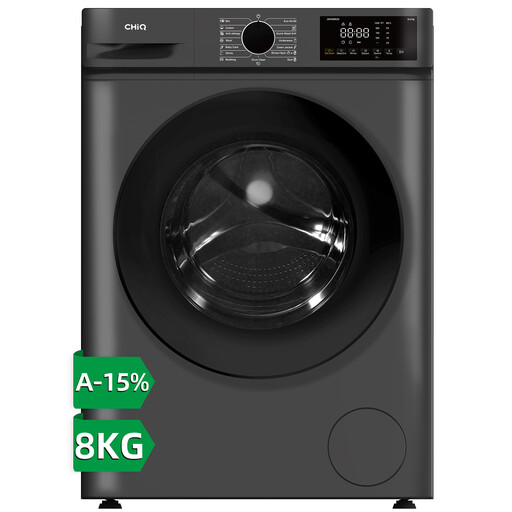 Image unavailable
CHiQ JW85883G, 8 kg, dark grey
If your kitchen has limited depth, start by comparing this front-loader’s installation dimensions with the space available. Its stated capacity is 8 kg; also check the width, height, door clearance and any requirements for installation under a worktop.
View on Joybuy
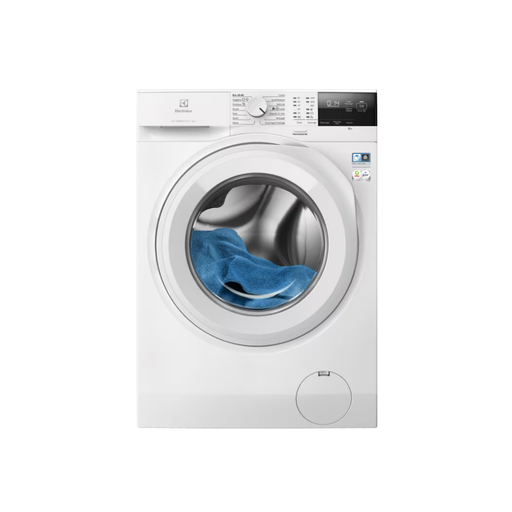 Image unavailable
Electrolux EW6FI4805AW, 8 kg, 1400 rpm
If an 8 kg front-loader suits your laundry loads, measure how much space it would leave in the walkway. Check the manual for this model’s depth with the door, the clearance needed in front of it, the connections and any planned installation under a worktop.
View on Joybuy
Frequently asked questions
How do you measure the space needed for a front-loading washing machine?
Measure the space, then check how much room is left in the walkway with the door open. Bosch’s product details for the WAN2827TFR show how much the measurements can vary: 59.0 cm deep without the door, 63.2 cm with the door and 104.9 cm with it open. Allow for the connection clearances specified in the manual for the model you are considering.
Can a top-loading washing machine go under a worktop?
No: the lid needs to be accessible so you can load the laundry. The French National Consumer Institute makes this distinction between top-loaders and front-loaders, which can be considered for installation under a worktop. However, check that the manual for the specific front-loader permits your planned installation.
Can you stack a tumble dryer on a front-loading washing machine?
Yes, as long as both appliances and a stacking kit are compatible. Electrolux, for example, states that one of its kits fits front-loading appliances with a depth of 47 to 60 cm. Check the references and instructions for the kit you choose; do not simply place the tumble dryer on top of the washing machine.
Does a washing machine need to be connected to a cold water supply?
Follow the manual for the model you buy. Electrolux states that its front- and top-loading washing machines are designed for a cold water supply and advises against connecting them to a hot water pipe. Do not assume this applies to other models without checking first.
How do you choose capacity without relying on the dimensions alone?
Match the capacity in kg to your usual loads, including bedding and towels. ADEME says that 7 kg is usually enough, while recommending that you check the drum meets your needs. Once you have found a design that fits your kitchen, compare the information on the energy label too.


