Start by measuring the available width, depth and height, as well as the space needed to open the lid or door and access the connections. A top-loading machine is best suited to limited width, a slim front-loading model to a lack of depth, while an integrated or stacked front-loading machine requires explicit model compatibility and, where applicable, a suitable stacking or installation kit.
Which homes are they suitable for?
Very limited width
You have a recess, bathroom or passageway where a 60 cm-wide front-loading machine will not fit. According to UFC-Que Choisir, top-loading washing machines are generally 40 to 46 cm wide; also check the vertical clearance needed to open the lid.
Limited depth
You have around 60 cm of width, but little space between the machine and a wall, door or unit. UFC-Que Choisir describes slim front-loading machines as 33 to 45 cm deep; the door must nevertheless be able to open fully in front of the appliance.
Under a worktop or in a stacked installation
You want to slide the machine under a worktop or save floor space by stacking it with a tumble dryer. Documented compatibility between the model and the relevant kit should take priority over the external dimensions alone.
Priorities before buying
Measure the space and delivery route before comparing programmes. Then choose the format that solves your main constraint and confirm the installation requirements in the model’s instructions.
| Priority |
What to check |
Your needs |
| Compatibility with the space |
Compare the machine’s overall width, height and depth with the recess, skirting boards and access routes. Check the installation measurements, rear access and connections in the instructions. |
I want to be able to deliver, connect and use the machine without blocking the intended space. |
| Access for loading |
For a top-loading model, check the clearance above the lid. For a front-loading model, check the door’s actual opening range and any obstacles in front of the appliance. |
The laundry should be easy to load without obstructing a door, walkway or neighbouring unit. UFC-Que Choisir states that a top-loading machine does not need front clearance, unlike a front-loading model. |
| Capacity and format |
Match the capacity in kg to your usual loads and washing frequency. Also compare water and energy consumption, spin performance and noise on the energy label. |
I want a drum suited to my laundry without running extra cycles or installing a machine that is too large for my household. ADEME states that a 7 kg capacity is sufficient most of the time. |
| Under a worktop or in a stacked installation |
Confirm that the model has a removable top or a suitable under-worktop kit for the exact reference. For a stacked installation, check the kit against the exact references of both appliances and the required depth. |
I want a stable, accessible installation without removing a top or stacking appliances based on width alone. |
Mistakes to avoid
-
Buying based on the advertised width alone
A machine may fit into the recess but still be difficult to connect or use if the lid, door or rear of the appliance is no longer accessible. A slim front-loading model mainly reduces depth and generally retains a width close to 60 cm.
Draw the space from the front and above, adding walls, doors, skirting boards, neighbouring units, the appliance opening and access to the connections. Then check the measurements in the instructions for the exact model.
-
Assuming a compact model will suit every load
The slim washing machines cited by the sources generally offer capacities of 4 to 6 kg. A drum that is too small may mean running more cycles, while a large drum that is regularly underloaded may not suit the way you wash.
Base your choice on your usual loads, bulky fabrics and washing frequency. ADEME cites 7 kg as a sufficient benchmark in most cases, although this should be adapted to your household.
-
Stacking appliances without checking the kit
The usable dimensions, stability and exclusions depend on the kit and the associated references. Bosch states, for example, that one of its kits requires a washing machine more than 55 cm deep and must be matched to the tumble dryer.
Keep the full references of the washing machine and tumble dryer, then check their compatibility in the manufacturer’s documentation before buying the appliances and kit.
-
Planning an under-worktop installation without checking the model
Removing the top may require a specific covering and protection kit. A Bosch under-worktop kit is designed specifically for machines without a worktop and protects cables and electrical components.
Choose a model whose product page or instructions explicitly mention under-worktop compatibility, a removable top or a kit suitable for the reference.
Brand guide
Bosch
Worth considering for an under-worktop or stacked installation when you are looking for kits documented for specific references.
- Bosch sells under-worktop and stacking kits with compatibility checks based on the product reference.
- The conditions are not universal: some kits require a depth of more than 55 cm or exclude certain series.
Whirlpool
The French product pages consulted illustrate a narrow top-loading format and a standard front-loading model, making them useful for comparing the space required in different rooms.
- The TDLR 6247 FR/N top-loading model listed by Whirlpool is 40 cm wide, compared with 59.5 cm for the FFSP 9269 W FR front-loading model.
- These dimensions apply to these specific references and do not describe the entire range.
Electrolux
Worth considering if delivery with installation is part of your plans and the access route to your home needs to be prepared.
- The Electrolux pre-installation guide recommends checking the dimensions and clearing the space before delivery.
- Installers do not carry out joinery, plumbing or electrical work; check the connections before placing your order.
Washing machine options on Joybuy
Joybuy options suited to under-worktop installations, limited depth or the need to combine washing and drying within a single floor footprint.
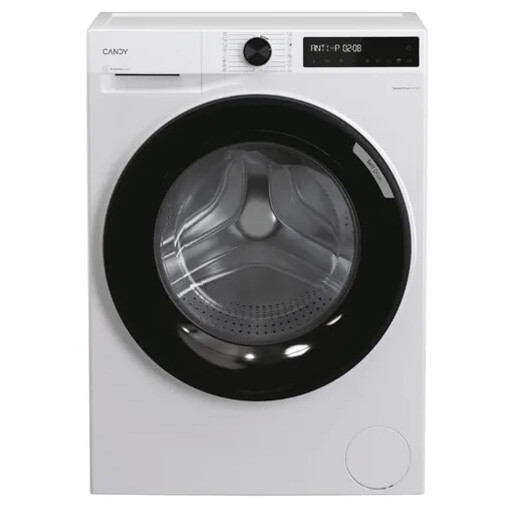 Image unavailable
Candy BR 411BL9-S, 11 kg front-loading washing machine
Worth considering for a standard-width under-worktop recess, provided the depth and connections remain accessible.
Advertised dimensions: 59.5 × 85 × 68.1 cm; capacity 11 kg; A rating; spin speed 1,400 rpm. Check the instructions for the door clearance and under-worktop installation tolerances.
Joybuy
 Image unavailable
Samsung WD10HG6U34BEU3, 10 kg / 6 kg washer dryer
An option to consider if you want to wash and dry in one appliance, with a recess close to 60 cm deep.
Advertised dimensions: 600 × 850 × 590 mm; washing capacity 10 kg and drying capacity 6 kg; stated D rating. Confirm the door opening, installation clearances and rear access before installation.
Joybuy
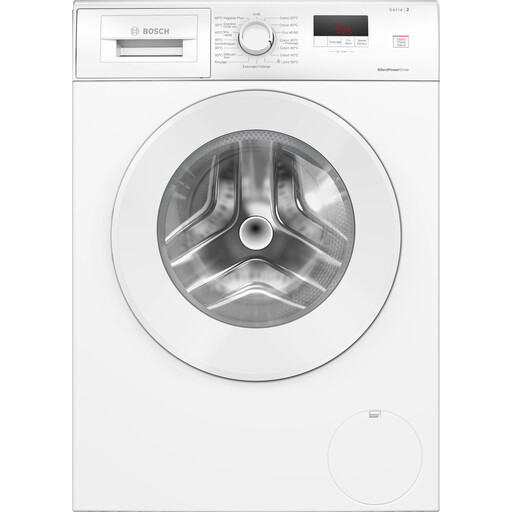 Image unavailable
Bosch WGE02407FR, 7 kg front-loading washing machine
Compare this model if your room can accommodate a standard-width front-loading machine and a 7 kg capacity suits your usual loads.
Advertised dimensions: 59.8 × 84.8 × 59 cm; total depth including the door: 63.2 cm; A rating; spin speed 1,400 rpm. The top is stated to be non-removable, so this model is not suitable for an under-worktop installation that requires its removal.
Joybuy
 Image unavailable
Samsung WD11DG6B85BEU3, 11 kg / 6 kg washer dryer
Worth considering when floor space is limited but you want to combine washing and drying in a single machine.
Advertised dimensions: 60 × 85 × 60 cm; washing capacity 11 kg and drying capacity 6 kg; A rating for washing and stated D rating for the wash-and-dry cycle. Check the door clearance and ventilation requirements in the instructions.
Joybuy
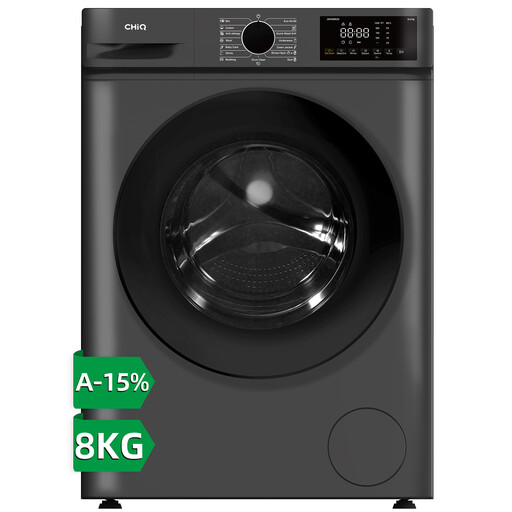 Image unavailable
CHiQ JW85883G, 8 kg front-loading washing machine
An option for a home where depth is the main constraint, provided you confirm the appliance’s full footprint within the recess.
Advertised chassis depth: 52 cm; capacity 8 kg; spin speed 1,400 rpm; 16 programmes. Check the width, height, depth including the door, door opening range and installation requirements before buying.
Joybuy
Frequently asked questions
What measurements should you take before ordering a washing machine for a narrow recess?
Measure the internal width, depth and height of the recess, then measure the delivery route to the room. Allow for the space needed to open the lid or door, as well as practical access to the water inlet, drain and socket; the exact clearances are listed in the model’s instructions.
Can a top-loading washing machine be installed under a worktop?
Generally, no: a top-loading machine needs clearance above it to open the lid and load the laundry. For an under-worktop installation, choose a front-loading model whose manufacturer explicitly provides for a removable top or a suitable under-worktop kit.
Can any tumble dryer be placed on a front-loading washing machine?
No. A stacked installation requires a stacking kit compatible with both exact references. Bosch specifies for some of its kits that the kit must be matched to the tumble dryer and that a washing machine more than 55 cm deep may be required; a similar width alone is not enough.
Will electrical or plumbing work be needed?
This depends on the condition and location of the existing connections. Electrolux states that its installers do not carry out joinery, plumbing or electrical work; if the installation looks unsuitable, have it checked by a qualified professional before delivery.
Which energy-label details matter in a small flat?
Compare water and energy consumption, spin efficiency and noise levels. ADEME recommends checking these criteria; effective spinning can be particularly useful when laundry is dried indoors.


