
Same-day & Next-day Delivery

Quality Guaranteed

Unlock Your Welcome Offers: FREE Delivery | Up to 80% OFF | Free 30-day JoyPlus trial
Download the APP
A sound toy can quickly become a child’s favourite playtime companion… or end up at the back of a cupboard. To avoid making an unsuitable purchase, it is worth looking beyond the colours, featured melodies and functions shown on the packaging. The recommended age, durability, volume and cost of accessories often make all the difference.
A musical toy for a baby with lights, buttons and dozens of melodies may seem appealing. However, a very young child will not use it in the same way as a 6- or 8-year-old. Conversely, an instrument that is too complex may discourage a beginner.
So the first question to ask is simple: will the child be able to understand and use the toy independently, or will you need to help them constantly?
Repetitive sounds can quickly become irritating at home, especially in a flat. Check for a volume control, an easily accessible on/off button and, for electronic models, a function that limits how long the toy can be used.
With a karaoke microphone for children, the distance between the speaker and microphone can also cause feedback. A clear space and a reasonable volume make singing sessions much more enjoyable.
Drumsticks, batteries, decorative accessories and removable components all deserve careful attention. Follow the age recommended by the manufacturer and read the warnings about choking hazards.
For a battery-operated model, check whether the batteries are included. Some toys use LR6 or AA batteries sold separately, while a rechargeable model requires a cable and charging by an adult.
For babies, choose a light-up baby toy or a musical toy with large controls that is easy to hold and clean. Short melodies, colours and responses to pressing can support early sensory exploration, without presenting the product as a medical or therapeutic learning tool.
Between 3 and 5 years old, a children’s drum and xylophone is ideal for freely discovering rhythm. Preferably choose easy-to-hold mallets and a stable structure. From the age of 6, a more complete children’s musical instrument can support writing, singing or creating short musical sequences.
Wood offers a more traditional feel and is very well suited to a wooden music box or a small instrument. However, check the quality of the finish, make sure there are no sharp edges, and check the sturdiness of the handles and the way any metal parts are secured. A wind-up music box is designed to be handled gently and must be kept out of babies’ reach.
Plastic is generally easier to clean and makes it possible to incorporate a screen, buttons or a speaker. In this case, check that the battery compartment closes securely, that the hinges appear sturdy and that you follow the care recommendations.
Before buying, look for the CE marking, the age range, warnings and the contact details of the manufacturer or responsible person in the European Union. Reference to the EN 71 standard may also be found in the product listing when provided by the manufacturer. This information does not replace reading the instructions.
For electronic products, also check:
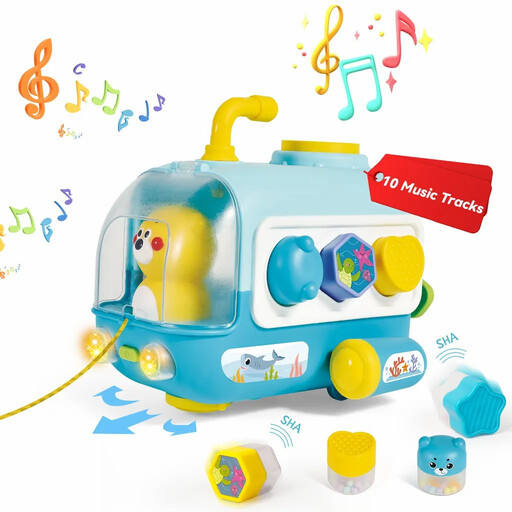
Why this choice suits this profile : Its playful design is ideal for early developmental play and can make a lovely birthday present for a young child, provided you follow the age stated in the product listing.
The functions are easy to identify: melodies and light effects. This makes it easy to understand how the toy is used before buying, without being swayed by an endless list of features.
A submarine-inspired design, light effects and several melodies. Adult supervision remains essential if the product contains small parts.
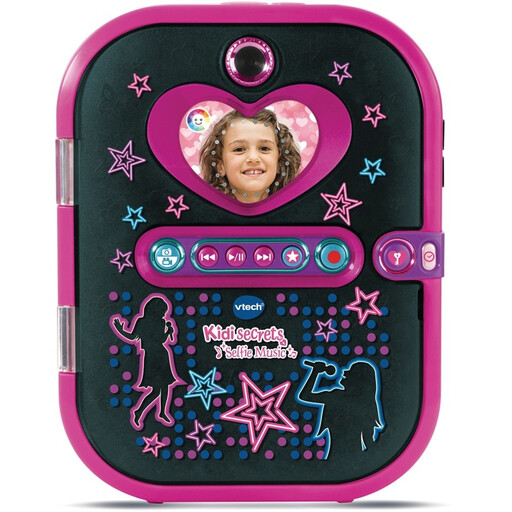
Why this choice suits this profile : This electronic diary is designed for children aged 6 to 12 who enjoy writing, taking photos, listening to music and playing on the same device.
The listing details the functions instead of making vague promises: keyboard, colour screen, dual camera, MP3 player, voice recorder and educational games.
More than 750 pages, facial recognition or a four-digit code, seven activities and four LR6 batteries included. This product is not suitable for children under 6.
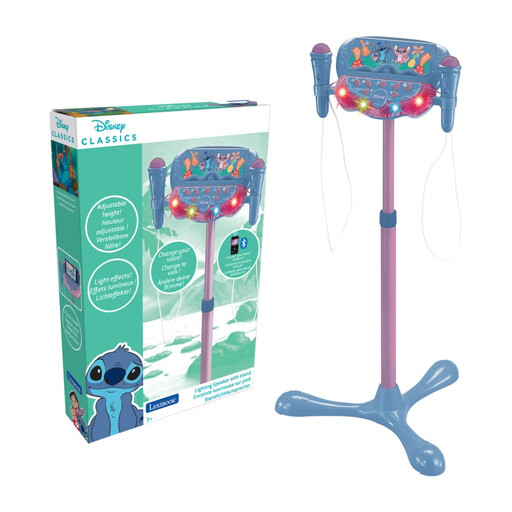
Why this choice suits this profile : It is ideal for children who regularly organise singing sessions, duets or impromptu performances at home.
The height adjusts from 60 to 95 cm and the volume remains easy to control. The three required AA/LR6 batteries are not included, so remember to factor them into your budget.
Bluetooth connectivity, two wired microphones, five voice effects, a phone holder and light effects built into the speaker.
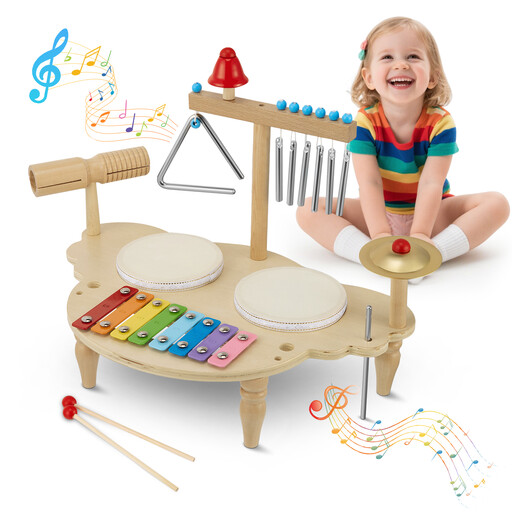
Why this choice suits this profile : This set combines percussion and colourful notes for a hands-on introduction to music, with no app or charging required.
The concept is simple: play the drum or xylophone with the mallets. Even so, check the fittings and put the mallets away after every session.
Two types of percussion in one set, an advertised wooden design and handling suited to early musical exploration.
We have brought together a complete, real-time selection of products that meet these demanding criteria and European safety requirements.
A wooden music box works without batteries and is mainly intended for occasional listening or decoration. Wind-up Alphynix models such as “Can’t Help Falling in Love” or “You Are My Sunshine” are more like decorative gifts for a romantic occasion than toys for babies. Because they contain small parts, keep them out of reach of very young children.
An electronic toy offers more interaction, but requires batteries, a rechargeable battery or more regular maintenance. The right choice therefore depends on the child’s age, how often it will be used and how much noise you are happy to tolerate.
Choose a model with an age recommendation suited to your child, large controls, easy-to-wipe surfaces and a secure battery compartment. Avoid detachable accessories if your child still puts objects in their mouth. Adult supervision is recommended during use.
It depends on the volume, the number of functions and how often the toy is used. A microphone with speaker may run on three AA/LR6 batteries, while some electronic diaries use four LR6 batteries. To reduce consumption, switch the product off after every session and remove the batteries if you are storing it for a long period.
Yes. The most relevant criterion is the activity the child enjoys: singing, playing a rhythm, listening to melodies, writing or having fun with lights. A toy for girls or boys should therefore be chosen according to age, ability to handle it and interests, rather than its colour or theme.