
Livraison le jour même ou le lendemain

Qualité garantie

Débloquez vos offres de bienvenue: Livraison GRATUITE | Jusqu'à -80 % | 30 jours d'essai gratuits à JoyPlus
Téléchargez l'application
A musical toy can encourage listening, movement and creative expression. But with promises of developmental benefits, multicoloured lights and endless features, it is not always easy to tell the difference between a worthwhile purchase and a toy that will soon be abandoned.
For parents, grandparents and other family members, three common pitfalls come up time and again:
The right choice therefore depends less on the number of lights and more on the child’s age, the space available and the type of interaction you are looking for.
When choosing a musical toy for a baby, start by checking the age specified by the manufacturer and the warnings about small parts. The wording “0 months and up” does not mean you can skip the safety information: some accessories, cards or removable parts may pose a choking risk to very young children.
The CE marking, the manufacturer’s contact details or those of its representative established in the European Union, as well as warnings in French, should also be checked on the packaging or product listing. These details do not, of course, replace adult supervision, particularly during the first few uses.
A musical developmental toy may respond to pressure, touch, movement or image recognition. For a baby, large controls that are easy to grasp and a washable surface are generally the most practical options. From the age of 3, a simple instrument such as a children’s xylophone or children’s drum allows them to create sounds directly, without relying on an electronic programme.
The material also deserves a closer look. Wood can be particularly suitable for an instrument played with mallets, while a musical play mat should be made from a soft textile that is easy to fold. In all cases, check the edges, handles, any cables and the battery compartment closure.
A light-up musical toy with volume control will be easier to adapt to a bedroom, living room or journey. When the sound level cannot be adjusted, playtime may need to be limited to protect your child’s hearing and preserve peace and quiet for the whole family.
Also compare:
A children’s toy piano or musical piano mat generally takes up more space than a rattle. Measure the play area before placing your order, especially if you live in a small home.
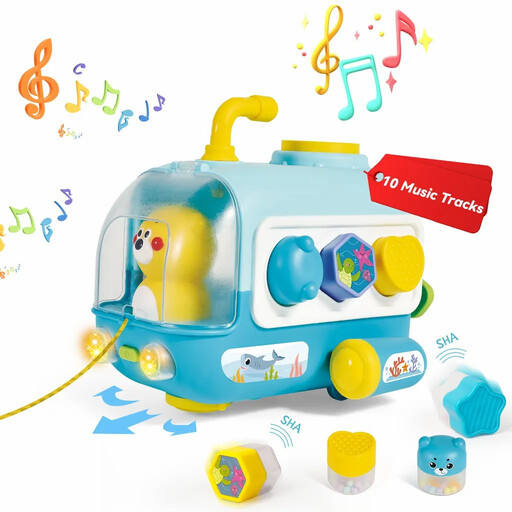
Why this choice suits this profile : Its playful design and preloaded melodies are ideal for a child’s first introduction to sounds, particularly as a birthday present for a very young child.
The listing states that it includes 10 melodies and lighting, so you know exactly what the toy contains before buying it, rather than relying solely on its appearance.
A submarine-shaped toy, light effects and several melodies listed in the product description.
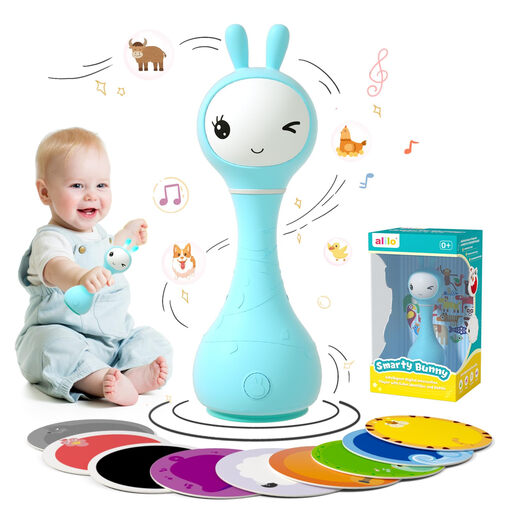
Why this choice suits this profile : This model combines an audio companion, audio content and colour-recognition cards, making it suitable for families looking for a toy that can grow with their child.
The listing details five music modes, nine colour cards and a rechargeable battery. However, check the recommended age and whether there are any small parts before giving it to a young child.
Preloaded audio content, a colour-recognition function and advertised USB Type-C charging.
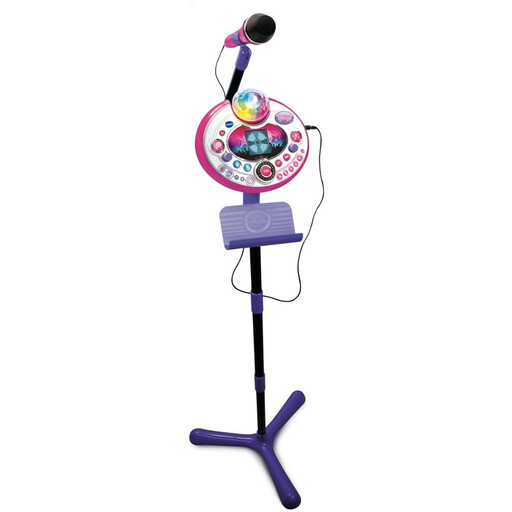
Why this choice suits this profile : Suitable from the age of 6, this karaoke microphone is designed for children who love singing, recording their voices and enjoying playtime with the family.
The listing specifies the recommended age, the four included LR6/AA batteries, the games provided and compatibility with an MP3 source, which is not included.
Eight animated songs, four voice effects, six games and a stand adjustable up to 1.40 m.
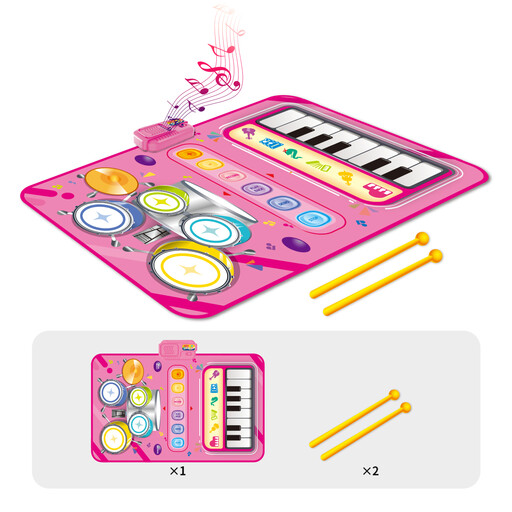
Why this choice suits this profile : This musical piano mat is suitable for children aged 3 and over who enjoy moving, playing together and experimenting with different rhythms.
The volume control prevents the sound from becoming too overpowering. The mat folds away, but the batteries are not included and adult supervision is required during use.
13 piano keys, six drum functions and the advertised option to play alone or with someone else.
We have put together a complete, real-time-updated selection of products that meet these demanding criteria and comply with European safety regulations.
The “Montessori” label should be viewed as a marketing description, not an educational guarantee. Instead, look at how simple the controls are, how freely the child can explore and whether they can use the toy without constant assistance.
Choose a model suitable for their age, easy to hold, with simple controls and no accessible small parts. A musical toy for babies may be suitable from the first few months, but the manufacturer’s guidance and warnings should take priority over the product name alone.
Battery consumption varies according to the sound volume, frequency of use and type of features offered. A model with an automatic shut-off or volume control can help prevent unnecessary use. Before buying, check whether the batteries are included and whether the toy runs on standard batteries or a rechargeable battery.
Interest can vary considerably depending on the child’s age and play habits. A mechanical instrument such as a drum or xylophone often remains appealing because of the freedom it offers. An electronic model with several modes, cards or activities may keep a child engaged for longer, provided its features genuinely match their abilities.