
Livraison le jour même ou le lendemain

Qualité garantie

Débloquez vos offres de bienvenue: Livraison GRATUITE | Jusqu'à -80 % | 30 jours d'essai gratuits à JoyPlus
Téléchargez l'application
Mung bean vermicelli has found its place in French kitchens: it cooks quickly, absorbs sauces and works just as well in stir-fries as in soups, Asian salads or hot pot dishes. However, be careful: behind names such as “glass noodles”, “soya vermicelli” and “Asian transparent noodles” are products whose ingredients and uses can vary considerably.
Before you reach the checkout, keep these three pitfalls in mind:
To achieve a soft, slightly springy texture, start by checking the ingredients. Products such as Double Phoenix Premium Mung Bean Vermicelli state that they contain 100% mung bean starch. Others combine several types of starch. This formula may work perfectly well in a soup or stir-fry, but it will not meet the expectations of anyone looking for vermicelli made primarily from mung bean.
The name Longkou vermicelli refers to a family of Chinese noodles, but does not necessarily guarantee a mung bean-based composition. For example, one 100 g Longkou product lists wheat starch and therefore contains gluten. It is always better to read the label than to rely solely on the product name.
Individual 40 to 50 g portions are practical for a quick meal, a lunch break or a serving to customise according to your preferences. Instant sachets from Vifon, PHU GIA or MAMA generally take 3 to 5 minutes in boiling water to prepare and already contain stock or a spice blend.
For family use, a 250 to 500 g pack offers greater flexibility. Plain vermicelli is rehydrated in hot water before being added to a soup, stir-fry or salad. Instructions vary from one product to another: some recommend soaking for 5 to 15 minutes, followed by a short cooking time of 2 to 3 minutes. The 1 kg format is more suitable for larger families, regular users or catering businesses.
Plain mung bean vermicelli sometimes has a short ingredients list consisting only of mung bean starch and water. This does not automatically mean that it is suitable for everyone with allergies: you must also check for possible traces and the information provided on the packaging.
Instant versions have a much more elaborate recipe. MAMA Tom Yum Kung contains fish and prawns, among other ingredients. MAMA Yen Ta Fo lists soya, while PHU GIA chicken contains soya and wheat. For a vegetarian diet, it is better to choose a plain product and add your own stock, mushrooms, tofu or vegetables.
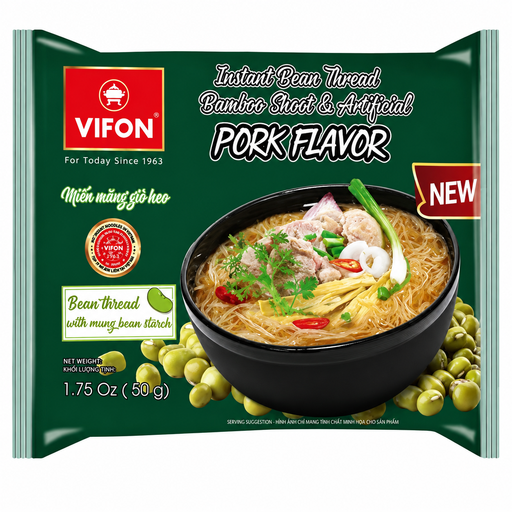
Why this choice suits this profile : The individual sachet and boiling-water preparation are ideal for discovering instant noodles without committing to a large pack.
The product details clearly distinguish the vermicelli from the soup sachet and specify the presence of salt, flavourings and enhancers. You can therefore check the recipe before buying.
A 50 g portion, quick preparation and bamboo shoots included in the seasoning. Remember to check the date and allergens on the packaging.
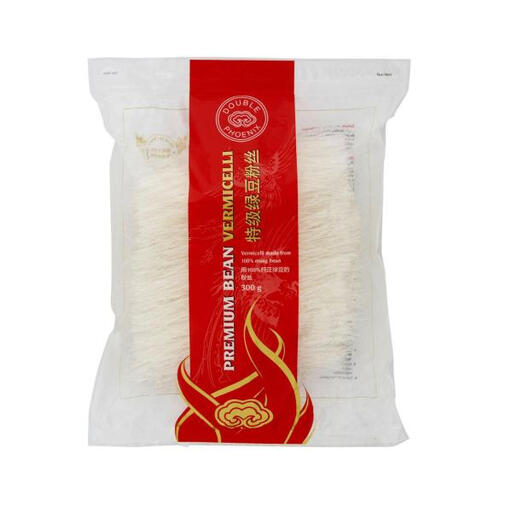
Why this choice suits this profile : With a composition stated as 100% mung bean starch, this product is ideal for cooks who want a plain base and complete control over the seasoning.
The absence of a flavour sachet prevents plain vermicelli from being confused with a heavily seasoned instant meal.
A 300 g format, translucent texture and multiple uses: salad, soup, stir-fry or frying, according to the product details.
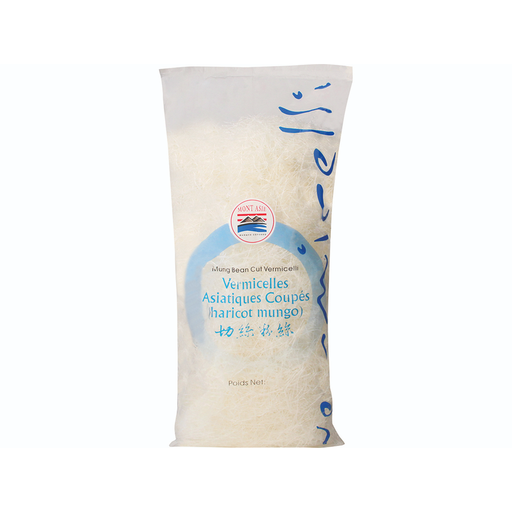
Why this choice suits this profile : Its large pack size and pre-cut vermicelli meet the needs of families, regular hot pot users and Asian catering professionals.
The total weight is clearly stated, and the instructions distinguish between soaking for 5 to 7 minutes and the short cooking time.
A 1 kg format, pre-cut noodles and a composition based on pea and maize starch, with 10% mung bean.
For stir-fried noodles, soak them until they become soft, then drain them before adding them towards the end of cooking. This helps prevent them from breaking down. In a soup, you can sometimes add them directly to the stock, depending on the manufacturer's instructions. For an Asian salad, rinse them in cold water after cooking, then mix them with vegetables, herbs and a dressing prepared separately.
Store dry vermicelli in a cool, dry place away from moisture. After opening, reseal the sachet carefully or transfer its contents to an airtight container. Instant products should be eaten immediately after preparation. As for the “gluten-free” claim, it should only be relied upon if it is clearly stated on the label or confirmed by the ingredients and regulatory information.
We have selected a complete, real-time updated list of products that meet these demanding criteria, as well as European food safety requirements.
Not necessarily. Products made from mung bean starch and water may be suitable for a gluten-free diet, subject to the labelling and the absence of any stated traces. Other products contain wheat or are made with ingredients associated with gluten. Always check the packaging before eating them.
It depends on their thickness and the recipe. Soaking in hot water may take between 5 and 15 minutes, followed by a cooking time of 2 to 3 minutes, which is generally sufficient. Instant mung bean noodles usually require 3 to 5 minutes in boiling water. In all cases, the instructions printed on the pack take precedence.
Yes. Hot pot vermicelli is generally added towards the end of cooking, after being rehydrated if necessary. It absorbs the stock, but cooking it for too long can make it excessively soft. For a meal to share, the bulk format makes it easy to adjust the quantity to the number of guests.