
Livraison le jour même ou le lendemain

Qualité garantie

Débloquez vos offres de bienvenue: Livraison GRATUITE | Jusqu'à -80 % | 30 jours d'essai gratuits à JoyPlus
Téléchargez l'application
A multi-surface disinfectant spray can make household cleaning far easier… provided you choose a formula suited to the task. Limescale remover, antibacterial spray and virucidal disinfectant are not interchangeable. The claim “eliminates 99.9% of bacteria” does not mean that a product is suitable for every surface or every application.
When choosing a product, both consumers and professional cleaners often encounter three common pitfalls:
In the bathroom, a bathroom disinfectant must meet two separate needs: removing soap residue and limescale, then disinfecting if this function is clearly stated on the label.
A simple limescale remover, such as ANTIKAL Fresh Spray, is primarily designed to tackle water marks, scale and soap deposits. It may be suitable for routine cleaning of tiles, washbasins, bathtubs, shower screens and taps. However, it should not be treated as a disinfectant unless this is explicitly stated.
In the kitchen, choose a cleaner for food-contact surfaces whose label specifies compatibility with areas that may come into indirect contact with food. Contact time and any requirement to rinse must be followed precisely.
A no-rinse disinfectant does not necessarily work within a few seconds. In most cases, the correct method is to:
Wiping the product away immediately may reduce its claimed efficacy. Conversely, leaving it on a delicate material for too long may cause marks or discolouration. For products claiming bactericidal, fungicidal or virucidal activity, check the instructions and standards stated on the packaging, such as EN 1276, EN 13697 or EN 14476, along with the associated usage conditions.
Formulas based on hydrogen peroxide, sodium hypochlorite, benzalkonium chloride or ethanol do not offer the same usage profile.
Sprays intended for wounds or skin, such as Hansaplast Wound Cleaning Spray and Mercurochrome Colorless Disinfectant, are not designed for surface cleaning. They must not be used as a household cleaning spray.
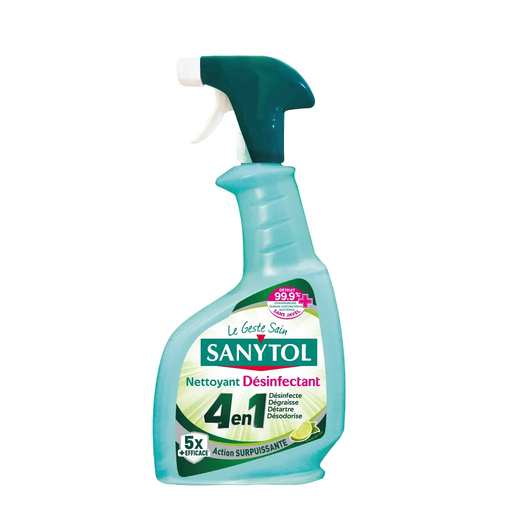
Why this choice suits this profile : Its formula is presented as disinfecting, deodorising, degreasing and limescale-removing, combining several functions in a 500 ml bottle. A practical way to avoid buying several products separately.
The product information specifies the contact time and confirms that rinsing is not required. For surfaces that come into contact with food, however, you must still follow the instructions on the label.
A foam described as penetrating, a lime fragrance and a formula containing 1.5 % hydrogen peroxide.
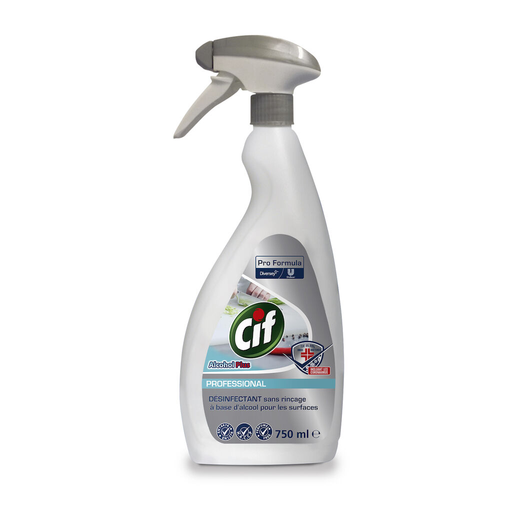
Why this choice suits this profile : This ready-to-use format is designed for the regular disinfection of small surfaces, particularly in kitchens and professional environments.
The product information distinguishes disinfection-related uses and specifies that rinsing is not necessary. However, the presence of ethanol means the room must be well ventilated and all ignition sources kept away.
A 750 ml bottle, 80 % denatured ethanol and claimed bactericidal, fungicidal and virucidal properties.
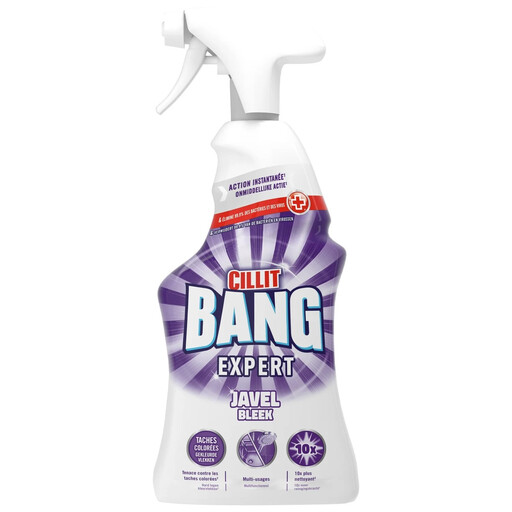
Why this choice suits this profile : Its chlorine-based formula targets washable bathroom surfaces when tackling stubborn stains and maintaining hygiene are the top priorities.
The product information details the application conditions and prohibits mixing with acidic cleaners. This is essential to prevent the release of dangerous gases.
A 750 ml bottle containing sodium hypochlorite dosed at 2.19 g per 100 g, with claimed activity against certain bacteria and viruses under the stated conditions.
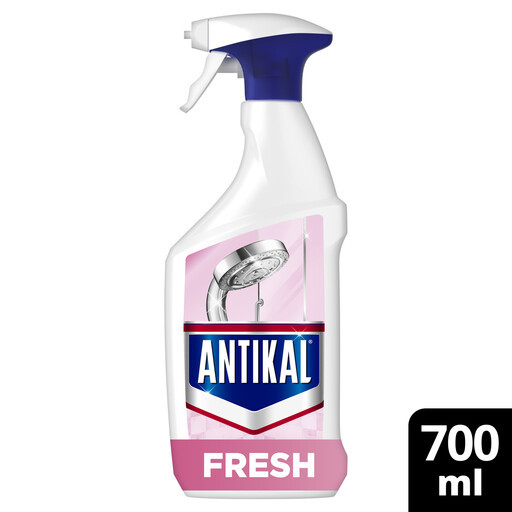
Why this choice suits this profile : This spray is designed for frequent cleaning of washbasins, showers, seals and taps, with a primary focus on limescale removal.
The product information presents it as a limescale remover, not a universal disinfectant. This helps you avoid paying for a function you do not need.
A 700 ml format, a lavender-inspired fragrance and drip-control technology designed to help limit the return of water marks.
We have selected a comprehensive, real-time updated range of products that meet these demanding criteria and European safety requirements.
Not always. Start by checking the authorised surfaces listed on the label. For a worktop or an area that may come into indirect contact with food, choose a disinfecting cleaner that clearly specifies this use and follow the rinsing instructions, even if the product is marketed as “no-rinse”.
It depends entirely on the formula and the claimed action. The required time may vary depending on whether the product is intended for simple cleaning or for bactericidal, fungicidal or virucidal action. Always check the contact time stated on the bottle and ensure that the surface remains wet for the entire specified duration.
No. Cleaning removes visible dirt, while disinfection is a supplementary step. To avoid wasting product, start by removing residue, then use the disinfectant only when the intended application and label instructions justify it.