
Livraison le jour même ou le lendemain

Qualité garantie

Débloquez vos offres de bienvenue: Livraison GRATUITE | Jusqu'à -80 % | 30 jours d'essai gratuits à JoyPlus
Téléchargez l'application
Drying, straightening, curling and adding volume with a single device can really simplify your hair routine. But not all 5-in-1 or 7-in-1 styling tools are created equal, and they don't all meet the same needs. The number of attachments alone isn't enough to judge a hair multistyler: you also need to consider heat, power, ergonomics and how you'll actually use it.
Product listings often boast about a motor running at very high speeds, for example 110,000 rpm. While this can indicate strong airflow, it doesn't guarantee even drying or styling that works for all hair types.
If you have thick or long hair, also check the wattage, the number of speed settings and whether a concentrator nozzle is included. For fine hair, multiple temperature levels and a cool shot button will generally be more useful than maximum airflow.
A 7-in-1 styling tool might include brushes, a diffuser, drying nozzles and rollers. But you actually need to use all that kit. An attachment that sits at the back of a drawer just adds bulk and can make the tool more cumbersome to handle.
Before you choose, start by identifying your priority uses:
A multifunction hot air brush with three genuinely useful attachments can be far more practical than an ultra-complete kit that's a pain to handle.
No heated device makes heat harmless in every situation. Phrases like 'ionic technology', 'Coanda effect' or 'smart control' describe technical features, not a medical or universal guarantee.
To limit heat exposure, use the device on towel-dried hair when the manufacturer recommends it, avoid holding an attachment on the same section for too long, and select the lowest temperature that still achieves your desired result.
A styling tool designed for different hair types should offer multiple settings. Three temperatures and three speeds provide a versatile foundation. Some models, like the MOVA Master 10, offer four heat levels and three speeds.
Fine, bleached or damaged hair generally copes better with moderate heat. Thick hair may need more power, but you should still keep an eye on how long the heat is in contact with each section. The cool shot button then lets you cool the section and set the style.
An ionic straightening brush is mainly used on dry or slightly damp hair, depending on the manufacturer's recommendations. A hot air brush, on the other hand, combines airflow with styling. An air curler or automatic curling brush uses the airflow to guide the hair around the barrel.
The Coanda technology is presented by some manufacturers as a system that can draw the hair around an attachment using air. However, the result depends on the size of the sections, how damp they are and your finishing technique.
Check the cable length, whether there's a 360° swivel joint and how easy the filter is to access for cleaning. A blocked filter can reduce airflow and lead to overheating.
In the UK, make sure the product comes with a compatible plug and read the safety instructions, manufacturer information and details of the responsible person within the European Union. Never use the device near a sink or bath, don't block the air intakes and let the attachments cool down before storing them.
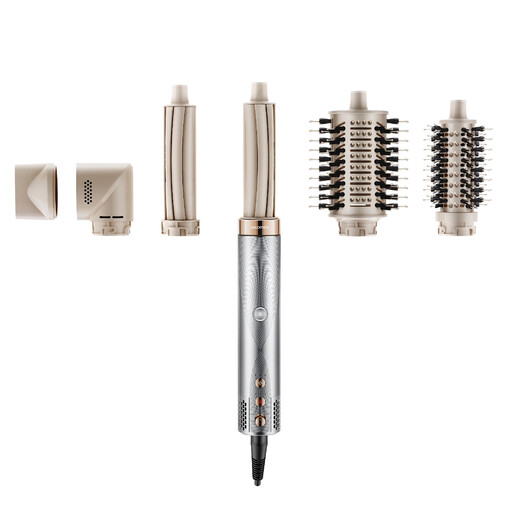
Why this choice suits this profile: Its 5-in-1 format combines drying, curling, volume and straightening in an affordable device, ideal for discovering air styling.
The listing mentions multiple heat and airflow settings, so you can start gently rather than jumping straight to maximum power.
Automatic curling technology claimed, lightweight format and customisable settings.
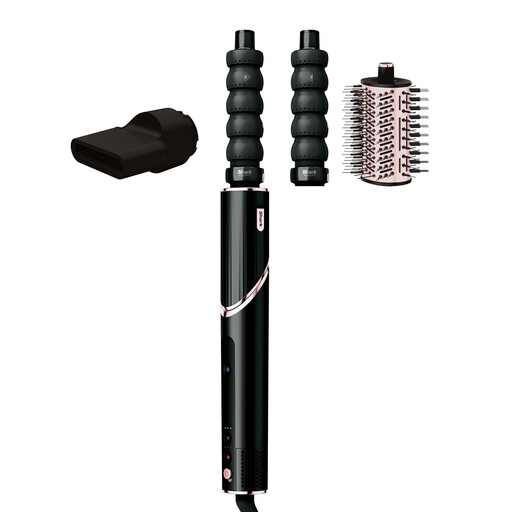
Why this choice suits this profile: Its rotating handle lets you switch from hairdryer to multistyler, with a selection of attachments for curls, volume and drying.
It doesn't rely solely on the number of attachments: the listing mentions temperature measurement, two Auto-Wrap attachments, an oval brush and a concentrator.
Claimed power of 1,650 W, stated weight of 700 g and swivel cable.
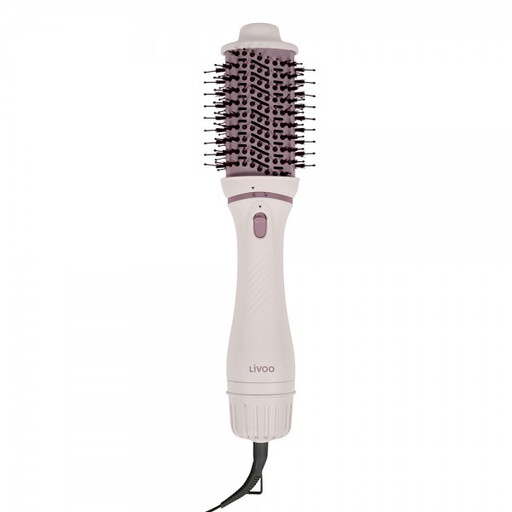
Why this choice suits this profile: This heated brush is for those who mainly want to dry, detangle, straighten and add volume without juggling a collection of attachments.
Its removable brush also lets you use it as a hairdryer, so there's no need to buy a separate device for drying.
Stated power of 1,200 W, ceramic coating, three speed-temperature combinations and cool shot function.
We've put together a comprehensive, real-time updated list of products that fully meet these strict selection criteria and European safety regulations.
Some models do combine drying, straightening and styling. However, the result depends on your hair's texture, length and how damp it is. A hot air brush is best for drying and blow-drying, while a heated brush is generally used on dry hair.
Start with the lowest setting and only increase it if necessary. Fine or damaged hair needs extra care: limit the number of passes, don't hold the device still on one section and use the cool shot when the device allows it.
Its lifespan depends on how often you use it, how well you clean the filter, how you store it and the condition of the cable. A well-maintained device that's never used near water and is stored once completely cool will experience less wear and tear. Always check the manual and warranty conditions for the model you choose.