
Livraison le jour même ou le lendemain

Qualité garantie

Débloquez vos offres de bienvenue: Livraison GRATUITE | Jusqu'à -80 % | 30 jours d'essai gratuits à JoyPlus
Téléchargez l'application
Published July 18, 2026 by Joybuy, your Head of Product Recommendations
Want your favourite playlist to follow you from the living room to the kitchen without any interruption? Or to create a different musical atmosphere in each room? Setting up a multiroom audio system can quickly become a headache. Between Wi-Fi speakers, protocols like AirPlay 2, and a myriad of connectivity options, it's easy to get lost.
This guide is here to demystify the topic and help you choose the multiroom speaker that truly meets your needs. We'll then present a selection of products that tick all the boxes—performance, design, and versatility—to help you build the sound ecosystem that's right for you.
Before you dive in, here are the key points to consider to make the right choice, in line with your current equipment and market standards.
The fundamental difference between a simple connected speaker and a true multiroom model is the connection.
For speakers from different brands to communicate, they must speak a common language. The two major protocols are:
Choosing speakers compatible with one or both of these protocols ensures maximum flexibility to expand your setup in the future.
A modern wireless Hi-Fi speaker must be versatile. For audiophiles, the presence of physical inputs is a major asset. An RCA or AUX (3.5mm jack) input will allow you to connect external sources like a turntable, a CD player, or even your television, and stream their sound across your entire multiroom audio system.
Here is our selection of models that cater to different needs in terms of power, design, and features.
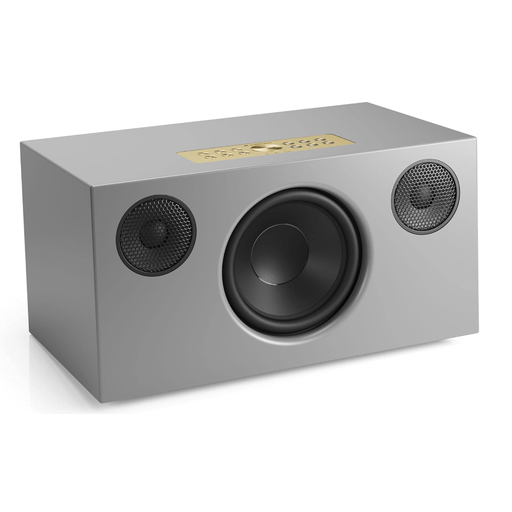
What sets it apart: The Audio Pro C10 MkII is the ideal centrepiece for a multiroom system. It combines an ample 80W of sound power with ultra-comprehensive connectivity. Its clean Scandinavian design and removable fabric grille blend elegantly into any interior.
Highlights:
Who is it for? For those looking for a powerful and versatile main speaker, perfect for a large living room and capable of juggling wireless streaming and physical sources.
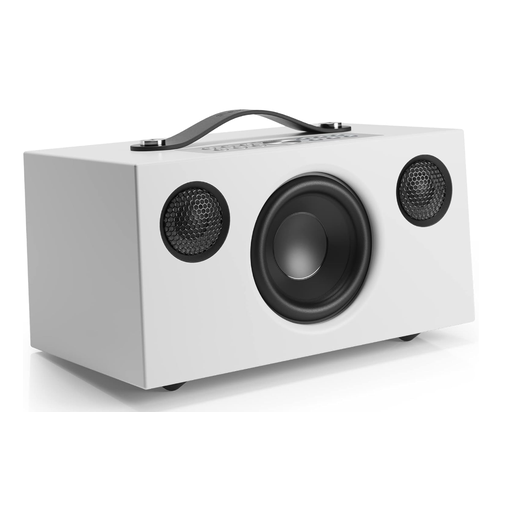
Its key advantage: The C5 MkII takes the excellent foundation of its bigger sibling and packs it into a more compact form factor. Ideal for providing sound in a bedroom, office, or kitchen, it delivers dynamic audio with surprisingly present bass for its size. It works just as well on its own as it does integrated into a larger Audio Pro ecosystem.
Highlights:
Who is it for? For those who want to expand their multiroom system into other rooms, or who are looking for a compact yet powerful solution for a smaller space.
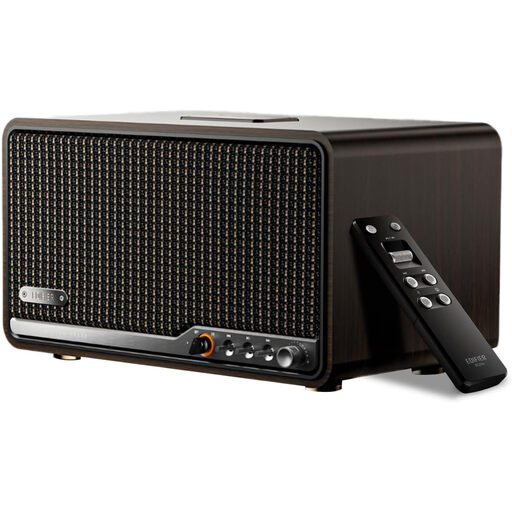
What makes it special: The Edifier S300 embraces a retro aesthetic with its stunning MDF wood cabinet and a strong focus on high-resolution audio. It's aimed at sound enthusiasts who appreciate both acoustic performance and beautiful design. Its compatibility with the LDAC codec makes it a top-tier option for high-quality Bluetooth streaming.
Highlights:
Who is it for? For the design-conscious audiophile seeking a wireless Hi-Fi speaker that can deliver studio-quality sound and integrates into the living room like a true piece of furniture.
To connect your existing equipment (turntable, CD player, etc.) to your new connected speaker, a quality cable is essential to preserve signal integrity.
Discover our selection of AUX audio cables to ensure optimal sound transmission.
A Bluetooth speaker connects directly to a single source (smartphone, computer) over a short distance. It's a simple and often portable solution. A Wi-Fi speaker, on the other hand, connects to your home network. The advantages: a much greater range, better sound quality, and, most importantly, the ability to synchronise with other speakers to create a true multiroom experience.
As a general rule, proprietary multiroom ecosystems (like Sonos or Audio Pro) only work with speakers from the same brand. However, if models from different brands are all compatible with a standard protocol like AirPlay 2 or Google Cast, you can group them and control them from a single app (such as Apple Home or Google Home).
Yes, the vast majority of multiroom speakers, especially Hi-Fi models like those in our selection, need to be permanently plugged into a power outlet. Their primary purpose is to provide fixed sound for a living space. While portable, battery-powered models with Wi-Fi do exist, they belong to a separate product category that often involves compromises on power and audio quality.