
Livraison le jour même ou le lendemain

Qualité garantie

Débloquez vos offres de bienvenue: Livraison GRATUITE | Jusqu'à -80 % | 30 jours d'essai gratuits à JoyPlus
Téléchargez l'application
An adjustable storage shelf can free up space in your kitchen, garage, bathroom or home office. But if the dimensions aren’t right, it can quickly become bulky, unstable or impractical. Before placing your order, look beyond the marketing claims and check a few practical details.
An extendable shelf may offer adjustable width while keeping its shelves fixed. This means it can fit against your wall, but may not suit the items you want to store. For a kitchen shelf or microwave stand, check the width, depth and clearance between shelves separately.
A maximum load doesn’t mean that each shelf can support a heavy appliance placed on one side. Stability also depends on how the weight is distributed, how rigid the frame is and the floor surface. If a load is described as ‘static’, treat it as a limit that shouldn’t be exceeded when the unit is stationary and correctly assembled.
A rack fitted around a microwave or mini oven must not block the ventilation openings. In a bedroom or living room, a height-adjustable bookcase should stand on a level surface and, if the manufacturer recommends it, be secured to the wall using the supplied anti-tip kit.
Measure the available space, allowing room for sockets, cupboard doors to open and air to circulate. For an extendable storage rack, compare its minimum and maximum widths with the actual dimensions of your appliance or alcove.
A multi-tier shelf helps you make the most of vertical space, but should still be easy to reach. In a kitchen, shelves that are too high can make jars difficult to reach. In a garage, adjustable shelves with plenty of clearance are better suited to storing crates or bulky tools.
It’s also worth checking whether the shelf has adjustable feet, cross-braces, non-slip pads or a wall-fixing kit before you order.
For a metal shelf intended for the garage, check both the maximum load per shelf and the total load the unit can support. For a kitchen organiser, also consider the combined weight of jars, appliances and utensils. Always follow the load limits stated on the product page and never exceed them.
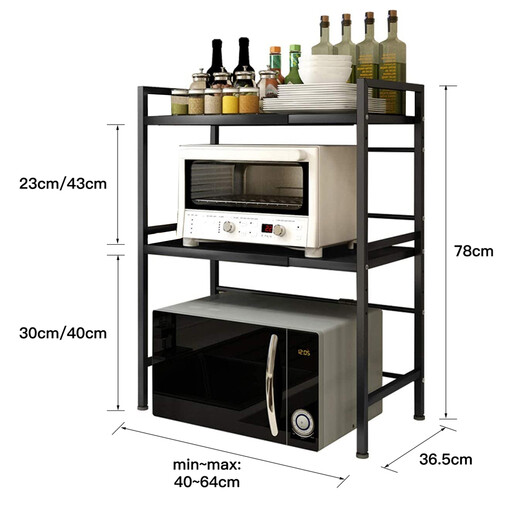
Why it’s a good fit: Its adjustable width of 40 to 64 cm means it can fit a range of worktops, while its three tiers provide space for appliances, plates or spices.
You can adjust the shelf heights to suit your needs, so you don’t waste space around smaller accessories.
Black matt-finish steel frame, three tiers and assembly accessories included.
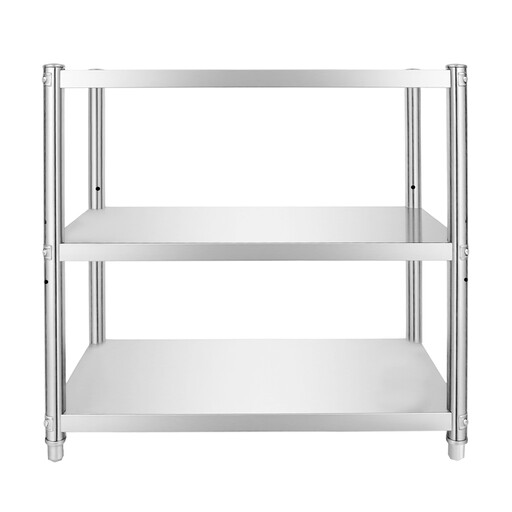
Why it’s a good fit: Its freestanding design is ideal if you’re looking for a smart storage solution for the kitchen, bathroom or pantry.
The spacing between the three shelves can be adjusted in increments of around 6 cm, making it easier to fit the items you want to store.
201 stainless steel, stated dimensions of 80 × 40 × 80 cm and a stated static load capacity of 30 kg.
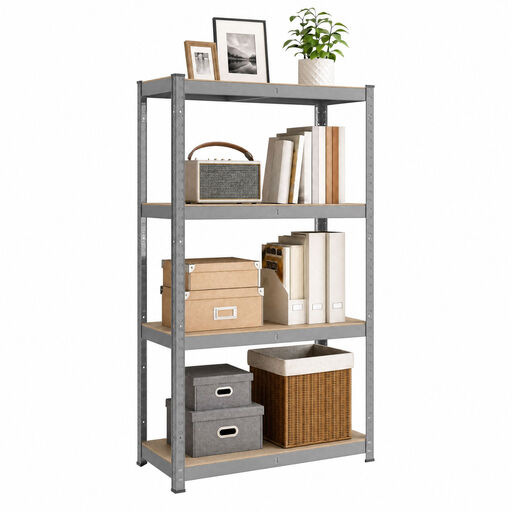
Why it’s a good fit: This shelf is well suited to a garage, workshop, pantry or basement, especially when you need to store heavy items of different sizes.
The shelves adjust in 3 cm increments, and you can split the unit into two sections to suit your layout.
Stated capacity of 130 kg per shelf, cross-braces and an anti-tip device included.
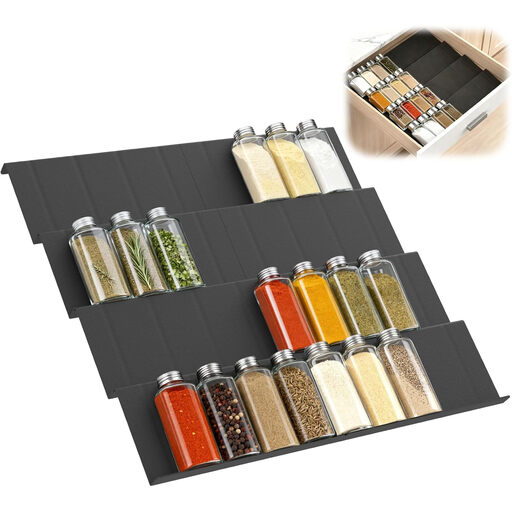
Why it’s a good fit: This design is made for drawers, cupboards and worktops where small jars and bottles don’t make good use of the space.
Its extendable design makes use of the full available width, without leaving a large area unused.
Suitable for cupboards, drawers and worktops, and easy to clean.
We’ve put together a comprehensive list, updated in real time, of products that meet these exacting selection criteria as well as European safety regulations.
Measure the appliance or area you want to cover, then compare this measurement with the shelf’s extension range. Allow a few extra centimetres for cables, ventilation and access to the controls.
Yes, as long as its frame, load capacity per shelf and dimensions are suitable for the tools or crates you want to store. For a garage shelf, choose a reinforced metal frame and use the supplied anti-tip system, if available.
Stick to the stated load capacity, distribute items evenly, avoid prolonged exposure to moisture and don’t use abrasive products. Regularly checking the screws and feet can also help you spot any looseness or distortion early.