
Livraison le jour même ou le lendemain

Qualité garantie

Débloquez vos offres de bienvenue: Livraison GRATUITE | Jusqu'à -80 % | 30 jours d'essai gratuits à JoyPlus
Téléchargez l'application
A multifunctional kitchen grater can be used to prepare Parmesan, vegetables, chocolate, garlic, ginger and citrus zest. However, some models disappoint from the very first use. The issue is not necessarily the price, but often an unsuitable grating surface, insufficient stability or cleaning that is too demanding.
Before comparing models, it is worth knowing the main pitfalls to avoid.
A grater with several sides is not necessarily suitable for every preparation. A fine grater is ideal for zest, spices and garlic, while an extra-coarse grater creates thicker strands for carrots, potatoes and certain cheeses.
A single so-called multifunctional surface can therefore quickly show its limitations. If you plan to vary how you use it, check the cuts available carefully: fine, medium, extra-coarse, slicing or julienne.
A grater that slips on the worktop increases the risk of touching the blades. In everyday use, an ergonomic handle, non-slip foot or collection container is often more useful than grand marketing claims.
A finger guard is also essential when using a kitchen mandoline, particularly when slicing firm vegetables.
This indication makes cleaning easier, but it says nothing about how easy the product is to clean in practice. Residue can become trapped between the grater teeth or inside removable accessories. Hand washing with a soft brush is often still necessary, especially with a cheese grater or a utensil used for garlic and ginger.
Each surface is designed for a specific use:
For a family that cooks regularly, a multi-sided grater can help avoid filling an already crowded drawer with utensils. For baking or finishing touches, a specialised fine grater often provides a more precise and direct action.
Stainless steel is generally preferred for its resistance to corrosion and its neutral properties when in contact with food. Also check how the blades are attached, the rigidity of the support and whether the entire surface is accessible for cleaning.
A very sharp blade must be handled with care. It should cut through food without requiring excessive pressure, but your fingers should always remain away from the cutting area.
A long, narrow grater fits easily into a drawer or can be hung from a hook. A square grater offers more surfaces, but also takes up more room. Before choosing one, measure the drawer or shelf where you intend to store it.
For a mandoline, also check its dimensions, blade storage and whether it has a holding system. Models with interchangeable accessories require a little more organisation, but can replace several utensils.
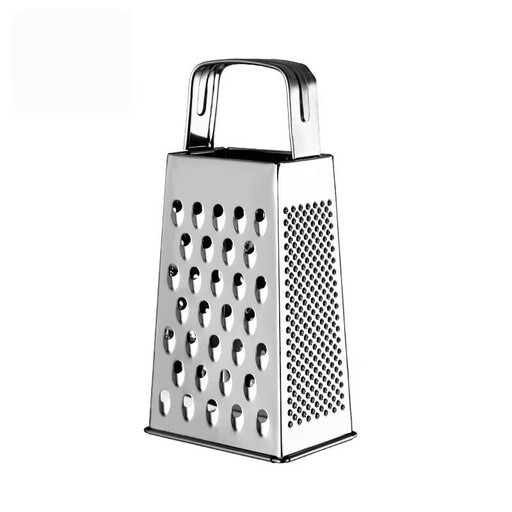
Why this choice suits this profile : Its four sides let you create different textures with a single utensil, for cheese, vegetables and everyday preparations.
Its four surfaces reduce the risk of buying a tool that is too specialised for everyday uses.
Four-sided design and stainless steel construction, according to the available information.
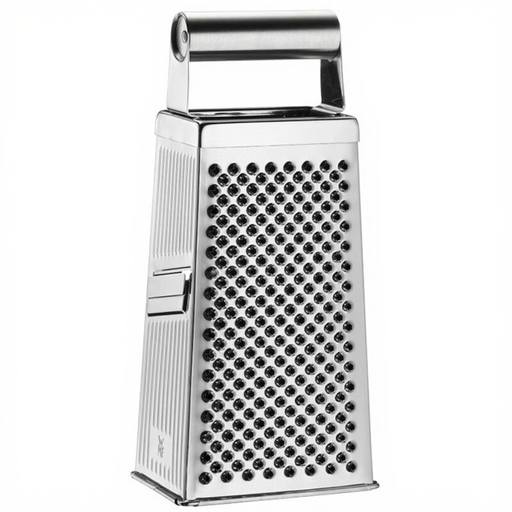
Why this choice suits this profile : Its four surfaces cover coarse grating, fine grating, slicing and ribbon cutting, making it suitable for a wide range of cooking tasks.
The description details the available functions rather than making a vague promise of versatility.
Cromargan stainless steel, ergonomic handle, stable base and stated dishwasher compatibility.
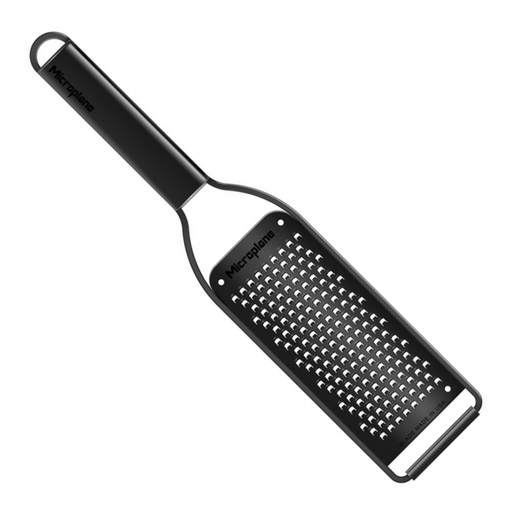
Why this choice suits this profile : Its fine surface is particularly well suited to zest, spices, garlic, ginger, Parmesan and hard cheeses.
The grating type is clearly defined, so you will not expect a fine grater to produce thick strands.
Stainless steel blades, ergonomic handle, non-slip base and stated dishwasher compatibility.
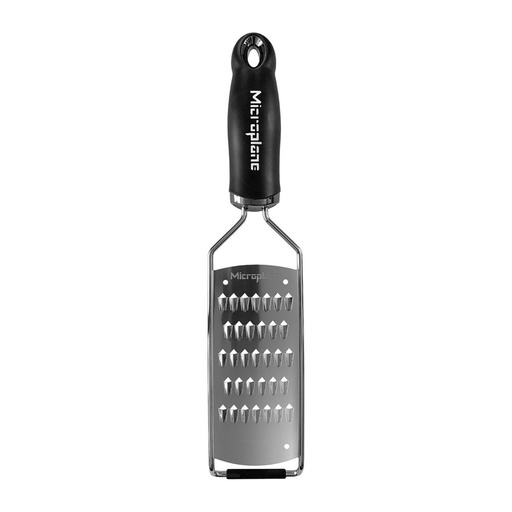
Why this choice suits this profile : Its extra-coarse surface is designed to grate potatoes, carrots, beetroot and hard cheeses quickly.
The extra-coarse surface is intended for a specific use, without being presented as a universal solution.
Stainless steel blades, soft-touch handle, non-slip base and protective cover included.
For even results, place the grater on a dry, stable surface. Hold the handle with one hand and slide the food across it with steady movements. Do not press too hard on a fine blade, and stop before your fingers reach the cutting surface.
After use:
With a multifunctional mandoline, remove the accessories carefully and always use the pusher or finger guard. The COOK CONCEPT 5-in-1 model, for example, offers seven interchangeable accessories and a collection container, but its care instructions specify hand washing only. For everyday use, this may matter more than the number of functions.
A fine grater or citrus zester is generally suitable for these preparations. It produces fine particles, ideal for Parmesan, nutmeg, ginger and lemon or orange zest. For thicker shavings, it is better to choose a medium or extra-coarse grater.
The dishwasher-safe grater label only indicates that the utensil is compatible with this cleaning method; it does not guarantee its lifespan. Repeated washing can put strain on the handles, coatings or sharpness of the blades. Check the instructions and opt for hand washing when recommended by the manufacturer to help preserve the utensil.
Not necessarily. A mandoline is mainly used for slicing, finely slicing or cutting into julienne strips, whereas a grater turns food into shavings or fine particles. Multifunctional models may combine several uses, but check the accessories included, thickness adjustment, safety system and cleaning instructions before buying.