
Livraison le jour même ou le lendemain

Qualité garantie

Débloquez vos offres de bienvenue: Livraison GRATUITE | Jusqu'à -80 % | 30 jours d'essai gratuits à JoyPlus
Téléchargez l'application
Making bread, brioche, pizza dough or whipped cream becomes much simpler with the right appliance. Yet buying a multifunctional food mixer can come with a few pitfalls. The wattage displayed isn’t enough to judge how comfortable it is to use, nor does a long list of accessories guarantee they’ll be useful day to day.
Here are the criteria to examine, the traps to avoid, and a selection of models suited to different needs in a family kitchen.
The stated power tells you about the motor’s consumption or characteristics, but on its own it doesn’t reveal how much dough the mixer can actually handle. For bread and firm doughs, check above all for a dough hook, the stability of the base, the maximum usage time and the recommended quantities.
A machine that’s too light can vibrate or move across the worktop, even with a motor that’s marketed as powerful.
A 6.5-quart bowl equates to roughly 6.2 litres – a comfortable capacity for family-sized preparations. That doesn’t mean it can be filled to the brim with heavy dough, though. You’ll need to check the limits for flour, water and dough in the instruction manual.
For a family, a 6.5 L food mixer can reduce the number of batches you need to make. On the other hand, someone living alone or a household with limited space will often be better off choosing a more compact model that’s easier to store.
A food mixer can come with a whisk, a beater, a dough hook, a mincer or even a blender. This versatility makes sense if you genuinely plan to use those functions. If not, the accessories take up space and add to the washing-up.
Before choosing a food mixer with accessories, check in particular:
A 10-speed food mixer lets you move gradually from a slow mix to a fast preparation. Lower speeds are suitable for starting a dough or incorporating flour, while higher settings are generally reserved for the whisk, for whipping egg whites or making whipped cream.
Gradual start-up helps limit splashes. It’s best to start slowly, then increase the speed depending on the texture you’re after. A pulse function can also come in handy for short bursts, especially with a blender.
The so-called planetary action makes the attachment rotate on itself while it travels around the bowl. On paper, this design encourages more even incorporation. In practice, you’ll still need to scrape down the sides when the recipe calls for it.
For thick mixtures, the electric dough kneader should be used at a moderate speed, respecting the limits set by the manufacturer. Prolonged use can cause the motor to heat up, so overheat protection is a real plus to look out for.
Non-slip feet, a sufficiently heavy base and a lockable head all help keep the appliance in place. The noise level stated by the manufacturer can serve as a guide, but it varies depending on the speed selected and the texture of the mixture.
A stainless steel bowl is valued for its durability and ease of cleaning. The accessories should not be submerged with the motor unit. Always unplug the appliance before changing the whisk, beater or hook.
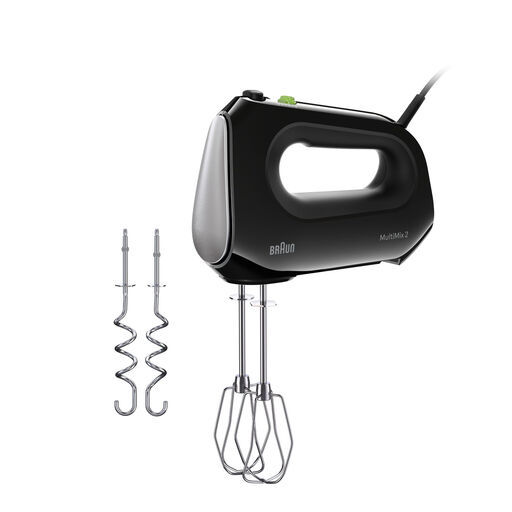
Why this choice suits this profile: This electric hand mixer is ideal for people who want to make cakes, creams or doughs occasionally without installing a bulky appliance on the worktop.
Its handheld design means you’re not paying for functions you rarely use. Its 4 speeds and Turbo function make it easy to adjust the setting for each preparation.
500 W motor, EasyClick system and stainless steel accessories that are stated as dishwasher-safe.
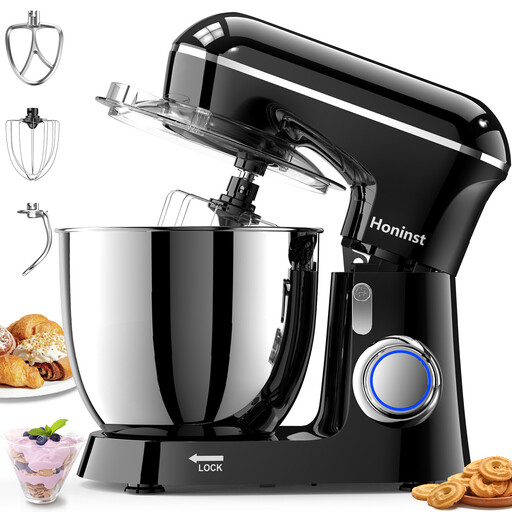
Why this choice suits this profile: Its 6.5-quart bowl and 10 settings are aimed at enthusiasts who switch between doughs, cakes, creams and family-sized batches.
The spec mentions overheat protection, suction feet and a splash-proof lid – features to look for when the appliance is used regularly.
Stainless steel bowl, dough hook, whisk and beater included, tilt-head design and planetary action stated.

Why this choice suits this profile: This configuration is aimed at households that want to combine kneading, mixing, mincing and blending in a single appliance.
The extra functions are clearly identified: mincer, blender and baking accessories. This means you can check they genuinely match your usual recipes.
6.5-quart bowl, 8 speeds with pulse function, head-locking system and accessories for mixing, kneading, mincing and blending.
We’ve put together a comprehensive, real-time updated list of products that fully meet these strict selection criteria and European safety regulations.
Yes, an electric hand mixer with a dough hook can work for small quantities of dough. For frequent use or heavier doughs, a stand mixer generally offers more stability and leaves your hands free during kneading. Always check the maximum permitted quantity.
Between 5 and 10 speeds is enough to cover most everyday needs. A wide range of settings is useful for starting gently, mixing a dough at medium speed or whisking quickly. However, the number of speeds should be considered alongside the appliance’s stability, the accessories supplied and the usage instructions.
The consumption depends on the motor’s power, the length of use and the function selected. A few minutes of kneading doesn’t have the same impact as prolonged use. To limit consumption, prepare your ingredients in advance, stick to the recommended times and avoid running the appliance empty.