
Livraison le jour même ou le lendemain

Qualité garantie

Débloquez vos offres de bienvenue: Livraison GRATUITE | Jusqu'à -80 % | 30 jours d'essai gratuits à JoyPlus
Téléchargez l'application
A multifunctional cleaning brush can replace several accessories in the kitchen, bathroom or utility room. But it needs to be genuinely practical for everyday use. Some models quickly become frustrating: handles that are too short, bristles that flatten, heads that don’t suit the surface, or unhygienic storage.
Before you buy, three common pitfalls keep cropping up:
The simplest approach is to choose the accessory based on the surface you need to clean, how often you’ll use it, and how easy it is to maintain – rather than relying solely on the word “multifunctional”.
A long-handled brush is ideal for tall bottles, deep sinks, large saucepans and hard-to-reach areas. At 36 cm, the White Label Blue Bottle Cleaning Brush can reach the bottom of narrow containers.
For everyday washing-up, a shorter handle usually gives you better control. It’s handy for scrubbing a frying pan, a baking dish or the corners of a sink. Households that regularly switch between tasks would do well to pair a long brush with a compact washing-up brush.
Also think about the grip: a textured surface or ergonomic shape reduces the risk of slipping when the handle is wet.
Stiff bristles tackle dried-on food residue, soles and certain tough surfaces. However, they can scratch a delicate coating if you have to press hard.
For a pan and pot brush, the material of your cookware should guide your choice:
Bamboo and plastic require different care. A bamboo handle needs rinsing and drying promptly – never leave it soaking. A polypropylene or ABS handle can cope with repeated washing, as long as you follow the manufacturer’s instructions.
A truly practical brush should be easy to rinse, drain and store without cluttering your worktop. A hanging loop, an open head or a draining holder can make a real difference day to day.
In a small bathroom or rented property, bathroom storage accessories with suction cups let you save space without drilling holes. The surface needs to be smooth, clean and non-porous: regular tiles, glass, metal or acrylic work better than painted, porous or uneven walls.
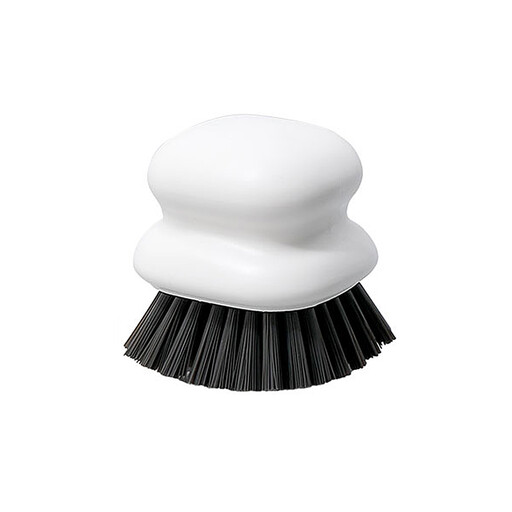
Why this suits this profile: Its short format works well for everyday tasks in a standard kitchen sink: plates, frying pans and small dishes. It lets you start with a simple accessory without collecting lots of tools.
The description states it’s designed for household cleaning and requires no assembly. Its short handle avoids the loss of precision you get with models that are too long.
Compact size, easy to grip and suitable for both washing-up and general household residue.
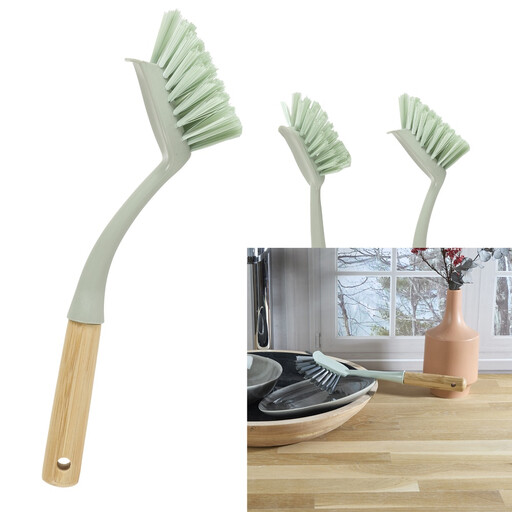
Why this suits this profile: Its bamboo handle and hanging loop fit naturally into a kitchen where aesthetics and storage matter as much as effectiveness.
The care instructions clearly state that you need to rinse and dry the bamboo and avoid standing water. This requirement is easy to spot before you buy.
Bamboo handle, dense synthetic bristles and a shape suited to saucepans, frying pans and deep containers.
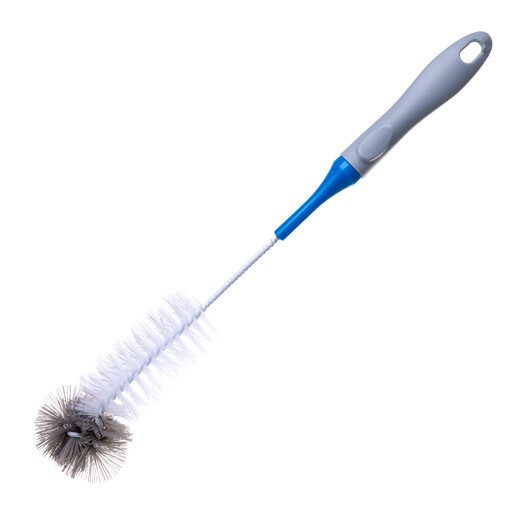
Why this suits this profile: At 36 cm long with a 21 mm diameter head, it targets bottles, flasks and narrow containers used regularly.
The dimensions are given precisely, so you can check compatibility with the neck and depth of your container before ordering.
Polypropylene handle, metal-free design and easy maintenance – just rinse after each use.
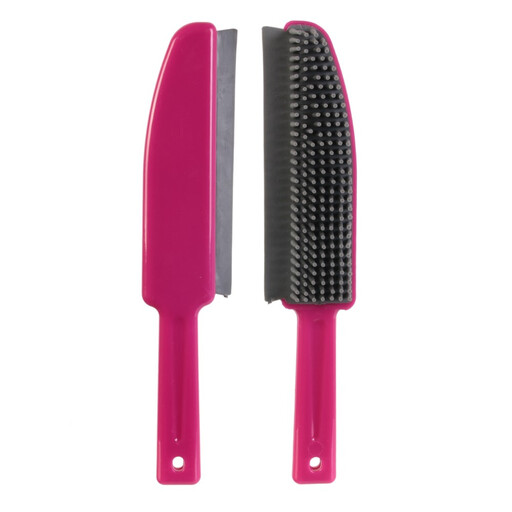
Why this suits this profile: The combination of soft bristles and a squeegee works well on grout, window tracks, sinks, fabrics and bathroom nooks.
The integrated squeegee means you’re not asking a standard brush to do something it can’t: removing water and residue after scrubbing.
Non-abrasive bristles, built-in squeegee and easy access to corners and tight spaces.
We’ve put together a comprehensive, real-time updated list of products that meet these demanding selection criteria and European safety standards.
Rinse the head after every clean to remove grease and particles that could distort the bristles. Drain the accessory, then leave it to dry in a well-ventilated spot. Avoid leaving a bamboo brush in a cup filled with water.
If your brush has a squeegee, run the blade under water too and wipe off any deposits. Replace the accessory if the bristles are flattened, the handle is cracked or the head comes loose. On a delicate surface, always test on a small area before cleaning the whole thing.
A bottle brush needs to be long enough to reach the bottom and slim enough to fit through the neck. Compare the total length and head diameter with the dimensions of your bottle. A head that’s too wide won’t clean the corners properly and could get stuck.
Not necessarily. It can handle several tasks, but a scrubbing brush for stubborn residue, a bottle brush for narrow containers and a squeegee for glass all meet very different needs. In practice, two well-chosen accessories can be more effective than one model marketed as universal.
Rinse the head thoroughly, remove any visible residue and let it dry completely in the open air. Don’t store the brush in a drawer while it’s still damp. For wooden models, avoid prolonged soaking and keep an eye out for cracks.