
Livraison le jour même ou le lendemain

Qualité garantie

Débloquez vos offres de bienvenue: Livraison GRATUITE | Jusqu'à -80 % | 30 jours d'essai gratuits à JoyPlus
Téléchargez l'application
Preparing brioche dough, whipping egg whites or blending soup does not necessarily require the same appliance. Yet product listings often blur the distinction between a multifunction stand mixer, food processor, electric hand mixer and immersion blender. As a result, some buyers pay for functions they will never use, while others underestimate the bowl capacity or the time required for cleaning and maintenance.
Before choosing an appliance for baking and bread making, here are the main pitfalls to avoid and the key features to examine.
A high wattage alone does not guarantee better results. Some manufacturers advertise maximum or “peak” power, which may differ from the rated power. This figure should be considered alongside the recipes you plan to prepare:
Variable speed control is also important. A stand mixer with 10 speeds allows you to start gently when incorporating flour, then gradually increase the speed for whipping. This helps limit splashing while giving you far more precise control than a simple on/off switch.
A 6- or 6.5-litre bowl cannot necessarily be filled to the rim. Flour, water and ingredients that expand need room to prevent spills. Always check the usable capacity, especially if you regularly prepare bread, brioche or several cakes for the whole family.
A stand mixer with a stainless-steel bowl is generally easy to clean and robust enough for frequent use. However, the bowl can become heavy once full. A tilting head, handle or locking mechanism can make handling considerably easier.
An appliance marketed as multifunctional may come with only three basic attachments: a whisk, flat beater and dough hook. That makes it suitable for baking and kneading, but it does not automatically replace an immersion blender, food chopper or countertop blender.
For soups, sauces and smoothies, a 4-in-1 immersion blender may be more practical, particularly because it can be used directly in a saucepan or tall container. Before placing your order, check the exact list of included accessories, whether they are available individually and the manufacturer’s cleaning instructions.
For varied household use, compare the rated power, number of speed settings and recommended operating time. According to the manufacturers’ specifications, the models featured in this selection range from 400 to 1,500 W, with configurations that can differ significantly.
Overload or overheating protection is a genuine everyday advantage, but it does not remove the need to respect maximum quantities. For yeasted dough, start at a low to medium speed and allow the appliance to cool if recommended in the instructions.
Measure the depth of your worktop as well as the available height beneath cupboards. The KENWOOD Go Collection is approximately 30 cm tall, while several 5- to 6.5-litre stand mixers take up considerably more space.
Non-slip feet, suction cups and vibration-absorption systems help keep the appliance firmly in place. As for the advertised noise level, treat it with caution: it may vary depending on the speed, quantity of ingredients and density of the mixture.
Removable accessories should come away without excessive force. Check whether they are dishwasher-safe and, if so, at what temperature. The motor unit should be cleaned with a damp cloth and must never be immersed in water.
With an electric hand mixer or electric whisk, always unplug the appliance before removing the beaters. Immersion-blender blades are particularly sharp. Some models, such as the BRAUN MultiQuick 1, recommend short operating cycles, while the ROUNY advises one minute of operation followed by one minute of rest.
The recommendations below are based on the specifications provided in the product listings. They do not guarantee any particular result: always consult the instructions and compliance information before using the appliance.

Why this model suits this profile: its 5 L bowl and included accessories cover the everyday needs of a household: cake batters, creams, homemade bread and pizza dough.
The listing specifies the 10 speeds, Pulse function, dough hook, whisk and beater. Buyers can therefore confirm the functions actually included before ordering.
5 L stainless-steel bowl, 10 speeds with Pulse function, tilting head and suction-cup feet, according to the available information.
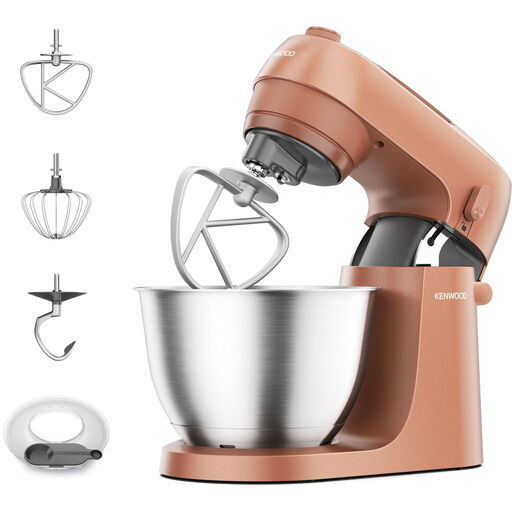
Why this model suits this profile: its compact design is ideal for kitchens where every centimetre counts, without compromising on the essential functions of a stand mixer.
Its stated dimensions, 4 L stainless-steel bowl and six speeds with Pulse function make it possible to assess its footprint and versatility without relying solely on marketing claims.
Advertised 800 W motor, metal construction, 4 L stainless-steel bowl and three accessories: K-beater, balloon whisk and dough hook.
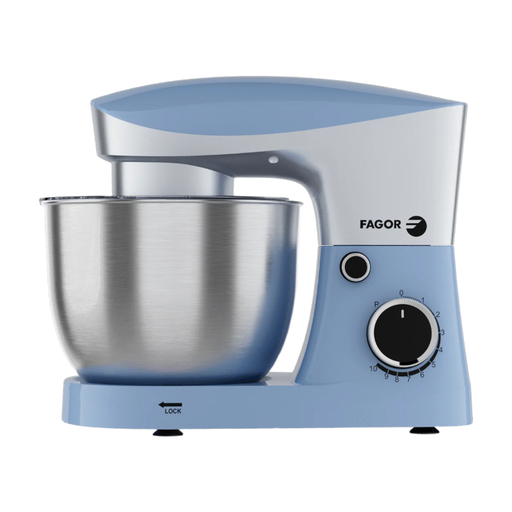
Why this model suits this profile: its stated 6 L bowl, with 5.7 L of usable capacity, is designed for families and anyone who regularly prepares bread, brioche or large batches of dough.
The listing distinguishes total capacity from working capacity and mentions overheating protection, helping prevent the bowl from being filled beyond reasonable limits.
10 speeds with Pulse function, 304 stainless-steel bowl, three metal accessories and overload protection, according to the manufacturer’s specifications.
We have brought together an updated selection of appliances that meet these purchasing criteria and the safety requirements applicable in France and the European Union.
The right choice therefore depends primarily on the recipes you prepare most often—not on the number of functions printed on the box.
A 4- to 5-litre bowl is suitable for everyday preparations and reasonable quantities. For several loaves, large batches or frequent family use, a 6-litre stand mixer or larger provides more room to work. However, you should always respect the usable capacity specified by the manufacturer.
Consumption depends on the power rating, speed and operating time. A 1,000 W appliance running for 10 minutes theoretically uses around 0.167 kWh. Actual consumption varies according to the selected programme and the load placed on the motor. To keep energy use under control, choose a capacity suited to your needs and avoid running the appliance empty or for longer than necessary.
Follow the quantities and operating times specified in the instructions, start doughs at a low speed, allow the motor to cool after demanding preparations and clean the accessories promptly. Always unplug the appliance before changing attachments. With an immersion blender, do not exceed the recommended operating cycles and never immerse the motor unit in water.