
Livraison le jour même ou le lendemain

Qualité garantie

Débloquez vos offres de bienvenue: Livraison GRATUITE | Jusqu'à -80 % | 30 jours d'essai gratuits à JoyPlus
Téléchargez l'application
The term multifunction covers a wide range of very different tools. A pair designed for paper has no place in the kitchen cutting chicken, while a pair of garden secateurs shouldn't end up in a cutlery drawer. To avoid unpleasant surprises, it's far better to start with your intended use, the dimensions and the materials, rather than relying on a simple promise of versatility.
Kitchen scissors can cut poultry, herbs or food packaging. That doesn't mean they're suitable for cardboard or wire. Similarly, DIY scissors may be sturdier without being designed to come into contact with food.
Always check the authorised uses on the product page. A clearly stated cutting capacity – for example, 6 mm, 12.5 mm or 19 mm for a branch – helps you choose a suitable tool without over-stressing it.
The type of steel matters, but it isn't enough to guarantee the longevity of your scissors. The thickness of the blade, the quality of its assembly, the robustness of the pivot and the ease of cleaning all play a decisive role.
Stainless steel resists moisture well, making it particularly practical for stainless steel scissors used in the kitchen or garden. Some models instead use treated or coated carbon steel. In that case, careful drying and regular maintenance are essential to limit oxidation.
A precise blade won't make up for an uncomfortable handle. Rings that are too narrow, a spring that's too stiff or a slippery handle can make repeated cutting tiring. If you use your scissors for long sessions, go for ergonomic scissors with a soft coating, a non-slip handle or an assisted spring mechanism.
For children, students and creative activities, the length also needs to suit the hand. A 13 cm or 16 cm model doesn't offer the same control as a larger pair of kitchen shears.
For paper, thin cardboard and crafting, a stainless steel blade with a suitable tip is usually sufficient. Precision scissors with a micro-tip are particularly handy for cutting small stems, flowers or carrying out bonsai work.
In the garden, look for a blade designed for bypass cutting – also known as cross-cut shearing – along with a clearly stated capacity. A garden secateur intended for fresh branches of 19 mm should not be used on dry wood or wire.
In the kitchen, reinforced models are designed for poultry, seafood and some small bones. They won't replace a cleaver when faced with very hard materials. The product page should therefore clearly state the usage limits.
A locking catch allows you to store the tool without leaving the blades open. On a secateur, an automatic spring makes reopening easier after each cut. For poultry shears, an assisted spring can reduce fatigue during repeated use, though it doesn't replace the need to control the pressure you apply.
Rounded tips are more suitable for school supplies, but they don't make the scissors harmless. Keep the blades closed, store them out of reach of young children and wear gardening gloves when the situation calls for it.
After each use, remove any residue with a soft cloth. Kitchen scissors should be washed according to the manufacturer's instructions, then thoroughly dried. For garden tools, a light lubrication of the pivot helps keep the mechanism running smoothly.
Avoid cutting materials that aren't intended for the tool: staples, cables, metal, dry wood or thick plastic. These uses quickly blunt the blades and can misalign the pivot.
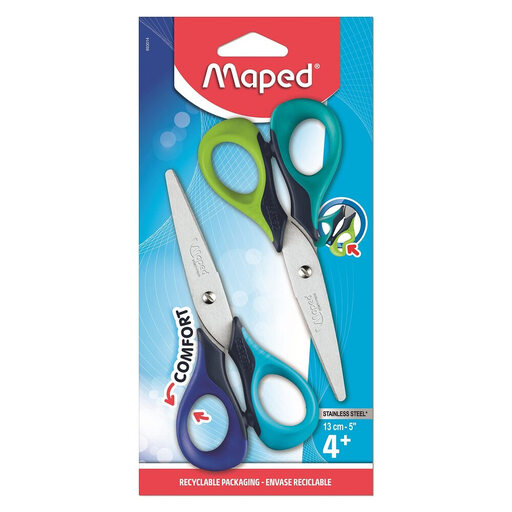
Why this choice suits this profile: This pack is ideal for school supplies, paper and creative activities at home. With their 13 cm length and soft handles, these scissors are suitable for small hands from age 4, under supervision and following the stated precautions.
The length and soft handle reduce the risk of choosing a model that's too large or uncomfortable for school use.
Two pairs, stainless steel blades, soft handles and a symmetrical design suitable for both right-handed and left-handed users.
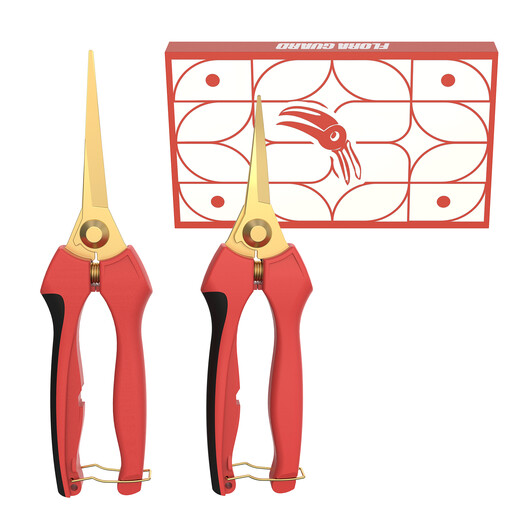
Why this choice suits this profile: This set includes one straight blade and one curved blade for flowers, bonsai and detailed pruning work. It's aimed at those who prefer to use a dedicated tool for each task.
The two blade shapes prevent asking a single pair to perform very different cuts, limiting unsuitable uses.
Coated stainless steel, non-slip handles and a stated capacity of up to 1.25 cm according to the description.
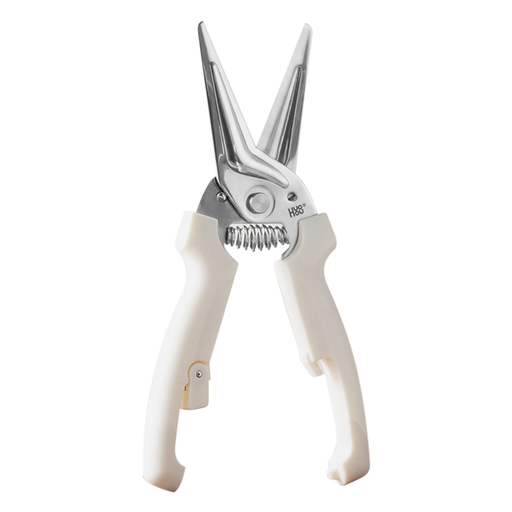
Why this choice suits this profile: This model is designed for regular preparation of poultry, meat, seafood and vegetables. It suits cooks looking for scissors for cutting bones, within the limits specified by the manufacturer.
The spring mechanism, lock and non-slip handle address the main issues of fatigue, storage and slipping.
3Cr13 stainless steel blades, assisted spring, non-slip PP handle and safety lock.
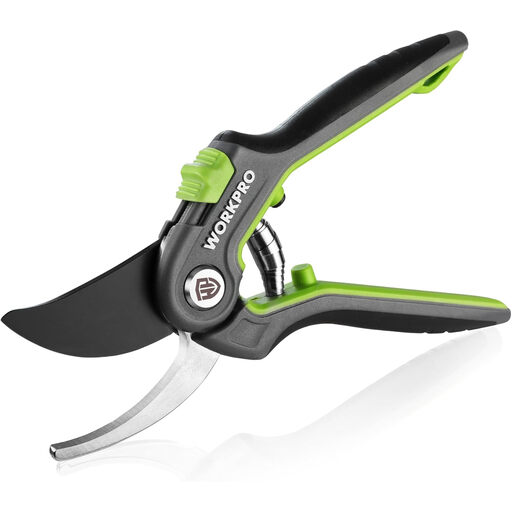
Why this choice suits this profile: These secateurs are suitable for maintaining ornamental plants, shrubs and small trees, as well as for harvesting and grafting, within the stated limit.
The maximum capacity of 19 mm and the locking mechanism clearly indicate the usage limits and make storage easy.
SK5 carbon steel blade with anti-corrosion coating, automatic spring, non-slip handles and safety lock.
We've put together a comprehensive, real-time updated selection of products that meet these demanding criteria and European safety standards.
This is not recommended. Kitchen scissors should be reserved for food to maintain hygiene and blade sharpness. For cardboard, packaging or DIY materials, choose a dedicated pair.
Use them only on the intended materials, clean the blades after each use and dry them before storing. For garden models, occasionally apply a drop of lubricant to the pivot. If sharpening is needed, choose a method compatible with the blade geometry.
A spring makes reopening easier and makes repeated cuts smoother. However, it doesn't replace a suitable blade or a stable grip. Also check for a lock and the list of materials the manufacturer allows you to cut.