
Livraison le jour même ou le lendemain

Qualité garantie

Débloquez vos offres de bienvenue: Livraison GRATUITE | Jusqu'à -80 % | 30 jours d'essai gratuits à JoyPlus
Téléchargez l'application
A multifunction food processor can make meal preparation much simpler, but not all appliances are created equal. Between the electric mini chopper, the multifunction mandoline, the food processor and the stand mixer, differences in capacity, power and accessories have a direct impact on everyday use.
The main risk is buying an appliance that claims to be versatile, only to discover it’s missing a crucial attachment or is a nightmare to clean. Here are the criteria to consider before you make your decision.
An appliance advertised as “5-in-1” or “4-in-1” may simply group together several similar operations, such as chopping, blending and puréeing. That doesn’t necessarily mean it will replace a blender, an electric slicer and a meat grinder.
Check the list of included accessories carefully:
High power doesn’t guarantee the right results for every recipe. A motor of 200 to 300 W can be perfectly adequate for small amounts of garlic, onion or herbs. For kneading, working with large volumes or using multiple attachments, it’s better to look for an appliance with 700 to 1,200 W.
The bowl capacity matters just as much. A container of 500 to 700 ml is fine for small portions, while a bowl of 3.8 to 6.2 litres will better suit a family’s needs.
A multitude of blades can be handy, but it also means more handling and storage. Check whether the parts are dishwasher-safe, whether the manufacturer recommends hand washing, and whether the accessories store away easily.
A compact mandoline with a collection tray helps keep splashes off your worktop. On the other hand, a bulky appliance will need a permanent spot in your kitchen.
For a single person or a couple, a mini chopper or a food processor under one litre may be enough. Families will be better off with a bowl of 1.1 to 2 litres for vegetables, sauces and purées, or a large bowl for doughs and batch cooking.
Also remember to measure the height available under your wall cabinets. Some stand mixers and appliances with an articulated arm take up significantly more space than a manual vegetable slicer.
Stainless steel blades are standard for chopping, grating or slicing. A glass bowl generally resists odours and staining well, but it is heavier and can be sensitive to thermal shock. Plastic food-grade containers are lighter – just check the guidelines regarding hot foods and dishwasher use.
For safety, look for a lockable lid, a non-slip base and, for mandolines, a finger guard. Blades should be handled with care, especially during cleaning.
Multiple speeds and a pulse function give you better control over texture. With a compact electric chopper, stick to the continuous running time stated in the manual to avoid overheating the motor unnecessarily.
If you cook often, also check the availability of spare parts, the warranty period and the after-sales service conditions. This information is far more useful than a simple promise of speed.
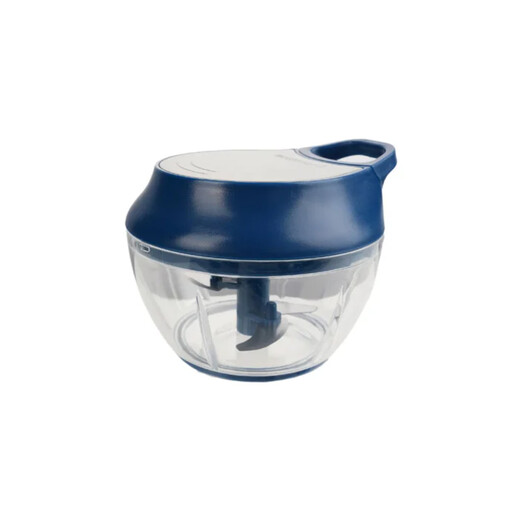
Why this choice suits this profile: Its pull-cord mechanism requires no power socket, and its 500 ml size is ideal for everyday small preparations.
It doesn’t promise artificial versatility – it focuses on manual chopping, with no electricity consumption or motor to maintain.
Three stainless steel blades, a non-slip base and a bowl that is stated as dishwasher-safe.
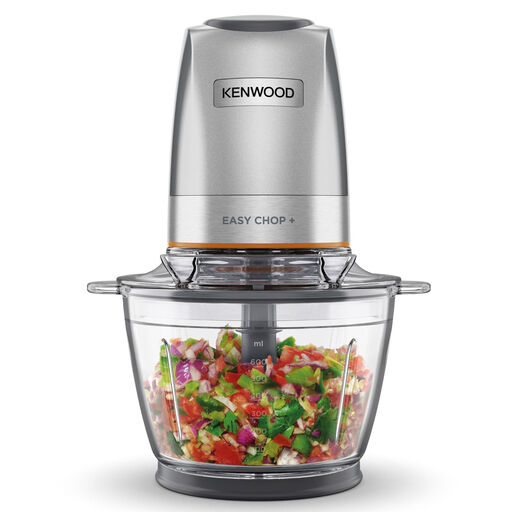
Why this choice suits this profile: This compact electric appliance combines 500 W of power with a 600 ml glass bowl, perfect for preparing sauces, vegetables, meats and other recipes in small quantities.
The product page clearly states the capacity, power and two speeds, allowing you to compare the appliance based on concrete data.
Four stainless steel blades, a mayonnaise attachment, cord storage and a glass bowl that is dishwasher-safe.
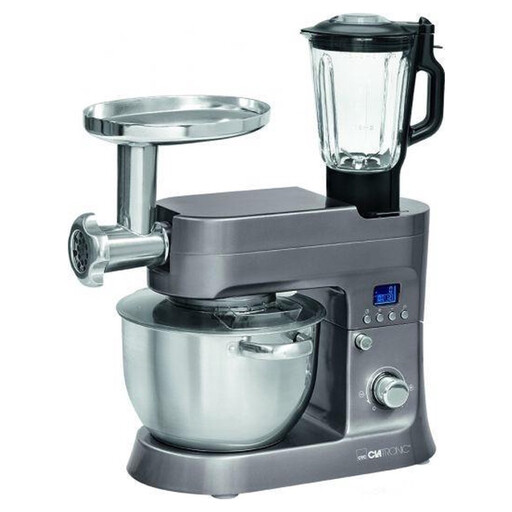
Why this choice suits this profile: Its 6.2-litre bowl, 12 speed levels and attachments for kneading, whisking, mincing meat and making pasta are designed for busy kitchens.
The product page distinguishes the large bowl, the 1.5-litre glass bowl and the included accessories – so your choice is based on clearly identifiable uses.
1,200 W motor, timer with LCD display, pulse function and attachments for mincing meat and making pasta.
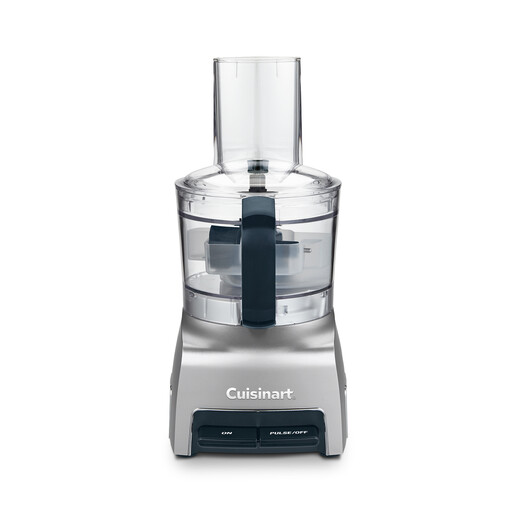
Why this choice suits this profile: Its mid-size format lets you prepare purées, sauces, grated vegetables and small portions without taking up the space of a family-sized machine.
Its 1.1-litre capacity and pulse function reduce the risk of choosing an oversized machine for everyday portions.
Universal blade, reversible grating disc, whisking blade and removable parts that are stated as dishwasher-safe.
A multifunction mandoline or manual vegetable slicer is ideal for slices, julienne strips and grating, with no plugging in or start-up time. The COOK CONCEPT 5-in-1 model, for example, comes with seven interchangeable accessories and a collection tray. However, it does require hand washing and extra care when handling the blades.
A motorised food processor will be more suitable if you want to mince meat, blend sauces, make purée or regularly work with large quantities. For bread dough, whisking egg whites or thick mixtures, a stand mixer with a dough hook and whisk will meet a different need.
We’ve put together a comprehensive, real-time updated list of products that fully meet these strict selection criteria and European safety regulations.
It depends on the power and how long you use it. A mini chopper used for a few seconds per preparation will have a limited impact. A 700 to 1,200 W appliance used for longer periods to knead or blend will consume more. When the recipe allows, the pulse function helps reduce running time.
For two people, a bowl of 600 ml to 1.1 litres can be enough, depending on the recipes. For a family, it’s generally better to aim for 1.5 to 2 litres for everyday preparations. A bowl over 3 litres becomes useful for doughs, large quantities of vegetables or batch cooking.
Respect the capacity limits and running times stated in the manual. Remove blades by holding them at the centre, never immerse the motor unit in water, and dry accessories thoroughly. Finally, store discs and blades in a protected place, out of reach of children.