
Livraison le jour même ou le lendemain

Qualité garantie

Débloquez vos offres de bienvenue: Livraison GRATUITE | Jusqu'à -80 % | 30 jours d'essai gratuits à JoyPlus
Téléchargez l'application
A multifunction electric cooker can replace several appliances in a small kitchen, speed up meal preparation and simplify dinner parties. But a spec sheet doesn't always tell the full story. A large capacity can take up a lot of worktop space, high power can push up your electricity bill, and a non-stick coating that isn't looked after properly will quickly lose its effectiveness.
Before you place your order, keep three pitfalls in mind: advertised capacities without any indication of the actual usable volume, appliances with a plethora of functions that don't really suit your daily routine, and the hassle of cleaning after every use.
A 5 or 7-litre container can't necessarily be filled to the brim. To avoid spillages, you need to follow the manufacturer's recommendations. Some appliances advise not exceeding two-thirds of the volume for soups and preparations that swell or boil up.
For a single person or a couple, a mini electric cooker of 1 to 2 litres can be more than enough. A family of four would be better off aiming for 3.5 to 5 litres. For hearty meals or large gatherings, a capacity of 6 to 7 litres is justified, provided you have a spacious enough worktop.
High power is great for fast cooking, but it doesn't guarantee even heat distribution. Also check for an adjustable thermostat, multiple heat levels or an independent control system.
An appliance with 1,000 to 1,500 W is generally suitable for noodles, soups, stews and everyday cooking. A double-basket deep fat fryer with 3,300 to 3,600 W is designed more for heating two oil baths quickly. However, it will require a suitable socket and good ventilation.
An appliance that's fiddly to take apart is likely to end up at the back of a cupboard. Go for a removable bowl, a detachable cord, a drip tray and, where the manufacturer states it, dishwasher-safe parts. With a non-stick coating, use a soft sponge and wooden, silicone or plastic utensils to avoid scratches.
A multifunction electric cooker can serve as an electric slow cooker, a deep frying pan, a steamer or even an electric hot pot. However, each model has its limits. A wide bowl is handy for searing several ingredients at once, while a deep container is better suited to soups and saucy dishes.
For sharing meals, an electric plancha with a surface of 100 × 23 cm can accommodate several portions at the same time. Conversely, a compact 20-litre microwave is better suited to reheating, defrosting and small preparations.
LOW/HIGH settings are easy to get to grips with, but they offer less precision than a gradual adjustment. Some appliances offer three settings, five levels or a range from 0 to 210 °C. Pre-set programmes can make life easier for beginners, provided you can adjust their duration.
A built-in induction hob requires different checks: cut-out dimensions, power supply, ventilation, detection of magnetic pans and installation by a qualified professional. The CIARRA model shown below indicates a cut-out of 560 × 490 mm and a 32 A power supply.
Before you buy, check compatibility with the 220–240 V, 50 Hz mains supply, the presence of an English instruction manual and the safety features stated, such as overheat protection, automatic shut-off or dry-boil protection. The appliance must also be placed on a stable, dry, heat-resistant surface.
With a deep fat fryer, never exceed the maximum oil level, never move the appliance when it's hot and never pour water onto an oil fire. With a steamer or rice cooker, keep your face away from the steam vent when you open the lid.
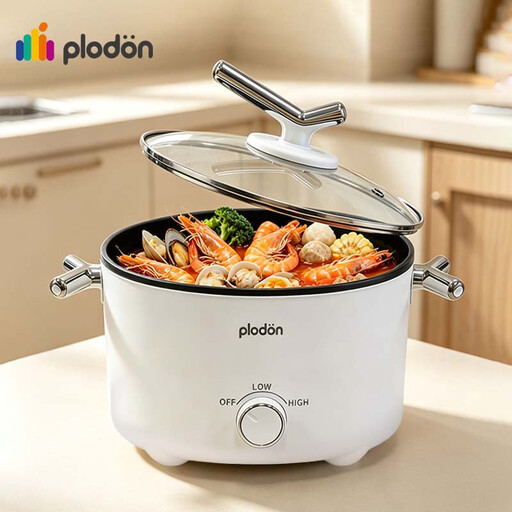
Why this choice suits this profile: Its 2-litre size and 1,000 W power are ideal for students, couples and small kitchens. The two LOW/HIGH settings make first attempts easy.
Its limited volume reduces the risk of choosing an oversized appliance for single portions. The detachable cord also makes it easier to store.
Glass lid, handles said to stay cool to the touch and non-stick bowl.
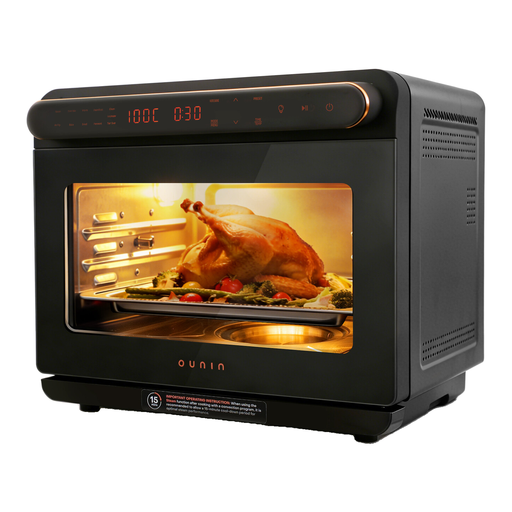
Why this choice suits this profile: This steam combi oven is for those who want to combine steaming, fan-assisted cooking, rotisserie, dehydrating and oil-free air frying in one countertop appliance.
The functions are clearly separated and the removable water tank lets you manage steaming without fiddling with accessories.
24-litre capacity, 1-litre tank, 304 stainless steel interior and seven accessories included.
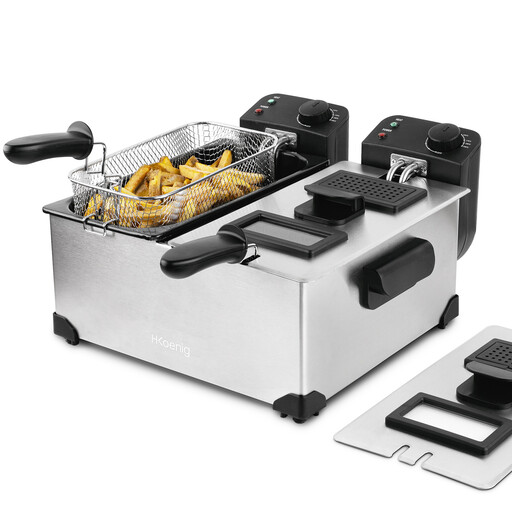
Why this choice suits this profile: This double-basket deep fat fryer is ideal for families and users who regularly cook two different foods at different temperatures.
The two independent thermostats mean you don't have to use the same temperature for different foods.
3,600 W power, 6-litre total capacity, removable baskets and parts said to be dishwasher-safe.
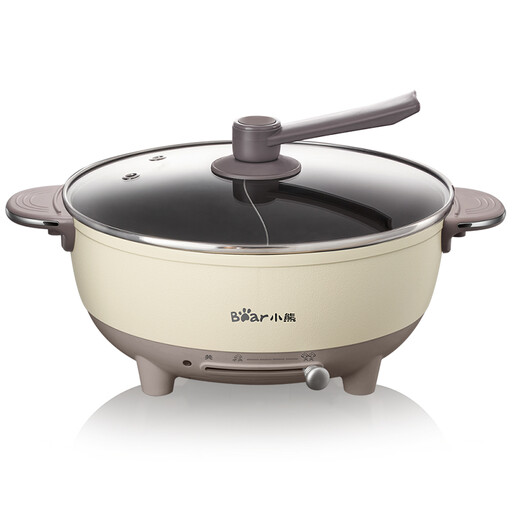
Why this choice suits this profile: With its 6 litres and internal divider, it lets you prepare two broths or two flavours for a hot pot and meals with several people.
The dual zone limits broth mixing and avoids having to buy multiple appliances for a sociable meal.
Gradual adjustment from 0 to 210 °C, 1,500 W power, non-stick coating and dry-boil protection.
We've put together a comprehensive, real-time updated selection of products that meet these demanding criteria and European safety regulations.
Consumption depends on both power and usage time. A 1,000 W appliance used for 30 minutes consumes around 0.5 kWh, compared with around 0.9 kWh for a 1,800 W model used for the same length of time. This is a theoretical estimate: the thermostat may cut the heating intermittently.
To keep your bills under control, choose a capacity suited to the number of portions, avoid unnecessary preheating and regularly clean the heating elements, filters and surfaces. A deep fat fryer can also lead to extra costs, particularly for replacing the oil.
The lifespan depends on how often you use it, how well you look after it, thermal shocks and the condition of the coating. An appliance used every day should be allowed to cool before cleaning and must never be submerged if the manufacturer forbids it.
Regularly inspect the cord, plug, handles, bowl and controls. If you notice a damaged cable, a cracked glass lid or unusual overheating, stop using the appliance immediately and contact customer service or consult the manual.
Not necessarily. An electric slow cooker excels at slow cooking, a rice cooker at preparing grains and an electric hot pot at soups, noodles and sharing meals. An electric plancha focuses on large-surface cooking, while a steam combi oven covers more techniques, at the cost of taking up more space.
The most logical approach is to start with the dishes you usually cook, then check the capacity, power, ease of cleaning and the accessories that are actually included.