
Livraison le jour même ou le lendemain

Qualité garantie

Débloquez vos offres de bienvenue: Livraison GRATUITE | Jusqu'à -80 % | 30 jours d'essai gratuits à JoyPlus
Téléchargez l'application
A multifunction electric chopper can chop onions, blend a mixture, grate vegetables or even slice cold meats. But the appliances grouped under this name don't all cover the same needs. A compact mini-chopper won't replace a multifunction food processor, while an electric slicer isn't designed to prepare dough or blend a soup.
Before you place an order, three common pitfalls keep cropping up.
For occasional use, a mini electric chopper of 200 to 300 W is generally sufficient for garlic, herbs, fruit, onions or small amounts of meat. With a capacity between 0.5 and 0.9 litres, you'll need to stick to modest volumes per batch.
For a family or more regular meal prep, an appliance with 750 W and a 1.8-litre bowl offers much more flexibility. It can combine several functions, such as chopping, blending, grating and slicing. It's still essential to follow the manufacturer's instructions regarding usage cycles to avoid overheating the motor.
The capacity should above all match your routine: a 0.6-litre bowl is handy for a sauce or a small portion, while a 2-litre model will be more comfortable with family-sized preparations.
Stainless steel blades are standard for chopping, mincing or processing different foods. Their number and geometry influence how even the result is, but they don't remove the need to cut ingredients into suitable pieces.
A chopper with a glass bowl can be useful for keeping an eye on the texture and reducing odour retention. Glass is, however, heavier and can be sensitive to thermal shock. With the Bear model, the bowl and lid must not be used with hot foods and are not designed to withstand sudden temperature changes.
If you're looking for an electric vegetable cutter, check the number of discs supplied and the size of the openings. A grating disc, a slicing disc and a chopping blade already cover most everyday needs. For an adjustable food slicer, pay particular attention to the maximum thickness, the stability of the carriage and the presence of a pusher.
A locking lid, non-slip base and pusher are features to look for. Blades and discs should always be handled by their central part, never by their cutting edge.
Also check which parts can be dismantled and whether they are dishwasher-safe. The motor block, cord and electrical components must never be immersed. In the UK, choose an appliance that displays the required markings and regulatory information, comes with a clear instruction manual and, where necessary, the contact details of a responsible party established in the European Union.
Finally, remember to measure your worktop. An electric slicer sometimes needs clear space around the appliance, whereas a mini-chopper can be tucked away in a cupboard much more easily.
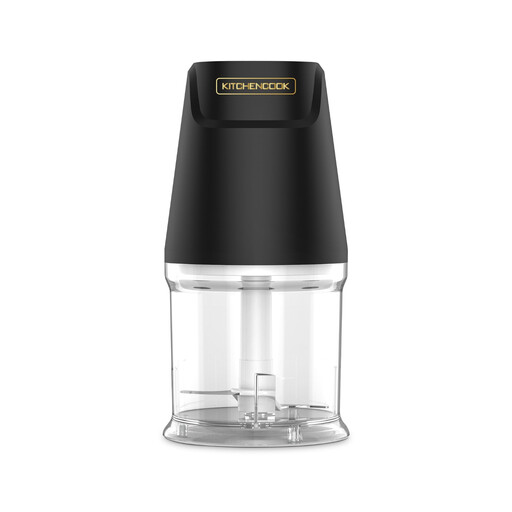
Why this choice suits this profile: Its 0.5-litre size and compact dimensions are ideal for small kitchens, baby food, herbs and condiments.
It doesn't promise excessive versatility: its capacity and pulse operation are designed for targeted use.
200 W motor, BPA-free 0.5-litre bowl, stainless steel blades and a compact, easy-to-store format.
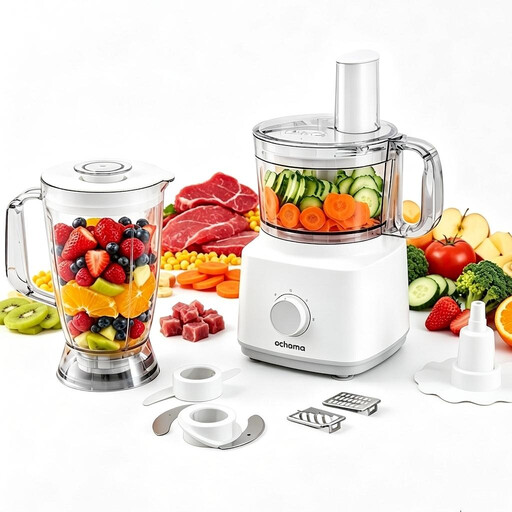
Why this choice suits this profile: This food preparation appliance combines several functions and avoids cluttering your worktop with multiple gadgets.
The product page details the 1.8-litre capacity and the included functions: chopping, blending, grinding, slicing and grating.
Stated power of 750 W, 1.8-litre bowl and detachable parts for easier cleaning.
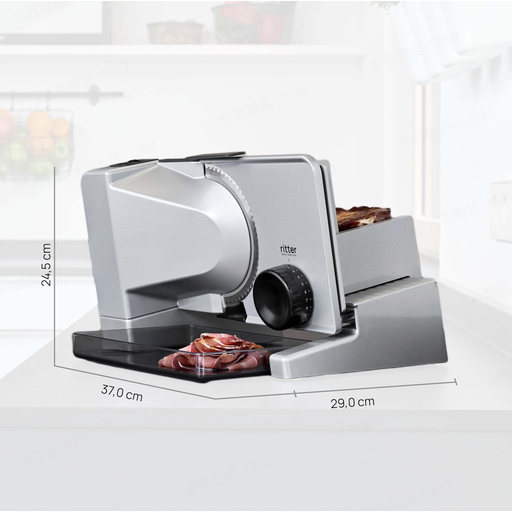
Why this choice suits this profile: This slicer is aimed at lovers of cold meats, bread and roasts who want an even thickness every time.
This is a specialised appliance: no point paying for blending or grinding functions you won't use.
All-metal construction, DC motor, electronic speed control and thickness up to 23 mm according to the product page.
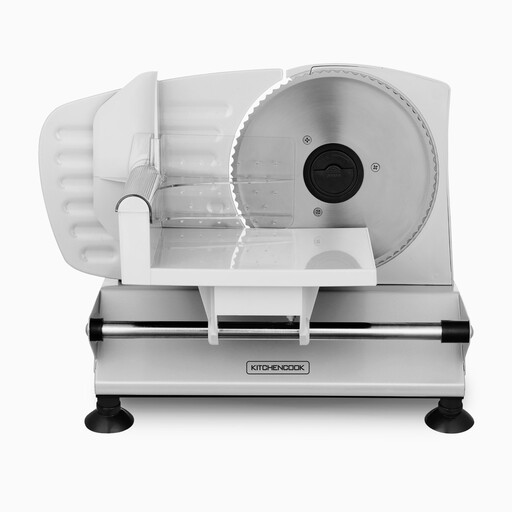
Why this choice suits this profile: Its adjustable thickness setting is ideal for users who regularly slice bread, cheese, meat or vegetables.
The cutting range, clearly stated as 0 to 15 mm, comes with a safety pusher and suction feet.
190 mm stainless steel serrated blade, removable carriage, 150 W motor and a stated maximum continuous running time of 10 minutes.
We've put together a comprehensive, real-time updated list of products that fully meet these strict selection criteria and European safety regulations.
The running time depends on the motor, the foods used and whether you follow the instruction manual. To keep an electric meat mincer or multifunction food processor in good condition:
Pulse operation is often better for controlling the texture and limiting heat build-up. The running cost mainly depends on the power and how often you use it: a 750 W appliance consumes more per minute than a 200 W model, but it may reduce the number of cycles needed to prepare a large quantity.
Not necessarily. Some models have a blending function or a dedicated accessory, but the shape of the bowl and blades can differ from those of a blender. Check which functions are actually included and avoid processing hot foods if the manual advises against it.
For small portions, a 200 to 300 W motor can be enough, depending on the texture of the food and the permitted cycles. For more frequent use or larger quantities, a stated power of 750 W offers more reserve. That doesn't mean you can ignore the manufacturer's recommendations on piece size, bowl capacity and running time.
Unplug the appliance, remove the accessories and wash only the parts intended for that purpose. Clean the motor block with a slightly damp cloth. Handle the blades with care, then dry them quickly to minimise marks and oxidation.