
Livraison le jour même ou le lendemain

Qualité garantie

Débloquez vos offres de bienvenue: Livraison GRATUITE | Jusqu'à -80 % | 30 jours d'essai gratuits à JoyPlus
Téléchargez l'application
Cutting a beading, a cable, cardboard or a PVC panel doesn't require the same tool. Yet many models are sold as versatile when they're actually limited to just a few soft materials. Before buying multifunction cutting tools, it's worth checking the compatible materials, cutting angles, actual capacity and included accessories.
A tool advertised as suitable for wood, plastic and PVC won't necessarily cut metal, hardwood or steel cables. Miter shears are generally designed for soft materials and small sections. Push them beyond their limits and you risk blunting the blade, deforming the workpiece or experiencing kickback.
A simple angle scale doesn't guarantee a clean cut. Check for an adjustable slider, a 45° stop or a system that can hold the workpiece in place. An adjustable miter shear with a range of 45° to 135° offers more possibilities for mouldings, joints, beading and trunking. However, precision also depends on the stability of the workpiece during cutting.
A replaceable blade can extend the life of your tool, provided you can find compatible replacements. Replacement SK5 blades are commonly available for craft knives and certain shears. Before comparing prices, check how many blades are included, their shape and the replacement method.
For cardboard, fabric, leather, felt or thin plastic, an 18 mm craft knife or cordless electric scissors will do the job. For beading, rubber seals, soft PVC and softwood, a miter shear is usually more suitable.
A PVC cutter or moulding cutter should, however, be used within the limits set by the manufacturer. A wide opening doesn't mean the tool can cut through hard material or thick sections without effort.
SK5 steel is commonly used for cutting blades and snap-off blades. It offers a sharp edge suitable for cardboard, packaging, fabrics and soft materials, but it doesn't turn a manual tool into a metal cutter. After each use, remove any residue, wipe the blade and store the tool in a dry place.
For cutting metal cable, choose a jaw and structure designed for steel cables or brake cables. A standard cable cutter intended for flexible conductors won't necessarily have the mechanical strength required.
A non-slip handle improves grip, especially during repeated cuts. A return spring reduces handling, while a safety lock prevents the tool from opening during storage. For electric models, also check the battery type, charging cable, weight and the presence of a device to prevent accidental start-ups.
Wear suitable safety glasses and gloves, keep your fingers away from the blade's path and never force the tool on a material it's not designed for. Cutting tools should always be kept out of reach of children.
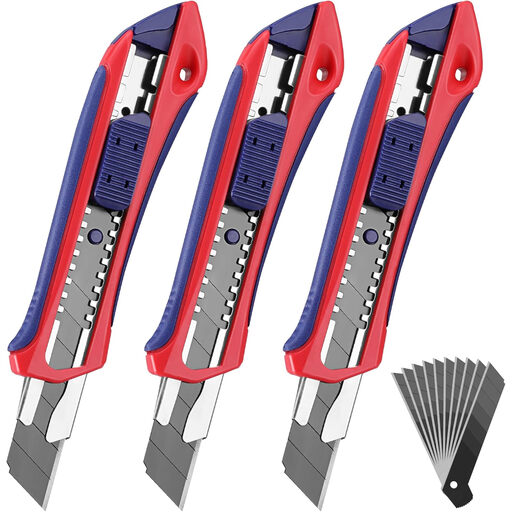
Why this choice suits this profile: This format is ideal for small household tasks, packaging, cardboard as well as DIY and craft activities.
The set clearly states it includes an 18 mm blade and comes with 10 replacement SK5 blades, so you don't have to buy consumables straight away.
Three craft knives, an ABS handle with TPR coating, blade lock and snap-off blades for quickly restoring a sharp edge.
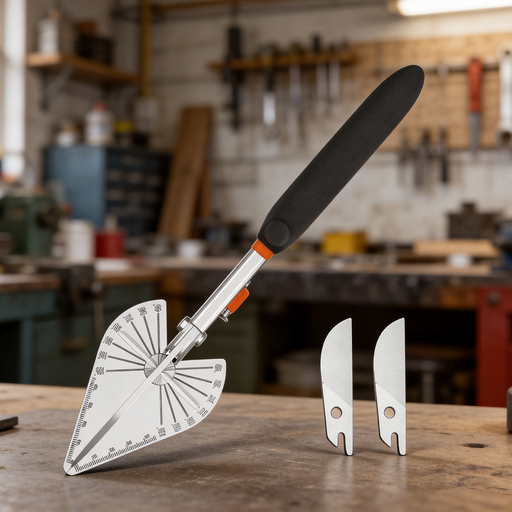
Why this choice suits this profile: Its wide adjustment range is ideal for those who regularly work on finishing, mouldings, trunking or seals.
The stated range of 45° to 135° and the engraved scale allow you to set the angle precisely, rather than relying on a vague promise of versatility.
SK5 blade, aluminium alloy handle with non-slip coating and a stated capacity of up to 6.8 cm, depending on the material.
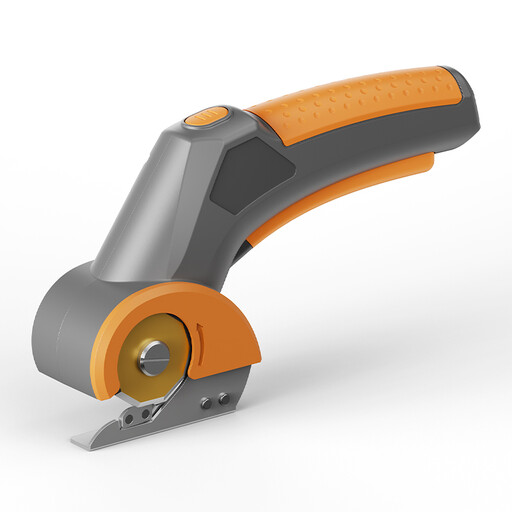
Why this choice suits this profile: This model is designed for repeated cutting of corrugated cardboard, carpet, leather, felt, paper and plastic, when using a manual tool becomes tiring.
The product page specifies the intended materials, the 4 V rechargeable lithium battery power supply and USB-C charging, so its limitations are easier to anticipate.
Up to two hours of stated battery life, safety lock, high-carbon steel blade and a stated weight of 470 g.
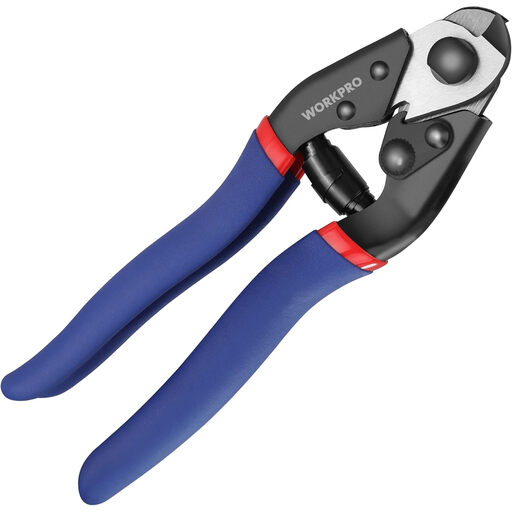
Why this choice suits this profile: It is intended for steel cables, stainless steel cables, bicycle brake cables and metal wires, rather than everyday cutting tasks.
Its function is clearly defined as a metal cable cutter, which prevents it from being mistaken for a universal pair of pliers.
Forged and heat-treated chrome-vanadium steel, opening spring, ergonomic handles and safety lock. Stated length: 190 mm.
We've put together a comprehensive, real-time updated list of products that meet these strict selection criteria and European safety requirements.
For cardboard, paper, film, thin leather or soft plastic, a cutting tool for cardboard and plastic fitted with a replaceable blade is usually suitable. An 18 mm craft knife lets you easily refresh the cutting edge thanks to its snap-off blades. For repetitive work, cordless electric scissors can reduce effort, provided you respect their cutting capacity.
No, unless the manufacturer explicitly states otherwise. The models shown here are intended for softwood, PVC, seals, mouldings and soft materials. Metal and hardwood require a tool specifically designed for those materials. Using a miter shear on material that's too tough risks damaging the blade and increasing the risk of injury.
Clean it after each cut, avoid abrasive or overly hard materials, don't force the mechanism and store the tool locked in a dry place. Replace any damaged or blunt blade promptly. For electric models, recharge the battery with the supplied cable and keep the device away from moisture.