
Livraison le jour même ou le lendemain

Qualité garantie

Débloquez vos offres de bienvenue: Livraison GRATUITE | Jusqu'à -80 % | 30 jours d'essai gratuits à JoyPlus
Téléchargez l'application
A multifunction cleaning brush can replace several accessories in the kitchen and around the home: a washing-up brush, a scrubbing brush, a bottle brush, a window squeegee or a tool for cleaning grout. But some models quickly become tiresome to use, warp or scratch surfaces.
Before you buy, three pitfalls deserve your attention:
For everyday washing-up, a head made from soft to medium-firm synthetic fibres generally works well for plates, sinks and utensils. For a scrubbing brush, you need more rigidity to lift residue, without using an abrasive surface on a delicate coating.
Check the usage guidelines:
The absence of a clear mention does not mean the brush is suitable for all surfaces. The manufacturer's recommendations remain the benchmark.
A long-handled brush makes it easier to reach the bottom of a saucepan, jar or bottle. A length of 30 to 36 cm offers a useful reach for deep containers, but a short brush often gives you more control for scrubbing a pan in the sink.
Also look for:
A wooden handle needs special care: avoid leaving it to soak and store it in a well-ventilated place. Plastic, polypropylene and ABS are easier to clean, but they too should be rinsed to prevent build-up.
A kitchen brush is more pleasant to use if its head doesn't trap particles. After each use, rinse it in clean water, remove any debris caught between the fibres and let it dry completely.
Don't rely solely on the price. Instead, examine:
Cleaning brushes generally require no installation, but some should be stored away from heat sources. Do not use boiling water or highly corrosive products unless explicitly stated.
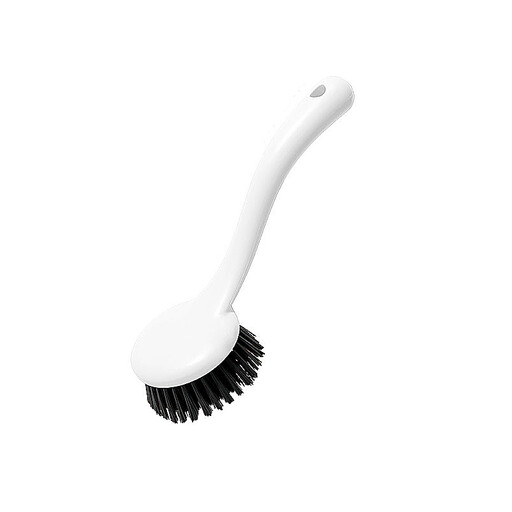
Why this choice suits this profile: Its long handle is ideal for anyone looking for a simple washing-up brush for the sink, saucepans and frying pans, without needing multiple accessories.
The handle length limits direct contact with hot water and residue. However, use it with care on non-stick coatings.
Long handle and a design made for washing dishes and removing everyday stains.
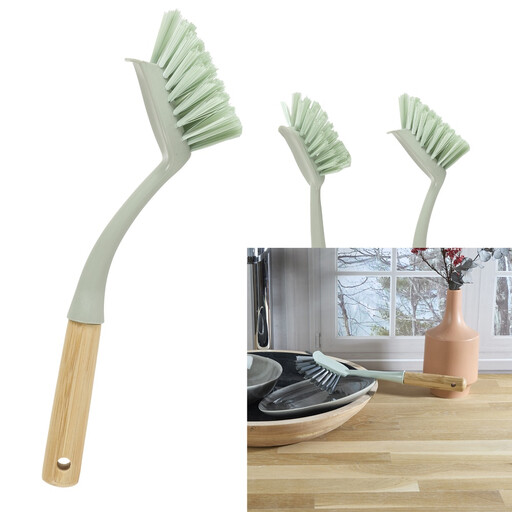
Why this choice suits this profile: Its bamboo handle and synthetic fibres appeal to households looking for a durable, everyday accessory with a refined appearance.
The product page clearly states not to leave the bamboo in standing water, which helps preserve the handle for longer.
Bamboo handle, dense synthetic fibres and a loop or profile that aids drying.
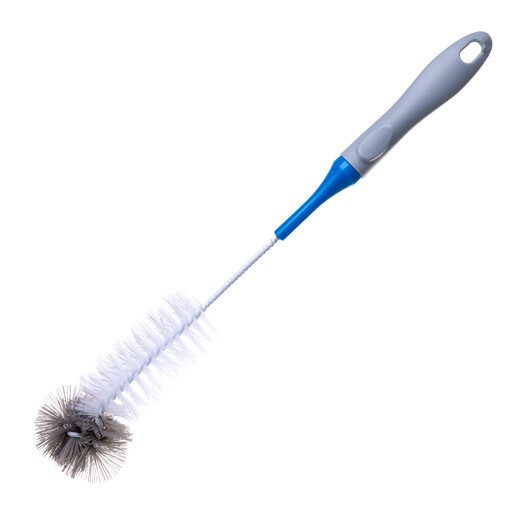
Why this choice suits this profile: At 36 cm long with a 21 mm head, this bottle brush targets tall, narrow or hard-to-reach containers.
Its dimensions are clearly stated: you can compare them to your bottle necks before buying, rather than relying on a vague promise.
Total length of 36 cm, polypropylene construction and a 21 mm fibre head.
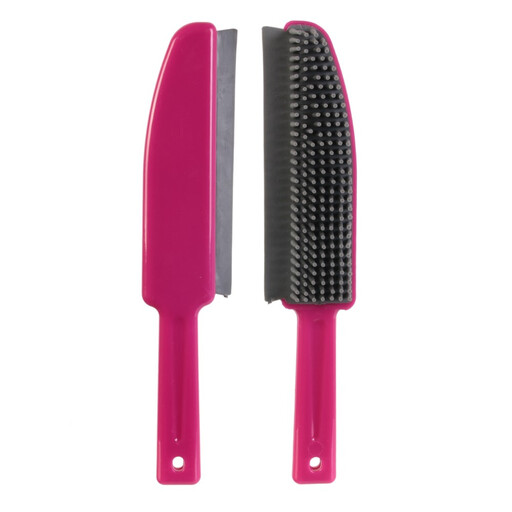
Why this choice suits this profile: The combination of soft bristles and a squeegee works well for grout, window tracks, sinks, textiles and hard-to-reach nooks.
The squeegee doesn't replace a head designed for cooked-on residue, but it avoids using an abrasive brush on textiles or delicate surfaces.
Non-abrasive bristles and an integrated squeegee for removing water and debris from corners.
Choose a scratch-resistant brush with soft or medium-soft fibres. Avoid metal scourers, abrasive powders and any brush whose head contains rigid particles. If in doubt, test on an inconspicuous area and follow the pan manufacturer's recommendations.
Rinse it after each use, remove any food debris, then drain it. Place it in a ventilated area with the head pointing downwards, or hang it if its design allows. A wooden handle must not be left submerged. Replace the brush when the fibres are flattened, broken or difficult to clean.
It can cover several tasks, but each head addresses a different requirement. A washing-up brush works for utensils, a bottle brush for narrow containers and a brush with a squeegee for tracks, grout or surfaces where water removal is needed. To protect surfaces and save time, choose the accessory based on the shape of the item you're cleaning, rather than relying solely on a promise of versatility.