
Livraison le jour même ou le lendemain

Qualité garantie

Débloquez vos offres de bienvenue: Livraison GRATUITE | Jusqu'à -80 % | 30 jours d'essai gratuits à JoyPlus
Téléchargez l'application
A multifunction blender can make smoothies, soups, sauces, purées and even chopped ingredients. But behind an appealing list of accessories, the differences in everyday use can be considerable. A compact model won't necessarily suit a family, while a very powerful appliance can quickly become bulky and a pain to clean.
To avoid a disappointing purchase, focus on four things: the actual usable capacity, the power, the accessories included and the safety instructions.
A high wattage doesn't guarantee an appliance can do everything. A powerful blender will handle certain hard ingredients more easily, but the shape of the bowl, the blade design, the speed settings and the amount of liquid all play a decisive role too.
A blender mixer of 300 to 600 W can be perfectly adequate for soft fruits and everyday drinks. For crushing ice or making large quantities, it's better to choose a model with a dedicated function, a pulse mode and clear instructions in the manual.
A 1.5 or 2 litre bowl can't necessarily be filled to the brim. Manufacturers often state a maximum liquid capacity that's lower than the total volume. This distinction matters to avoid spillages, especially with thick or hot preparations.
For one person, a smoothie blender with an individual cup can be more practical. For making several portions, look for a large-capacity blender, checking both the actual usable volume and the space available on your worktop.
The accessories of a blender with chopper, a blender with whisk or a multifunction food processor can quickly multiply the number of parts to wash. Before ordering, check whether the parts come apart, whether they're dishwasher-safe and whether they're easy to dry.
An easy-to-clean blender should also let you reach the base of the blades without putting yourself at risk. In any case, unplug the appliance before dismantling it and handle the blades with care.
The rated power tells you about the motor, but it needs to be considered alongside the functions offered. Multiple speeds allow you to adapt the blending to fruits, vegetables, sauces and thicker preparations. Pulse mode, meanwhile, lets you work in short bursts, particularly with certain firm ingredients.
Also look at the maximum continuous usage time. Some immersion blenders or compact models need a break to prevent the motor from overheating. Following this guidance helps preserve the appliance in the long run.
A glass bowl generally resists odours and staining well, but it's also heavier. Plastic or Tritan make the whole thing lighter and easier to carry, provided you check the manufacturer's information about food contact.
With hot preparations, never pour boiling liquid into a container that doesn't allow it. Some models recommend letting the preparation cool down; others specify a maximum temperature. This precaution reduces the risk of splashes, pressure under the lid and thermal shock.
A 4-in-1 set might include an immersion blender shaft, a whisk, a chopper bowl and a cup. Simply ask yourself whether you'll actually use each accessory. For blending soup directly in a saucepan, the immersion blender is often the most practical. For making a smoothie to take with you, a personal blender or a USB rechargeable blender meets a different need.
The spice grinder or small bowl can come in handy, but their capacity is generally limited. They don't replace a family-sized chopper or a dough mixer.
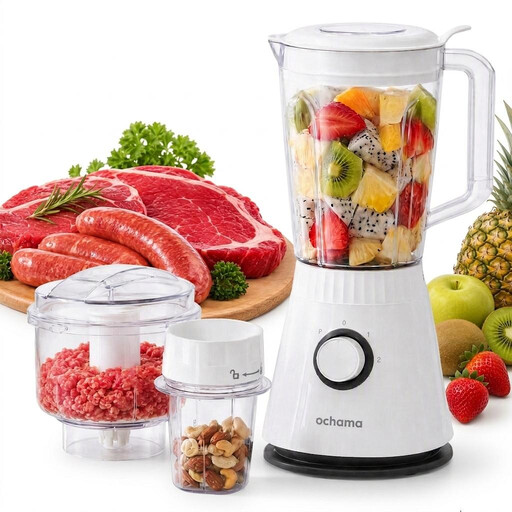
Why this choice suits this profile: With its 1.5 L bowl, three speeds and blending, chopping and grinding functions, it covers a good range of everyday needs without taking up the space of a larger appliance.
The product page details the 600 W power, capacity and intended uses. You can therefore compare the appliance on concrete data, rather than on a vague promise of versatility.
600 W motor, 1.5 L bowl, three speeds, crushed ice function and parts designed to be dismantled.
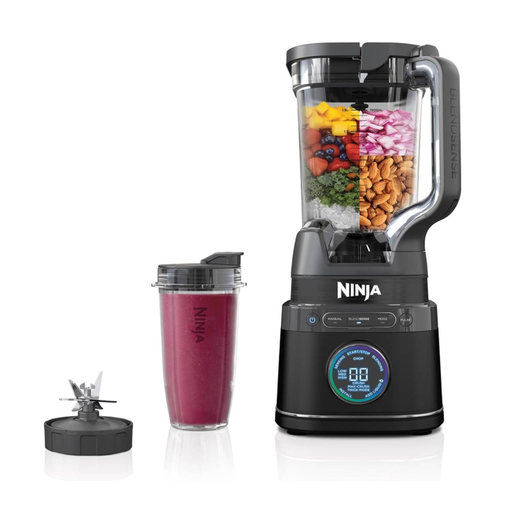
Why this choice suits this profile: This model combines a large container with two individual cups. Its various manual and automatic modes let you vary your preparations without multiplying appliances.
The product page clearly distinguishes the maximum capacity from the usable capacity and explicitly details the 10 speeds and 15 available modes.
1200 W power, 2 L bowl, two 680 ml cups and removable parts that are dishwasher-safe on the top rack.
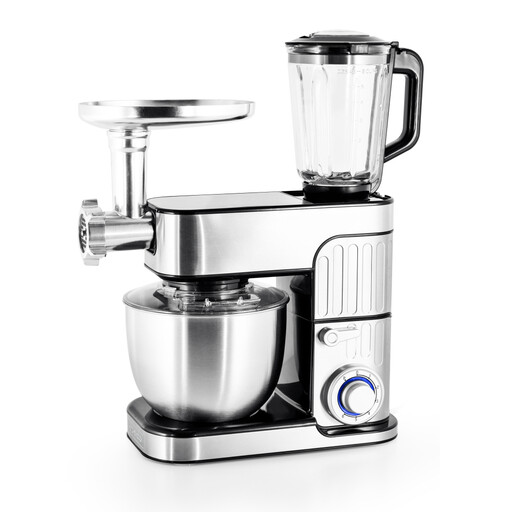
Why this choice suits this profile: This multifunction food processor is aimed at households that regularly make doughs, blended preparations or chopped ingredients in quantity.
Its versatility is based on clearly identified accessories and specified capacities, including a 5.5 L bowl and a 1.5 L glass blender.
1300 W motor, six speeds plus pulse, whisk, mixer, dough hook, meat grinder and overheat protection.
We've put together a comprehensive, real-time updated selection of products that meet these exacting criteria as well as European safety standards.
It depends on the model. Look for a function explicitly dedicated to crushed ice, a pulse mode and instructions that allow this use. Never add ice cubes to an appliance whose manual prohibits it, particularly some individual models.
A 1.5 L container can be enough for several portions, but the actual quantity you can make depends on the liquid limit and the texture of the recipe. For frequent use, compare the usable capacity, the stability of the base and the permitted operating time.
Respect the maximum quantities, avoid running the motor empty and let it cool down between cycles if the manual recommends it. Clean the removable parts promptly, dry them before storing and never submerge the motor unit in water. For the blades, use a suitable brush or sponge without gripping them directly.