People keeping an eye on the sugars in their drinks
You want to compare the sugars and energy in your lunchtime drink without assuming that ‘no added sugars’ means ‘sugar-free’.


For lunch at work, don’t choose a multifruit juice based solely on the claim ‘no added sugars’: the sugars naturally present in fruit are still included in the nutritional information. Compare the sugars and energy per 100 ml, then check the ingredients to see whether you’d prefer pure juice, nectar or a recipe with sweetener. For an everyday drink, Manger Bouger recommends choosing water and a whole piece of fruit, and limiting juice to a maximum of one glass a day.
You want to compare the sugars and energy in your lunchtime drink without assuming that ‘no added sugars’ means ‘sugar-free’.
You prefer pure juice or a specific recipe, and are happy to check the naturally occurring sugars and any sweeteners separately.
You’re looking for a size that suits one serving and the storage options available once it’s opened, especially if you share a fridge.
If you have juice with lunch, first choose the type of recipe that suits you, then compare the nutritional values per 100 ml of the options you’re considering.
Choose this if: ingredients are your top priority and you’re happy to compare the sugars in each product.
Worth bearing in mind: Auchan’s 2 L pure multifruit juice contains 11 g of sugars per 100 ml; ‘pure juice’ doesn’t mean ‘low in sugars’.
Choose this if: you want to avoid added sugars but would still like a nectar.
Worth bearing in mind: Jafaden nectar with no added sugars contains 9.8 g of sugars per 100 ml, according to E.Leclerc.
Choose this if: you’re happy with a sweetener and are looking for a recipe with less declared sugar than other products you’re comparing.
Worth bearing in mind: the ECO+ nectar sold by E.Leclerc contains the sweetener E960a, so it won’t suit you if you prefer to avoid sweeteners.
| What matters to you | What to check | Who is it for? |
|---|---|---|
| Sugars and energy | Compare ‘of which sugars’ and kcal per 100 ml, using the same volume. | If I want to cut down on the sugars in my lunchtime drink, the value per 100 ml matters more to me than the claim on the front of the pack. Around 33% of consumers put reducing sugars at the top of their list of concerns. |
| ‘No added sugars’ claim | Read this claim alongside the ‘of which sugars’ line and the ingredients list. | I want to understand what’s really in my glass, so I don’t mistake no added sugars for no sugars at all. This distinction is a priority for around 27% of consumers. |
| Type of recipe | Look for the product description ‘pure juice’ or ‘nectar’, the fruit content where stated, and any sweeteners. | I may prefer a fruit-based recipe to a sweetened nectar, even if the latter has less sugar. Ingredients come before other factors for around 20% of consumers. |
| Serving size and storage | Choose a size that suits the number of people and follow the storage instructions once opened. | If the bottle stays at work, I need to be able to pour a glass and store the rest as directed. Around 20% of consumers prioritise this practical consideration. |
Sugars naturally present in fruit are still counted: the Joker and Jafaden products with no added sugars that we checked contain 10 g and 9.8 g of sugars per 100 ml respectively, according to Auchan and E.Leclerc.
Check the claim on the packaging, then look at the ‘of which sugars’ line per 100 ml.
The product description tells you about the recipe, but doesn’t tell you the sugar content on its own. Auchan’s 2 L pure multifruit juice contains 11 g of sugars per 100 ml.
Choose the type of recipe that suits you, then compare the nutritional values using the same volume.
An opened bottle should be used according to the instructions for that product. For its 2 L pure multifruit juice, Auchan advises keeping it in the fridge and consuming it within five days of opening.
Check the instructions on the packaging and choose a size that suits the number of people who’ll be drinking it.
A bottle that’s too large for your needs may not be finished within the stated time.
Manger Bouger recommends choosing water, opting for a whole piece of fruit and limiting all fruit juices to a maximum of one glass a day.
For a regular lunch at work, consider having water and a whole piece of fruit. If you choose juice, remember to count any other glasses you’ve had that day.
The range includes a 1 L multifruit nectar with no added sugars.
The Le Fruit product we checked is described as a multifruit and vegetable juice with no added sugars.
The retailer offers pure multifruit juices in a range of sizes.
The multifruit nectar range includes different recipes, including one with no added sugars and a classic recipe containing sugar.
The multivitamin multifruit product we checked is sold as pure juice.
This selection includes two nectars with no added sugars and a multifruit juice with no added sugars. For lunch at work, compare their ingredients and plan a suitable serving from their 1.5 L bottles.
 Image unavailable
If you’re choosing a multifruit nectar with no added sugars for lunch, compare its sugars per 100 ml with those in the other recipes you’re considering.
1.5 L PET bottle: pour a serving into a glass and check the storage instructions after opening. If you avoid sweeteners, check the ingredients list.
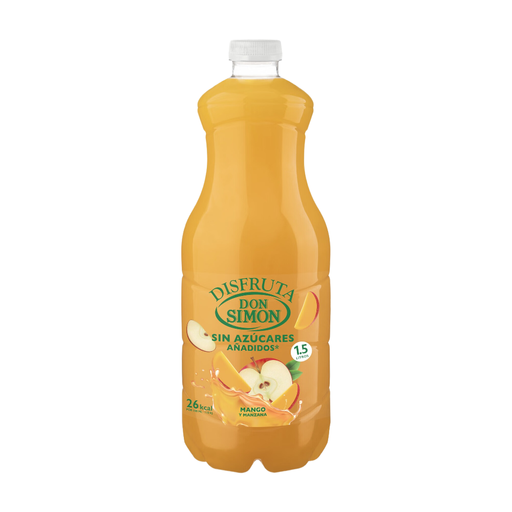 Image unavailable
If you’d prefer a mango and apple recipe to a multifruit blend, compare this nectar with no added sugars on the same per-100 ml basis.
1.5 L PET bottle: plan how you’ll serve it and store it after opening. Check the ingredients list if the presence of a sweetener affects your choice.
 Image unavailable
If you’re looking for a multifruit juice with no added sugars rather than a nectar, check its total sugar content per 100 ml too.
With a 1.5 L bottle, you’ll need to plan a serving and follow the storage instructions after opening.
No: juice or nectar with no added sugars can still contain sugars naturally present in fruit. The Joker and Jafaden products with no added sugars that we checked contain 10 g and 9.8 g of sugars per 100 ml respectively, according to Auchan and E.Leclerc.
No: ‘pure juice’ describes the recipe; you can’t tell the nutritional content without checking the label. Auchan’s 2 L pure multifruit juice contains 11 g of sugars per 100 ml. Compare the ‘of which sugars’ line on the products you’re interested in.
Manger Bouger recommends limiting all fruit juice to a maximum of one glass a day, whatever the type, and choosing water and a whole piece of fruit instead. Remember to count any other glasses of juice you have during the day.
Start with the energy and ‘of which sugars’ per 100 ml, then check the product description and ingredients, particularly if you want to avoid sweeteners. The DGCCRF explains that nutrition information per 100 g or 100 ml makes it easier to compare products.
Yes, as long as the fridge allows you to follow the storage instructions on the bottle you bought and you drink it within the stated time. For its 2 L pure multifruit juice, Auchan advises keeping it in the fridge and consuming it within five days of opening.